

On this significant day, Chile is set to witness a crucial presidential runoff featuring two candidates from starkly different political ideologies: Jeannette Jara representing the left and José Antonio Kast from the far-right. This election is particularly important as both candidates aim to succeed Gabriel Boric, whose presidency will conclude on March 11, 2026.
Over 15.7 million Chileans are eligible to cast their votes. The voting process is mandatory, penalizing those who fail to participate without a valid excuse.
Polling stations have been set up at 426 locations across 64 countries, accommodating Chileans living abroad. As of Saturday, over 36,000 individuals sought to excuse their voting obligations to avoid penalties.
Minute-by-minute coverage is available below:
How to Determine Where to Vote on December 14?
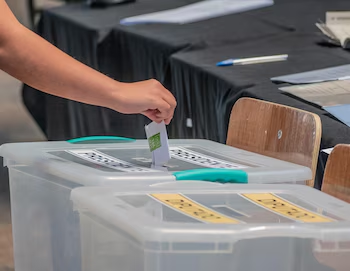
The Electoral Service (Servel) confirmed that over 15 million Chileans will be able to participate in this critical election on December 14.
Voters can find their designated polling places by visiting the official Servel website, entering their National Unique Role (Run) number, and following the verification process.
Election Begins in Asia and Oceania
The presidential runoff officially commenced on Saturday at 4:00 p.m. Chile time (1:00 p.m. GMT) with voting starting in New Zealand, where citizens cast their ballots in Wellington and Auckland.
Voters in Asia began casting their votes during late Saturday and into early Sunday, with polling stations opening at 8:00 p.m. in Seoul and Tokyo, and at 9:00 p.m. in Beijing and Hong Kong.
The Chilean Foreign Ministry affirmed that voting abroad officially began with the opening of polls in New Zealand.
Over 30,000 Absentees in Chile’s Runoff
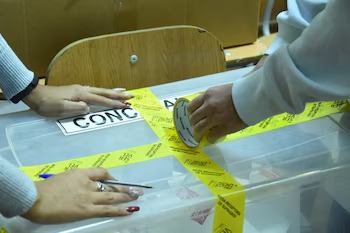
As the runoff approaches, Carabineros reported that over 36,000 requests have been filed for voter exemptions till Saturday evening.
Reasons for these exemptions largely include being over 200 kilometers from polling stations, health issues, or other serious circumstances preventing individuals from voting.
US Ambassador Criticizes Communication Cut with Chile
“Disappointing not to have open communication,” stated Brandon Judd just hours before the runoff.

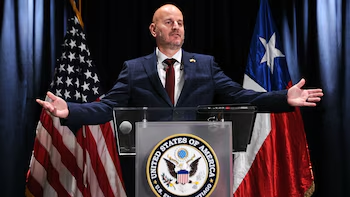
The US ambassador to Chile, Brandon Judd, raised concerns regarding the absence of open communication between his administration and President Gabriel Boric’s government since Donald Trump’s time in office.
Jeannette Jara and José Antonio Kast: Opposing Forces in Chile’s Presidential Runoff
This election pits a progressive candidate against a far-right lawyer advocating for order and security.
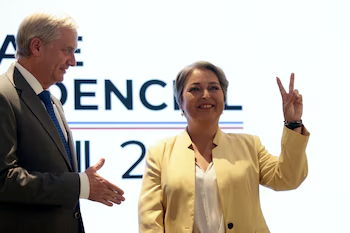
Chile’s political landscape has polarized with the advent of this election. Jara represents a progressive background, championing social issues, while Kast appeals to conservative voters by emphasizing a strict public order agenda crucial for addressing rising insecurity. Both candidates embody distinct visions for the future of Chile.
Franco Parisi, leader of the People’s Party (PDG), who came in third during the first round, urged voters to consider casting null votes. He argued that such a choice would save resources for Chile, as the Electoral Service compensates candidates according to the total votes received.
Kast Promises “Order, Security, and Trust” in Campaign Closure
The far-right candidate addressed thousands, claiming the current administration caused chaos.
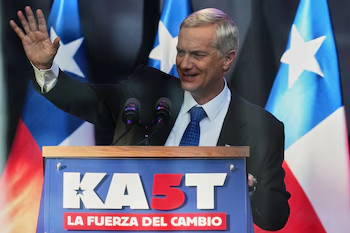
In the final rally, José Antonio Kast emphasized his commitment to restoring “order, security, and trust” in the nation, asserting that his leadership would signify a return to hope for many Chileans. He blamed the current administration for fostering chaos and insecurity, striking a chord with voters dissatisfied with recent social changes.