
Acquittal in Breathalyzer Case: Understanding the Mar del Plata Verdict
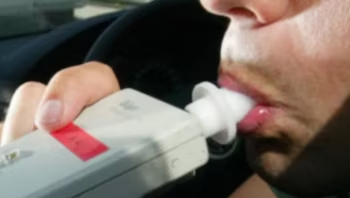
In a pivotal ruling, the Chamber of Appeals and Guarantees in Mar del Plata acquitted a driver who refused to submit to a breathalyzer test. The vehicle was parked, leading the judges to determine that there was no obligation for the driver to comply with the alcohol test under these circumstances.
Case Background
The case arose on the night of June 1st when transit personnel issued two citations: one for refusing the alcohol test and another for improperly parking the vehicle. Initial sanctions were handed down by Judge Inés Hayde Olmedo, which included a fine for both violations. However, the appeals court intervened, revisiting the evidence presented in the case.
Legal Reasoning of the Acquittal
The appellate court, governed by judges Leandro Favaro and Gastón de Marco, seized upon the argument that since the driver was inside the vehicle with the engine off and parked, the refusal to take the breathalyzer test was unjustly penalized. The judges emphasized the distinction between procedural nullity and the assessment of evidence. They asserted that if the lower court believed the evidence was insufficient for a conviction, it should have acquitted the defendant rather than partially nullifying the sanctions.
“What I observe here is not a question of nullity … but, rather, a matter of evidentiary assessment,” noted the ruling from the judges.
Details of the Ruling
While the court overturned the sanction related to the breathalyzer refusal, it did confirm a fine of $254,496.16 for the wrongful parking violation. The ruling represents an important legal precedent regarding the applicability of breathalyzer tests when a vehicle is parked and the driver is not in violation of other laws related to operation or control of the vehicle.
Related Incidents
The case also coincided with a separate incident involving students from the Sacred Heart Institute of Oliva. Their trip to Bariloche faced delays due to four drivers testing positive for alcohol. Following various tests and delays, parents expressed their concerns, leading to the intervention of Highway Police to ensure equipment reliability.
Conclusion
This acquittal underscores the complexity of traffic law and the rights of individuals during stops for intoxication checks. The case promises to set a precedent for future interpretations of similar situations, emphasizing the need for clear standards regarding breathalyzer compliance, especially when vehicles are not actively engaged in traffic.
This ruling demonstrates the judiciary’s role in balancing public safety with individual rights, establishing important benchmarks in traffic enforcement policies.