
Pepe Álvarez Critiques Juan Carlos I: A Call for Historical Awareness
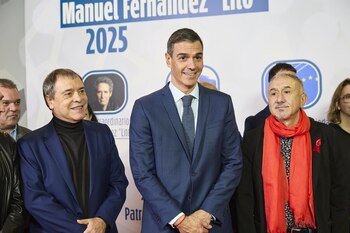
At a recent event organized by the Manuel Fernández ‘Lito’ Foundation, Pepe Álvarez, the general secretary of UGT, delivered a poignant critique of Juan Carlos I, the former king of Spain. Álvarez emphasized the pressing need for historical memory in Spain, particularly among the youth who may not fully grasp the implications of the dictatorship under Francisco Franco. He articulated that fifty years post-Franco’s death, there remains a significant gap in understanding the past and its lasting impacts.
Critical Assessment of Juan Carlos I’s Claims
Referring specifically to a video in which Juan Carlos I spoke about his role in Spanish history and urged support for King Felipe VI, Álvarez firmly stated, “he is not an example of anything in our country. That is without a doubt.” This assertion raises important questions about the former monarch’s moral authority to comment on Spain’s democratic transition, a topic that remains sensitive and pivotal in the nation’s political discourse.
The Importance of Progress and Social Rights
Álvarez further distanced himself from Juan Carlos I’s plea for recognition of the monarchy’s contributions. He focused on the social freedoms and rights that have emerged following the dictatorship, highlighting that these advancements were largely driven by societal demands for recovery and reform after Franco’s regime.
Emphasizing Coexistence and Acceptance
During his address, Álvarez also stressed the importance of coexistence and mutual respect in fostering a healthy democratic environment. He pointedly stated that Spanish society must learn to appreciate its diversity of opinions. “Either we recognize and love each other as we each are, respecting our neighbors, or coexistence in our country will be very difficult,” he warned. This notion of inclusivity is critical to maintaining and enhancing Spain’s democratic future.
Addressing the Historical Awareness Gap
In addressing the gathered audience, Álvarez warned about the danger posed by a lack of awareness among younger generations regarding the dictatorial past. He maintained that it is essential for all citizens to fully comprehend the severity of Spain’s historical narrative as a foundation for informed citizenship in the present and future. His remarks underline a collective responsibility to remember and learn from the past.
Conclusion: A Future Built on Understanding
The ceremony, attended by various political leaders including President Pedro Sánchez, underscored the significance of historical memory, the democratic transition, and the monarchy’s evolving role in Spain. Álvarez’s intervention serves as a critical reminder that a country’s future is deeply rooted in its collective memory and understanding of its past, advocating for a Spain built on respect, acceptance, and awareness.