
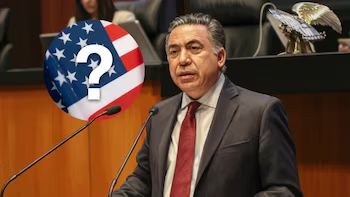
Enrique Inzunza Reappears in the Senate After 50 Days of Absence
Background of the Controversy
Enrique Inzunza Cázarez, a legislator from Sinaloa and member of the Brunette Party (Morena), recently made headlines following his reappearance in the Senate after more than 55 days of absence. This gap in participation was largely due to serious allegations stemming from the United States Department of Justice, which implicated him in alleged links to the Sinaloa Cartel.
In a session held remotely by the Senate Justice Commission, Inzunza connected online. His absence from the Senate chair sparked much debate, particularly when he skipped a session just two days prior on June 23, where he was also a member of the Senate Human Rights Commission.
The Accusations and Their Implications
On April 29, the U.S. Department of Justice accused Inzunza, along with other current and former officials from Sinaloa, of having negotiated political favors in exchange for support from the “Chapitos”, a faction of the Sinaloa Cartel. Following these allegations, Inzunza chose to refrain from participating in Senate activities, indicating he did not want to “offer a spectacle unworthy of the parliamentary chamber.”
Currently, Inzunza has an Interpol red card issued by the U.S. government, a detail that significantly elevates the stakes regarding his political future. Despite the gravity of the accusations, the senator has vehemently denied any wrongdoing, calling the charges “mendacious and lacking support.”
Legislative Context
During his absence, the Senate operated under a Permanent Commission, a period characterized by different rules compared to regular sessions. This allowed Inzunza to avoid formal sanctions or the risk of dismissal. He had requested a two-day leave during the only extraordinary session held, thereby preserving his constitutional rights.
Inzunza, highlighting his commitment to his position, stated: “I was elected by nearly 700,000 Sinaloans and will honor my responsibilities with punctuality, commitment, and decorum, until my term ends in 2030.” However, he did not specify when he would return to in-person activities in Congress.
Recent Developments
After more than a month of absence, Inzunza’s involvement in the Justice Commission marks a noteworthy moment for his legislative career, as it represents his first active participation since the U.S. accusations became public. While this virtual connection signifies a step towards engagement in legislative matters, it leaves many wondering about his ability to fully re-enter political life amidst ongoing investigations and accusations.
As this situation unfolds, it remains unclear how these allegations will impact not only Inzunza’s position but also the political landscape in Sinaloa and Mexico as a whole. The implications of U.S. intervention in local politics continue to ripple, raising questions on accountability and governance.