
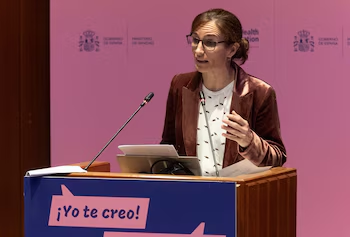
Mónica García Calls for Action Against Sexist Violence
The urgent plea from Minister of Health Mónica García emphasizes activating “all radars” to ensure that no instances of sexist violence go “unpunished or invisible.” This call for action arrived during the opening of the ‘I believe you!’ day, a collaborative event organized by the Ministry of Health and the World Health Organization (WHO).
Structural Nature of Sexist Violence
García articulated that sexist violence is a structural issue, often manifesting visibly in some cases while remaining silent and hidden in others. She highlighted the importance of acknowledging that many occurrences of violence can be overlooked if not actively monitored and addressed.
The opening event featured the report titled ‘Attention, courage, change: the leadership of the health sector to end violence against women and girls,’ which critiques the inadequate responses of European health systems to victims of such violence.
Spain’s Comprehensive Framework
Spain stands out as one of the only 12 countries in the WHO European region with a comprehensive health policy for addressing violence against women. García stated that this recognition also brings a heightened sense of responsibility. She emphasized that despite progress, there remains a considerable amount of work to be done, urging all stakeholders to remain vigilant and proactive in their duties.
Role of Primary Care
The Minister underscored the pivotal role of Primary Care (PC) in early detection and comprehensive support for victims of violence. In many cases, Primary Care serves as the first point of contact for women seeking help, making it crucial for health professionals to be equipped with the right training and resources.
García explained that the development of specialized training and coordination among judicial, forensic, and social services is essential to provide a uniform and empathetic healthcare response focused on victim safety and recovery. The Primary and Community Care Action Plan 2025-2027 includes a program aimed at early detection of gender violence, reflecting this commitment.
Mental Health Initiatives
In addition, the Minister highlighted initiatives within the mental health sector. The Mental Health Action Plan 2025-2027 identifies victims of gender violence as a priority group, advocating for further training on this issue in mental health services. García noted that previously, the health system often overlooked the underlying violence impacting women’s mental health.
Addressing Outstanding Debts
García candidly reflected on the “outstanding debts” that health systems owe to women. Historically, women’s health concerns have been treated unequally, with significant issues such as mental health and menopause often dismissed or undervalued.
The Minister asserted that confronting sexist violence signifies that women’s health should be valued in all its complexity and diversity. This includes guaranteeing women’s autonomy, sexual and reproductive rights, and access to abortion without barriers.
Combating Denialist Discourses
Finally, García expressed concern over the rise of denialist discourses regarding sexist violence in certain parts of Europe. Such narratives threaten the progress made in women’s rights and, by extension, their health and safety.
In light of this, she emphasized that the appropriate response must be one of commitment, backed by scientific evidence and cooperation among countries to combat this pressing issue.
Conclusion
Mónica García’s impassioned advocacy serves as both a rallying cry and a roadmap, urging for heightened attention and systemic action against sexist violence. Her clarion call reminds us that tackling this pervasive issue must be a collaborative, sustained effort spanning various sectors and societal levels.