
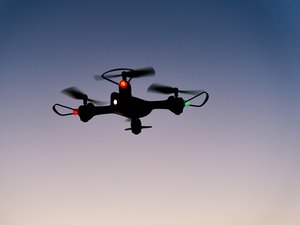
Flights were suspended on the evening of Friday, October 31, for almost two hours at Berlin-Brandenburg Airport after the detection of drones, reigniting security concerns in Europe. No operator has been identified in connection with the incident, but it arises amid increased tensions with Russia, which is suspected of conducting drone incursions on sensitive sites.
What to Remember
Flights were suspended on Friday from 8:08 p.m. to 9:58 p.m. at Berlin-Brandenburg Airport due to the presence of a drone, raising alarm over this emerging threat.
While no operator has been identified, Berlin suspects Russian involvement given the context of repeated overflights of sensitive sites in Germany and across Europe.
Germany is revising laws to allow its military to shoot down drones. Additionally, Brussels is planning an operational “anti-drone wall” by 2027, despite some reluctance among member states.
Flights were interrupted for nearly two hours on Friday evening at Berlin-Brandenburg Airport due to the presence of drones, highlighting a growing alert about this danger that poses a substantial threat in Europe. This event comes nearly a month after a spate of drone sightings that have been attributed to suspected Russian actions.
Between 8:08 p.m. and 9:58 p.m., takeoffs and landings were put on hold, as confirmed by a spokesperson for the airport. The report stated, “A whole bunch of flights” were rerouted to other German cities before the nighttime flight ban in Berlin was later relaxed to alleviate the impact on operations. The spokesperson added, “We assume that the danger is over for the moment.”
No Operator Identified
Local police were alerted to the drone’s presence and dispatched a helicopter along with patrols to investigate. Although the patrol was able to visually confirm the drone’s existence, they could not identify its operator. This incident adds to the mounting concern among German officials regarding the growing threat posed by drones, particularly following a series of unidentified aircraft incursions into airports and sensitive military locations this year.
Germany is a significant supporter of Ukraine in its ongoing conflict with Russia and has pointed fingers at Moscow for the resurgence of drone activity. Numerous drone sightings have been reported above military bases, industrial facilities, and other critical infrastructure within Germany.
Earlier in October, two drone sightings over Munich resulted in the temporary closure of the city’s airport. Similar occurrences have been noted over airports and military sites in Denmark and Norway, further raising suspicions about Russian involvement, which Moscow has denied.
“Anti-Drone Wall”
Chancellor Friedrich Merz commented on the situation, stating, “We don’t know for sure yet, but a significant part of these actions are likely orchestrated by Russia.” He referred to previous disturbance incidents reported in Munich and Copenhagen during late September.
Merz condemned these actions as “espionage and destabilization attempts” and highlighted that Germany is meticulously monitoring the so-called “Russian ghost fleet” stationed in the Baltic Sea, believed to play a part in these drone incursions. Interior Minister Alexander Dobrindt emphasized the need for Germany to adopt new strategies to confront this hybrid threat, advocating for enhanced capabilities in detecting, evaluating, and potentially destroying unmanned aerial vehicles.
In alignment with these emerging threats, the German government initiated a comprehensive review of national air safety laws. This revision seeks to enable the German military, as opposed to solely the police force, to engage and neutralize drones when necessary. Concurrently, the European Union Commission is devising plans for an “anti-drone wall,” which aims to be fully operational by 2027. However, skepticism persists among various member states regarding the feasibility and effectiveness of this initiative.
NATO’s recent response to incursions by around twenty Russian drones into Polish airspace underscored existing gaps in the European defense arsenal. The alliance had to use expensive missiles to intercept and neutralize three of these drones, drawing attention to the inadequacies of current defense systems.
As Europe grapples with escalating tensions and security threats, the increased visibility of drone incursions is not merely a matter of aviation security, but also a reflection of broader geopolitical strife. The urgent need for enhanced defenses against aerial threats has never been more apparent, and Europe finds itself at a critical juncture in addressing these rising challenges. Each incident serves to underscore the reality that drone technology is increasingly becoming a tool for both espionage and aggression, demanding innovative solutions and collaborative efforts across the continent.