
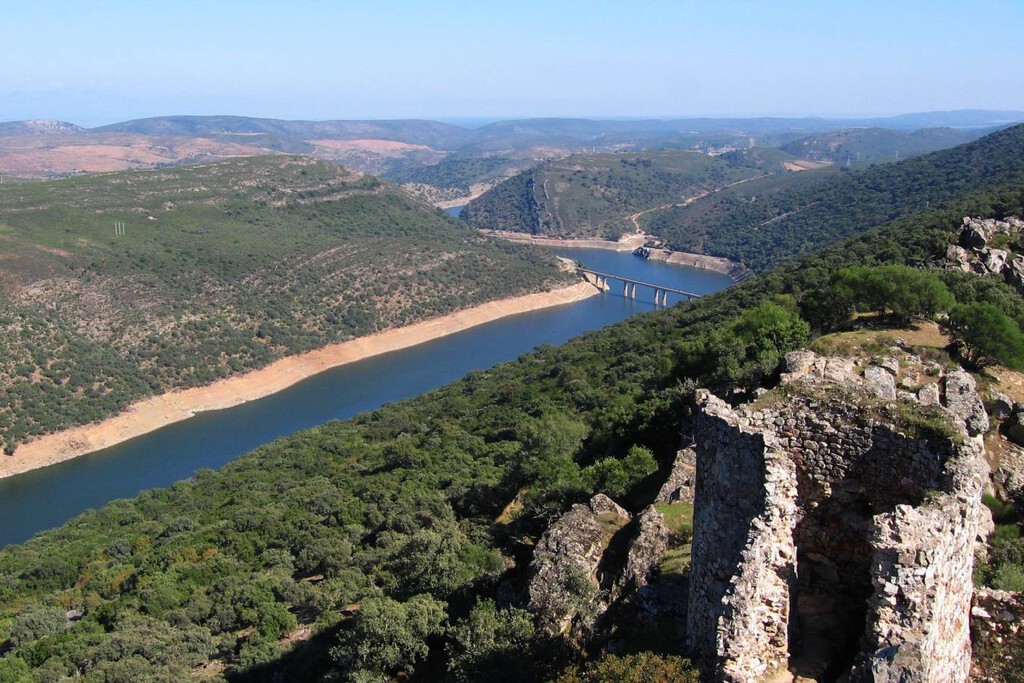
On October 22, 1965, a catastrophic event unfolded in the working-class town of Torrejón el Rubio , located in the province of Cáceres, Spain. The construction site of dams on the Tajo and Tiétar rivers held an ominous foreboding, especially felt by numerous workers involved in the construction. As the clock struck nine-twenty in the morning , the sound of a warning siren pierced through the morning air—a sound that would soon signify a tragic episode in Spanish history.
The small town of Torrejon el Rubio, nestled in the picturesque Monfragüe region, would be forever marked by what many consider the worst work accident in Spain’s history. This incident, driven by the ambitions of the Franco regime, unfolded against a backdrop of industrial development that sought to showcase Spain as a burgeoning power in post-war Europe.
A Monumental Work
The Franco dictatorship aimed to construct two dams that would not only provide water and electricity but also symbolize national progress. Following the infamous Ribadelago disaster in 1959, where a dam failure resulted in the loss of 144 lives, the regime was eager to regain public trust through ambitious infrastructure projects in Extremadura .
The endeavor in Cáceres involved building large dams and associated canals designed to generate electricity and facilitate water transfer between the Tajo and Tiétar rivers. By October 1965, the construction was significantly advanced, employing around 4,000 workers —many of whom sought stable employment to prevent emigration from their hometowns.
Conditions on site were noteworthy; two towns were constructed specifically for the workforce—“the one upstairs” for managers and one for laborers, boasting amenities such as schools and a marketplace. The principal contractor, Agromán , operated under Hidroeléctrica Española , now recognized as Iberdrola .
But what happened next was an unintended, devastating result of multiple factors, including weather conditions and negligence from those overseeing the project. Several weeks of heavy rain had caused the reservoir water levels to dangerously rise, reaching 83 centimeters above the safety limit. Despite the escalating risks, work continued unabated, with the workers laboring tirelessly in dangerous conditions.
Tragedy Strikes
What should have been an awe-inspiring display of engineering quickly devolved into a catastrophic failure. As one eyewitness later recounted, the anticipation of a spectacular waterfall from the spillways transformed into sheer horror when the dam pressure caused the cofferdam, crucial for water control, to burst. This unleashed a violent torrent that flooded the construction area and underground facilities.
The conditions were chaotic. Many workers were oblivious to the impending danger, continuing their tasks in the dry riverbed. Estimates indicate that nearly 400 individuals were on-site when the disaster occurred. The floodwaters surged with such ferocity that escape became an impossibility, leading to immediate evacuation measures. Families frantically searched for their loved ones, but the reality was grim.
Flori Almendral, whose father was amongst those trapped, vividly recalls the foreboding feelings expressed by workers prior to the disaster. Others, like Paqui Martos, retain tragic tales of attempts to save comrades, emphasizing the drowning incidents in open pits and the harrowing moments that followed.
The Aftermath
In the wake of the tragedy, silence became the regime’s responses. The incident was thoroughly understated in the media, and official reports recognized only 54 fatalities . However, eyewitness accounts and testimonies suggest the number could surpass a hundred , with some reports indicating 75 coffins were dispatched to accommodate the victims. Rumors persisted that politically imprisoned laborers had been included in the workforce, a detail that added layers to the already heavy narrative.
Victims’ families received minimal compensation—about 20,000 pesetas plus an additional 5,000 for each dependent, contingent on the forfeiture of any further claims. The callous approach by authorities to dismiss the incident resonated deeply with the affected families and underscored a desire to maintain a facade of progress.
As time went by, the ghosts of that fateful day lingered, veiled by the regime’s silence. It wasn’t until half a century later, in 2015, that the town of Malpartida de Plasencia recognized the tragedy with a memorial. Families gathered to honor the lost lives, reflecting on the perpetual scars left on the community. The stories of surviving family members were a poignant reminder of the day when nature and negligence collided, forever changing the fate of many in Torrejón el Rubio .
General News – 2