
Understanding Global Nuclear Energy Production
The World Nuclear Association estimates that there are approximately 430 operational nuclear reactors worldwide. In the midst of the rise of renewables and the push for decarbonization, nuclear energy remains a pivotal source of energy for many countries. Nations such as China , India , and France heavily depend on nuclear energy, and even private companies are investing in their own reactors to meet increasing energy demands driven by advancements in technology like artificial intelligence.
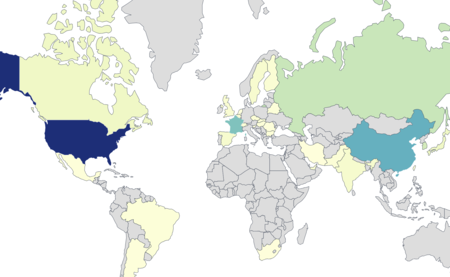
One can explore this interactive map to see countries producing the most nuclear energy, including details on the number of reactors and their contribution to each nation’s energy mix.
</div>The United States: A Nuclear Power Giant
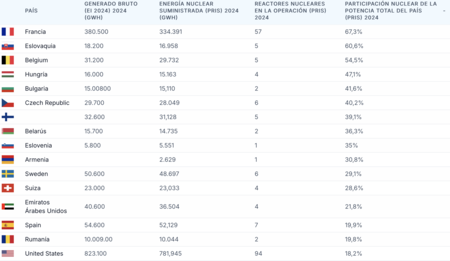
The United States stands out as the leading producer of nuclear energy worldwide, estimated to generate 823 TWh in 2024. This figure represents about 30% of global nuclear energy production. Home to 94 active nuclear reactors , the U.S. relies on nuclear energy for just over 18% of its energy mix. This is particularly noteworthy against the backdrop of significant investments in renewables and the continuing importance of fossil fuels in the nation’s energy landscape.
By contrast, Canada does not even come close, producing only 85 TWh from its 19 reactors , while Mexico lags significantly behind with just 12.3 TWh from its two reactors.
<img alt="The production of renewables in Europe is so strong that it is forcing nuclear power plants to work" width="375" height="142" src="https://i.blogs.es/e7e756/guia-de-imagenes-destacadas/375_142.jpeg"/>China’s Growing Nuclear Landscape
Next on the list is China , known for its aggressive expansion of both renewable energy and nuclear power. With 57 reactors , China is estimated to generate about 450 TWh of electricity from nuclear sources. However, despite these high numbers, nuclear energy only accounts for less than 5% of China’s total energy production in 2024.
China’s unique position highlights its dual focus on renewables , including wind and solar energy, while simultaneously exploring opportunities to expand its nuclear capacity, including next-generation reactors.
France: The Nuclear Champion
Completing the top three countries engaged in nuclear energy production is France , where nuclear energy plays a pivotal role. France is estimated to generate 380.5 TWh from its 57 reactors , showcasing that nuclear energy accounts for 67.3% of the country’s total energy consumption. As the most reliant nation on nuclear energy globally, France has made substantial investments in this sector, maintaining its status as a key player in both nuclear energy and the nuclear defense landscape of Europe.
Countries like Slovakia , Belgium , and Hungary show similarly high reliance on nuclear energy, with percentages ranging from 41% to 60.6% of their total energy supply coming from nuclear sources.
Even smaller nations, like Slovenia , which operates only one reactor, find 35% of their electricity dependent on nuclear energy, illustrating the sector’s importance to diverse energy portfolios.
<span>Countries ordered by their dependence on nuclear energy</span>Countries Without Nuclear Energy
Interestingly, some nations appear completely blank when it comes to nuclear energy production. Germany is a notable example, as it had once generated approximately 170 TWh in 2006. However, after the Fukushima accident and subsequent political decisions, Germany shut down all its nuclear plants by 2023. Australia also has a ban on nuclear energy, while Italy has prohibited it through referendums held in 1987 and 2011 .
<img alt="The Atacama Salar is key for the electric car industry" width="375" height="142" src="https://i.blogs.es/38da48/salar-de-atacama/375_142.jpeg"/>The Future of Nuclear Energy
Despite the current landscape, the future of nuclear energy is dynamic and could change. Proponents argue that it is a cleaner alternative compared to coal or gas, especially in light of rising data center emissions. Meanwhile, detractors emphasize potential accidents and the challenges of waste management.
Political advocates in countries such as Italy, Australia, Poland, and Germany are increasingly calling for a return to nuclear energy. As India, South Korea, Japan, and China continue to expand their nuclear arsenals, with about 70 reactors under construction , the future is looking bright for nuclear energy advancements.
In the coming years, the nuclear energy landscape could significantly shift due to rising investments, technological advancements, and the growing emphasis on cleaner energy. Monitoring the future of nuclear energy will be essential as nations work to create a sustainable energy future.
The evolving energy landscape underscores the pivotal role nuclear energy plays in our collective energy future. Amidst the push for sustainability, understanding how nations balance traditional and renewable energy sources will remain a vital discussion.