
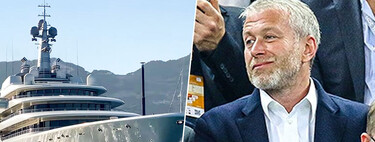
The ongoing Russian invasion of Ukraine has sparked significant geopolitical fallout, particularly in Western Europe and the United States , where allied nations have implemented stringent sanctions against Russian billionaires. These international measures not only target financial assets but have led to the confiscation of luxury items , such as mansions and superyachts . The resulting maintenance costs of these opulent vessels have become a significant burden on local economies, particularly for small towns and cities forced to shoulder the expenses.
Among the most notorious cases is the Sailing Yacht A , a 149-meter marvel that holds the title of the largest sailing yacht in the world, eclipsing Jeff Bezos’s Koru , which measures 127 meters . The yacht, owned by Russian oligarch Andrey Melnichenko , was blocked from leaving the port of Trieste in March 2022 . Trieste’s city officials have had to contend with the high maintenance costs of this super yacht, which is estimated at an astronomical 30,000 euros daily . The pressure on municipal coffers has led the mayor, Roberto Dipiazza , to express concern over who will bear this financial strain: “ Who will pay the 30,000 euros of daily expenses? ” he exclaimed in a recent interview.
The Superyacht Floats, But the Municipal Coffers Sink
Since the yacht has been anchored in Trieste, the city has faced mounting expenses totaling more than 11 million euros . Although local authorities bear the financial burden, it’s crucial to note that this situation is the consequence of sanctions imposed by the European Union against Russian elites. The mayor has articulated that the city should not be responsible for these extraordinary expenditures, which are a byproduct of external political actions.
The Sailing Yacht A remains an enigma, entangled in legal disputes surrounding its status. Unlike full confiscation, it falls under an administrative block , which means it must be returned in its current state if sanctions are lifted or if the owner legally challenges the restrictions placed upon them. Consequently, Trieste’s municipal government is obliged to maintain the yacht while awaiting the resolution of these complex legal dynamics.
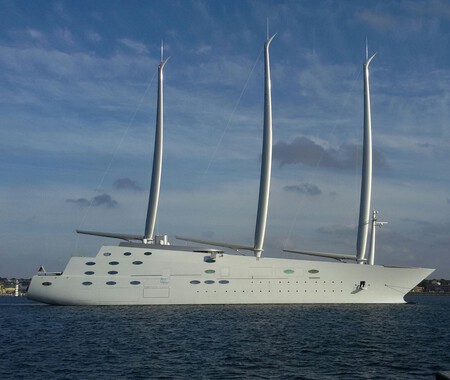
Sailing Yacht A , measuring 149 meters in length.
Maintenance Only within Reach of a Millionaire
The daily maintenance cost, cited at 30,000 euros , only covers essential operations needed to keep the yacht in good shape. Over the course of its nearly three-year stay in the port, reports estimate the total maintenance expenditures exceed 11 million euros , with some sources, like Il Piccolo , indicating it could be as high as 18 million euros . Mayor Dipiazza emphasizes that the city’s escalating financial burden stems from a decision made at a European level , forcing local taxpayers to fund the upkeep of an asset that technically belongs to a foreign billionaire.
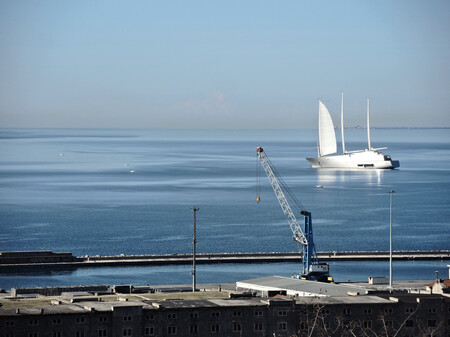
Sailing Yacht A docked near the port of Trieste.
The Problem Repeats: The Case of the Alpha Nero and the Eclipse
Trieste’s plight is echoed in other regions grappling with similar situations. The Alpha Nero , another superyacht owned by Russian oligarch Andrey Guryev , has similarly drained resources on the Caribbean island of Antigua and Barbuda . Its costs surged even higher due to the yacht’s fuel consumption, amounting to 2,000 dollars just to maintain the air conditioning system , which is critical to preserve the luxurious interior finishes. Local taxpayers have found themselves footing the bill for the yacht’s $28,000 weekly maintenance expenses while awaiting a decision on its ultimate fate.
The Eclipse , owned by billionaire Roman Abramovich , presents yet another instance highlighting the exorbitant maintenance costs associated with seized superyachts. This yacht was docked for over three years in Muğla, Turkey , consuming an estimated 1,000 liters of fuel daily just to keep its engines running and air conditioning operational. The environmental ramifications are significant, with CO2 emissions contributing to air quality issues in the region.
In conclusion, the ongoing saga of high-maintenance superyachts seized during political upheaval sheds light on the broader implications of economic sanctions. The burden of maintaining these extravagant assets falls disproportionately on local communities, forcing them to confront the financial repercussions of decisions made far beyond their borders.