
The Depreciation Reality of New Luxury Watches
New luxury watches face immediate 20-30% depreciation the moment they leave authorised dealers. Unlike cars, watches don’t physically deteriorate through normal wear, making this depreciation purely market-driven rather than condition-related.
Consider the mathematics: a £5,000 new watch might command only £3,500 in immediate resale, representing £1,500 in instant value destruction. This same timepiece, purchased pre-owned at £3,500, maintains its value more effectively because the initial depreciation has already occurred.
Access to Discontinued and Vintage Models
The pre-owned market provides access to discontinued models that often command premiums over their original retail prices. Manufacturers regularly refresh collections, discontinuing popular references to introduce new variants.
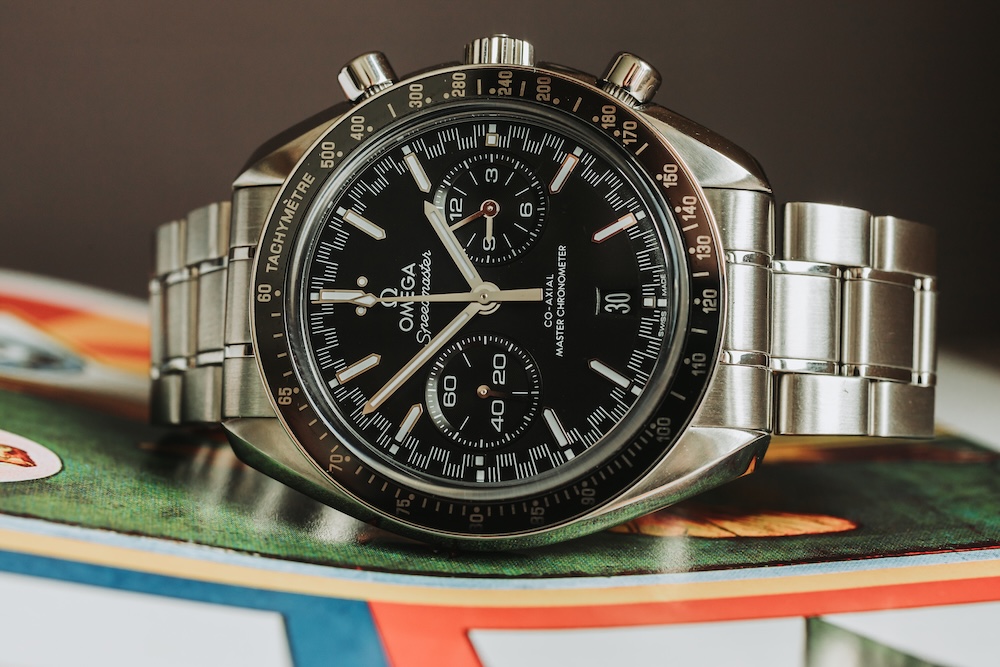
Pre-owned OMEGA Speedmaster watches from the 1960s and 1970s now trade for multiples of their original prices, reflecting both inflation and genuine collector demand. The space exploration heritage and “Moonwatch” designation create compelling narratives that support sustained appreciation.
Quality and Condition Advantages
A well-maintained pre-owned piece from recent years often provides reliability equivalent to new examples whilst avoiding the break-in period that new mechanical movements sometimes require. Professional servicing history becomes more valuable than factory freshness for mechanical timepieces.
Authentication services provided by reputable pre-owned dealers offer additional quality assurance. These specialists examine movements, cases, and complications more thoroughly than typical retail transactions.
Negotiation Power and Market Efficiency
Pre-owned transactions typically allow negotiation that authorised retail strictly prohibits. Manufacturers maintain rigid pricing policies that prevent dealers from offering discounts on new pieces. The pre-owned market operates more efficiently with pricing that reflects actual supply and demand dynamics.
Brand Diversification Within Budget Constraints
Budget allocation efficiency dramatically improves through pre-owned purchasing. The same investment that secures one new luxury watch might provide access to multiple pre-owned pieces from different brands.
Pre-owned TAG Heuer Formula 1 and Monaco models offer motorsport heritage and Swiss manufacturing at accessible price points. The brand’s strong vintage following and contemporary racing connections create stable value propositions for pre-owned buyers. Or maybe a used Cartier timepiece gives you all the style and luxury you require.
Warranty and Service Considerations
Modern pre-owned watches from recent years often retain manufacturer warranty coverage. Independent service networks have expanded significantly, reducing dependence on manufacturer service centres. Qualified watchmakers can maintain most luxury watches at costs lower than authorised service prices.
Parts availability rarely poses problems for major brands like OMEGA and TAG Heuer. These companies maintain extensive parts inventories that support decades-old timepieces.
Investment and Resale Considerations
Pre-owned purchases often provide superior investment characteristics compared to new alternatives. The initial depreciation absorption means future value retention depends on actual market appreciation rather than recovering from inflated retail pricing.
Certain pre-owned segments show consistent appreciation trends that outperform new watch investments. Vintage sports models, limited editions, and historically significant pieces create compelling investment cases that new production cannot match.
Environmental Benefits
Pre-owned purchasing aligns with increasing environmental consciousness without sacrificing luxury or quality. Extending product lifecycles reduces manufacturing demand and associated environmental impacts. Luxury watches are inherently sustainable through multi-decade lifespans and repairable construction.
Market Timing and Opportunities
Economic cycles create periodic opportunities in pre-owned markets that savvy buyers can exploit. Recessions often force collection sales, creating temporary supply increases that depress prices temporarily. Patient buyers with available capital can secure exceptional pieces during these windows.
Building Relationships with Specialist Dealers
Long-term relationships with pre-owned specialists such as MVS Watches provide access to pieces before public availability. These dealers often know their clients’ preferences and contact them privately when suitable watches become available.
Specialist knowledge from experienced dealers proves invaluable for both buying and selling decisions. Their market insights, authentication expertise, and client networks provide services that justify their involvement in transactions.
Conclusion: The Pre-Owned Advantage
Pre-owned luxury watch purchasing offers compelling financial advantages that new purchases cannot match. Depreciation avoidance, access to discontinued models, negotiation flexibility, and superior investment characteristics create persuasive cases for choosing pre-owned over new.
The key lies in working with reputable dealers who provide authentication, condition assessment, and market expertise. Smart money recognises that luxury watches represent both personal pleasure and potential investments. Pre-owned purchasing optimises both aspects whilst avoiding the financial penalties that new purchases impose on buyers.