
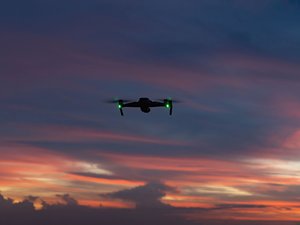
Last night, unknown drones flew over Munich airport in Germany, causing its temporary closure. After the night disturbances, traffic resumed.
A Russian maneuver ? The operations of the German airport in Munich resumed on Friday morning, noted Reuters, after air traffic was suspended for several hours following the appearance of drones on Thursday evening. This alarming incident resulted in the cancellation of seventeen flights and disrupted travel plans for almost 3,000 passengers .
An “Anti-Drone Wall”
This incident occurred after several unidentified drone intrusions were reported last week in Denmark and Norway , raising significant concerns about air security in Europe. These developments have prompted leaders of the European Union to discuss a potential “anti-drone wall” aimed at safeguarding the continent against aerial threats.
In a statement released late Thursday, Munich airport revealed that, in addition to the suspended flights, 15 additional flights scheduled to arrive in Munich were diverted to other airports, including Stuttgart, Nuremberg, Vienna , and Frankfurt . The situation escalated when representatives from German air force control restricted operations at Munich airport at 10:18 p.m. (8:18 p.m. GMT). This precautionary measure was taken after several drones were spotted in the vicinity.
Munich had already been on high alert earlier that week due to a bomb threat and the subsequent discovery of explosives, which temporarily closed the iconic Oktoberfest . The recent drone activities add fuel to a growing narrative surrounding European security concerns, prompting calls for more stringent measures to manage aerial traffic and potential threats.
Amid these tensions, EU leaders recently convened for an informal summit where they discussed proposals for implementing an “anti-drone wall.” The leaders emphasized the importance of collaborative defense measures following various aerial incursions that have raised alarms across the continent.
Danish Prime Minister Mette Frederiksen was cautious in her remarks regarding the responsible parties behind the drone intrusions that led to the closure of several Danish airports earlier. She hinted that these operations might be linked to Moscow, given the geopolitical climate and previous accusations associated with Russian activities in the region.
However, Russia has vehemently denied any involvement in the incidents occurring in Denmark. President Vladimir Putin , addressing the escalating tension, mockingly stated that he would no longer send drones into Danish airspace , painting the accusations as unfounded provocations by European officials.
The concerns surrounding drone activities extend beyond localized incidents; they highlight broader issues of national security and the complexities of air space management in an increasingly connected world. With advancements in drone technology, both legitimate and malicious actors can pose serious threats to public safety and national defense. This has prompted European nations to rethink their surveillance systems, legal frameworks , and emergency response strategies.
The implications for air travel and public safety are significant. Airlines, airport authorities, and government agencies must work collaboratively to devise new protocols that can quickly address potential drone threats, minimizing disruptions to air traffic. As technological advancements continue to evolve, the challenge for regulators will be to balance the benefits of drone innovation with the guarantees of security necessary to maintain public trust.
In the wake of the Munich airport incident, discussions surrounding the establishment of comprehensive drone regulations are becoming increasingly urgent. Technological solutions , such as advanced radar systems or drone detection technologies, are among the options being considered to bolster safety protocols. It’s important for regulatory bodies to keep pace with technology, ensuring that the airspace remains safe for all users while fostering an environment conducive to innovation.
In conclusion, the incidents involving drones have not only disrupted travel but also stirred serious conversations about national security and airspace management in Europe. As the region grapples with these emerging threats, leaders must prioritize establishing effective strategies to combat potential incursions while maintaining the freedom of innovation in drone technology. The stakes are high, and the need for solutions has never been more pressing.