
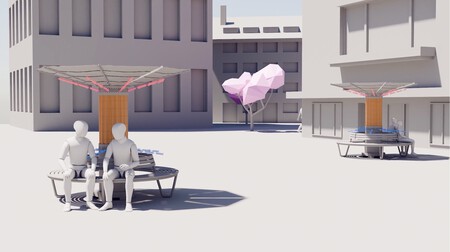
Innovative Cooling Solution: The Bloc Brick
This summer, Spain has witnessed significant climate extremes, with three of the ten hottest days in the last 75 years recorded in August. This oppressive heat creates an urgent need for effective cooling solutions, urging people to rely on air conditioning. However, Spain’s situation is not an isolated one; numerous countries are experiencing a surge in the number of heat days, prompting a global innovation response.
Enter the Bloc brick, an innovative creation by Swedish designers Luc Schweizer and Andrin Stocker from the Zurich University of the Arts. The duo aims to transform urban spaces into cool havens , harnessing the ancient principles of botijo technology, which utilizes evaporation to lower temperatures.
How Does Bloc Work?
The Bloc is designed to be more than just a conventional building material . It integrates the principles of a wind tunnel and a water tank to create a unique cooling solution. The goal? Lower the ambient temperature around the brick by an impressive nine degrees Celsius , achieved through a combination of solar energy and evaporation cooling.
In essence, the Bloc draws inspiration from the traditional botijo , a clay vessel used to keep water cool. The botijo operates by allowing water to seep through its porous walls, where it evaporates, thereby extracting thermal energy and keeping the remaining liquid cooler. Bloc takes this age-old concept and modernizes it through technological enhancements .
Designed for Sustainability
What sets Bloc apart is its sustainability . It includes a fan that propels air through the wind tunnel created by the bricks, thereby distributing cooler air into the surrounding area. This setup is powered by solar panels , ensuring a minimal environmental footprint.
Each brick contains a small water tank , estimated to be refilled with rainwater collected naturally by the design or supplemented with municipal water service. This unique aspect is crucial for the system’s efficiency, as the amount of water available directly impacts its cooling ability.
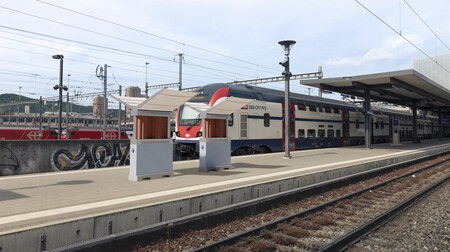
Beyond the individual brick , designs also include amenities like shaded benches and cool bus stops , demonstrating Bloc’s versatility. The innovation provides not just a cooling method but also creates comfortable public spaces for urban dwellers and visitors alike.
Future Prospects for Bloc
While promising, it’s important to note that Bloc is currently in its prototype stage. The designers are working on a 1:1 scale version to test its effectiveness in a real urban environment. Until then, widespread applications of this innovative technology may take time to materialize.
Moreover, there are opportunities to explore indoor applications, such as integrating Bloc into building facades to cool large spacious interiors like exhibition rooms. The potential is vast and could redefine urban architecture.
Global Context and Similar Innovations
Interestingly, this concept is not entirely unique. In India , similar innovations are being tested—clay flutes utilizing the same technology to cool spaces effectively. While these systems can reduce temperatures significantly, they share the common challenge of needing a steady water supply.
Bloc requires approximately 50 liters of water on hot days, a consideration that could pose practical challenges. Yet the exploration of ancient technology to combat modern climate challenges is indicative of a greater trend in sustainable design.
The Importance of Material Innovation
As cities around the world grapple with heat, water shortages, and rising temperatures, the discovery and use of materials that resonate with ecological awareness become vital. The Bloc brick embodies a return to traditional materials while embedding them with modern functionality to address contemporary urban issues. Whether Bloc defines the future of urban cooling or inspires further innovations remains to be seen, but its creation signifies a significant step towards considering sustainable solutions for our increasingly warm planet.