
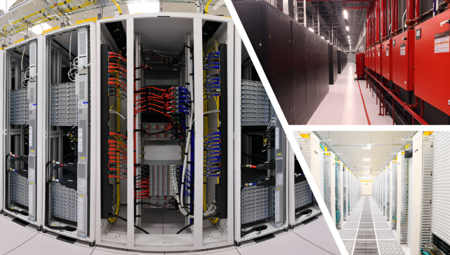
Artificial Intelligence has seamlessly integrated into our daily lives, but many people overlook the substantial energy required to run tools like ChatGPT or Copilot. On May 7, 2024, Microsoft announced the commencement of operations in its “Central Mexico” data center region, which comprises several sites in the Querétaro Metropolitan Area. Nonetheless, this deployment faces notable challenges: as reported by the company, one of these centers, Columbus, will not have access to electric power until mid-2027 and has been granted permission to temporarily operate using gas generators.
The proximity of data centers to users is crucial, as it minimizes latency, enhances service quality, and fulfills data residency requirements. These technical benefits are contingent on a robust electricity grid that can support continuous operations and cooling systems. Microsoft has underscored the ambition of its project in Mexico, aiming to provide local access to services like Azure, Microsoft 365, and Dynamics 365. The company envisions this infrastructure as an “avant-garde” initiative that strives to foster innovation in the region.
The Achilles Heel of Deployment: Energy
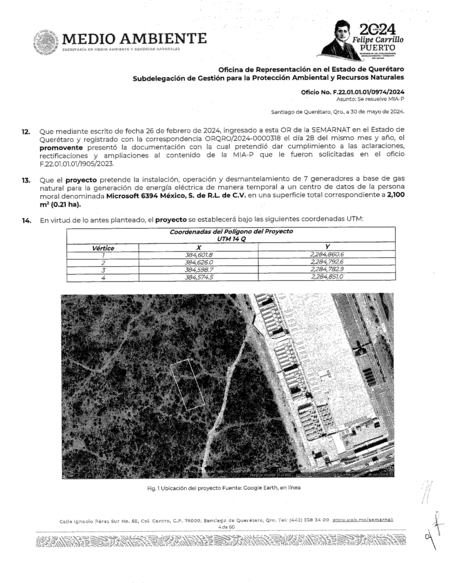
In a 2023 submission to the Ministry of Environment, Microsoft acknowledged that although the data center was set to connect within planned timelines, the actual energization would not be feasible until the second quarter of 2027. To address this gap, seven generators were approved to operate for 12 hours daily, covering 70% of the Columbus center’s demand for at least four months.
According to Rest of World, Mexico currently hosts around a hundred data centers, with over $7 billion in investments from companies such as Microsoft, AWS, and Google since 2020. Querétaro has emerged as a primary hub, housing 15 facilities that consume about 80% of the sector’s energy demand, translating to around 200 MW. Notably, the Mexican Institute for Competitiveness projects that by 2030, the electricity grid could face a shortfall of 48,000 MWh—more than half of its 2023 output. With over 70 new centers anticipated in the next five years, the disparity between generated capacity and electrical transmission poses a significant threat.
Microsoft has established ambitious environmental goals, aiming to achieve negative carbon emissions by 2030, eliminate all historical emissions by 2050, and rely on 100% renewable energy contracts by 2025. Contrarily, the Columbus center’s temporary reliance on gas generators until 2027 raises questions about the sustainability of its operations. What remains unclear is how long these generators will be utilized or what alternative solutions Microsoft intends to implement in the interim. Currently, the company has not disclosed the energy sources being used at Columbus.

The launch of the Central Mexico region represents a pivotal move toward boosting the country’s digital transformation and attracting foreign investments. However, the energy landscape presents a critical challenge: the infrastructure necessary to support this growth is lagging behind technological aspirations. The discord between sustainability pledges and the limitations of the electricity network serves as a reminder that the so-called cloud, rather than being an ethereal concept, relies on tangible foundations made up of cables, concrete, and megawatts. This dichotomy highlights the complex relationship between advancing technology and the available resources that power it.
Images | Microsoft (1, 2) | Screen capture