
We are so accustomed to GPS that, when it suddenly disappears, a simple journey can become a headache. It is not that we have lost the ability to interpret the signs of a lifetime, but that the way of moving through big cities has changed so much that this technology has become indispensable.
The M-30 is a prime example. Its tunnels form one of the most complex systems in Europe and, for many drivers, entering them poses a risk of disorientation. Taking a wrong turn and ending up kilometers away from your destination is not uncommon, as both locals and visitors to Madrid can attest. The problem is clear: the GPS signal is often lost underground and can return absurd data.
Aware of this issue, the Madrid City Council announced a plan in September 2024 to install electronic beacons using Bluetooth technology. Installation began in April 2025, and just five months later, the system is already underway. The goal is to continue adding more beacons over time, but the current network already allows assisted navigation to function effectively in the M-30 tunnels. For a roadway that serves as a crucial ring road for the capital, this advancement is significant: navigating through it should no longer be a leap of faith.
An Aid That Comes at the Right Time
Getting through the M-30 not only involves navigating its intricate tunnels; ongoing construction at critical junctions like the A-5 and the sales zone, along with usual traffic jams, means any misstep can be very costly. Ensuring that we don’t make a wrong turn or take the incorrect exit is not merely a desire; it is a way to save precious time and avoid frustrations on a daily basis.
- 1,600 devices have been installed along 48 kilometers of tunnels, with an investment of €141,000.
- The objective is to reach a total of 2,700 beacons by the end of the year, as installation continues throughout the rest of the underground network.
- These are low-consumption devices that operate on batteries, boasting an autonomy of four to six years, and emit a one-way signal without collecting user information.
- Once a signal is detected, the smartphone calculates the driver’s position in real time, maintaining navigation even without GPS coverage.
- Thanks to the use of Bluetooth Low Energy, the impact on the mobile battery is minimal.
A Huge Impact on Daily Mobility
The M-30 accommodates the passage of more than half a million vehicles daily. Addressing the GPS signal loss problem significantly improves the experience for hundreds of thousands of drivers who rely on this route to commute to work, return home, or reach any point in the city.
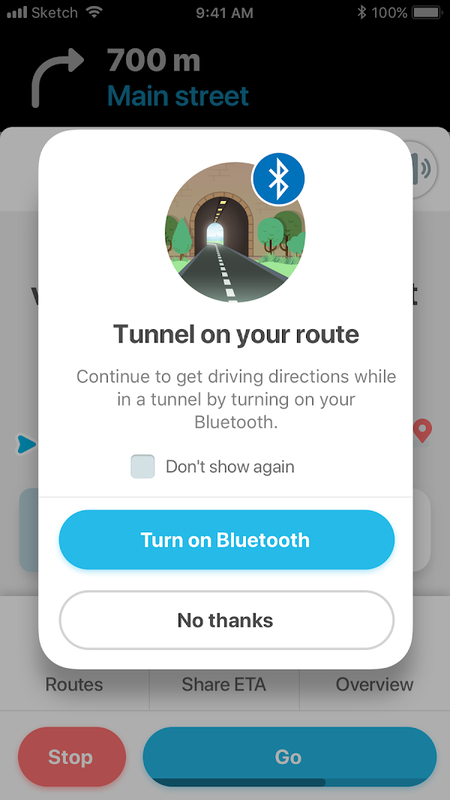
Furthermore, a noteworthy aspect is that these beacons do not require additional mobile data or complicated setups; users simply need to turn on Bluetooth and grant permission to their navigation application.
This initiative positions Madrid as the European city with the largest network of active beacons, and the second in the world after Sydney. This accomplishment is due to the cooperation between the City Council of Madrid, Madrid Calle 30, Waze, Google, and Imalesapi, the company responsible for the installation.
The challenge was substantial: The M-30 features a multitude of entrances and exits, in addition to increasingly complex sections, such as the stretch from the Prague bridge to the Toledo bridge, which includes two parallel but overlapping tunnels.

Other cities are already employing similar beacon technology, such as the Paris Network, which utilizes beacons in the Tunnels of the Défense and La Périphérique. Moreover, cities outside Europe also serve as examples: the Lincoln tunnel under the Hudson River in New York, the Queens-Midtown tunnel under the East River, and the Hugh L. Carey tunnel, which connects Brooklyn with Manhattan.
With this, Madrid joins a very short list of cities committed to this technology, facing one of the most demanding scenarios on the continent.
How to Activate It on Google Maps and Waze
The system is already operational in the two most popular navigation applications, but with some differences.
- Google Maps: On Android, go to Navigation settings and enable the option Bluetooth tunnel beacons. Currently, it’s not yet available on iOS.
- Waze: Simply ensure Bluetooth is active and permissions are granted. If Bluetooth is turned off, the app will notify users upon approaching a tunnel with beacons, prompting them to activate it at that moment.
Images | Google | Madrid City Council