
US Actions Against Venezuelan Drug Traffickers: An Escalating Military Presence
The United States has recently intensified its military focus in the Caribbean, launching a second attack against an alleged vessel linked to Venezuelan drug traffickers. This operation, ordered by former President Donald Trump , was characterized by claims of “narcoterrorism,” and a video circulated showcasing the impact that left three individuals dead. However, the authenticity and credibility of the evidence supporting these claims remain questionable, with critics pointing out that there has been no confirmed association with drug trafficking.
The Context of Increased Military Activity
At the start of September, a previous attack on what was labeled a “drug ship” resulted in 11 fatalities . This spike in military operations corresponds with the U.S. Navy’s bolstered presence in the area, deploying eight ships, including destroyers, a cruise ship, an amphibious assault vessel, and a nuclear submarine. Marco Rubio , a prominent Republican Senator, has advocated for stringent actions against suspicious vessels in the region, increasing the pressure on Venezuela.
President Nicolás Maduro of Venezuela has denounced these military actions as “aggression” occurring in international waters, labeling them as deliberate moves to incite regime change. He asserts that communication between his administration and Washington has deteriorated, with dialogue essentially limited to issues surrounding the repatriation of Venezuelan migrants. Despite rejecting the U.S. accusations of his connections to the “Los Soles” drug cartel, Maduro is faced with a significant bounty of $50 million being offered by the U.S. for information leading to his capture.
The Strategic Role of Roosevelt Roads Naval Station
While the immediate implications of Washington’s military initiatives are still to be seen, a critical element comes from the Naval Station Roosevelt Roads in Puerto Rico. Once closed in 2004, it has been restored as a strategic operation node against drug trafficking in the Caribbean, enhancing military pressure on Maduro’s regime.
The introduction of F-35B stealth fighters , alongside logistical support from aircraft like the C-5 Galaxy and C-17 Globemaster III , has revitalized the operational capacity of the airport. Furthermore, military personnel are re-establishing the control tower’s functionality to facilitate air operations essential for forthcoming missions, thereby transforming an infrastructure that had long been stagnant.
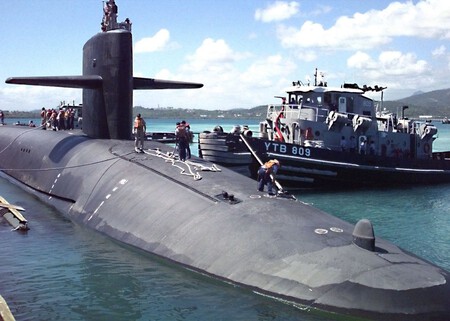
Ohio Class ballistic missile submarine at the Roosevelt Roads Naval Station, 1997
Historical Importance and Future Prospects
Roosevelt Roads, with its extensive facilities, provides an unparalleled aeronaval duality that enables rapid deployment and acts as a support center for various military operations. Established in 1943 and initially intended for the regional defense of the Caribbean, it played a prominent role during the Cold War as a pivotal base for the U.S. Sixth Fleet .
The naval base underwent significant expansions during contentious geopolitical moments, adding over 100 miles of infrastructure and enhancing its ability to execute military operations across the Caribbean. However, social pressures and environmental concerns stemming from its activities led to its eventual closure.
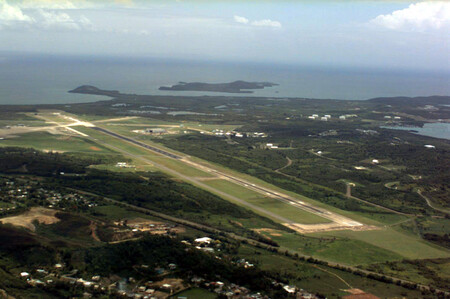
Aerial view of the base
Debate and Considerations in Puerto Rico
Despite the closure, Roosevelt Roads has continued to function at a basic operational level. Its role as a logistical hub became evident during the response to Hurricane Maria in 2017. More recently, significant military exercises indicate that the base could serve a renewed purpose in the U.S. strategy against drug trafficking and regional instability.
In Puerto Rico, a proposal has emerged urging the evaluation of Roosevelt Roads’ infrastructure and its potential reallocation for national security purposes . Senate resolutions advocate for utilizing the base as a means to both bolster the defense of the Caribbean and spark economic revitalization in the area around Ceiba by employing local resources and creating job opportunities.
This dual-purpose framework—strengthening national security while ensuring economic recovery—highlights the ongoing debate regarding the militarization of Puerto Rico. While some residents remain wary of the historical impact of military activities, there is a growing sentiment that a properly managed operational base could yield positive outcomes in both security and economic stability for the region.
Looking Ahead: The Path of U.S. Military Engagement
The future of the U.S. military’s engagement in the Caribbean remains uncertain. The immediate focus appears to be on maintaining Roosevelt Roads as a joint training, logistics, and operational hub, adapting its role based on the evolves regional dynamics. In the medium term, heightened political and military initiatives in Central and South America could further amplify the significance of the base.
As the U.S. solidifies its military presence, debates will undoubtedly continue to swirl around the balance of security needs and community concerns, with Roosevelt Roads serving as both a symbol of U.S. military power and a potential engine of economic change for Puerto Rico. The strategic initiatives undertaken today may well set the stage for future military operations and regional policies that will impact both the Caribbean and the broader geopolitical landscape.
As realities unfold, the awakening of previously dormant bases in response to contemporary challenges illustrates the adaptive nature of U.S. military strategy, focusing on both preserving security and fostering regional stability.