
The Evolution of Air Conditioning: China’s Innovative Approach
When heat waves hit, cities around the world scramble for solutions to combat rising temperatures. Countries like France struggle with traditional air conditioning systems, while others are exploring innovative cooling methods. Notably, China is leading the way with a unique approach to building air conditioning that minimizes electricity consumption and enhances community comfort.
Misting Systems: A New Form of Air Conditioning
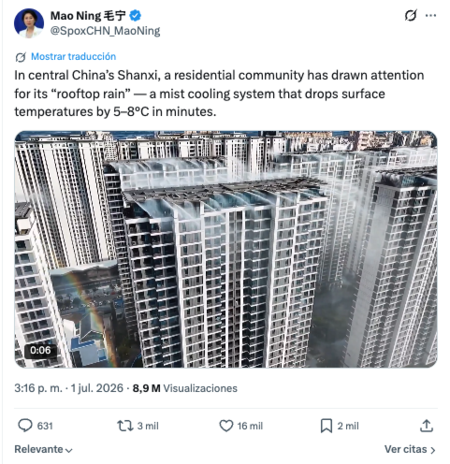
In areas like Yuncheng, located in Shanxi province, communities are adopting water-spraying mist systems from their rooftops. This initiative facilitates shared outdoor cooling spaces by reducing surface temperatures by 5 to 10 °C in mere minutes. The technology, like the HY-WSWD system, enables up to 30% reductions in air conditioning energy consumption, transforming how air conditioning is perceived.
A Necessity Amidst Growing Demand
This innovative cooling technology is particularly critical given that China is the world’s largest air conditioning consumer. The International Energy Agency forecasts that refrigeration demand in Asia is set to triple by 2050, directly correlating with rising electricity consumption during hot months. Therefore, technologies enabling buildings to cool before reliance on traditional air conditioning not only benefit individual households but also the overall electricity grid.
Historical and Cultural Context
Interestingly, while this misting technology may seem modern, its roots extend back thousands of years. Ancient Chinese architecture, such as the Hanliang Hall of Daming Palace from the Tang dynasty, employed similar methods, utilizing circulating water to cool space through evaporative cooling.
The Scale of Innovation
What sets these misting systems apart is their large-scale application. Unlike the small, localized air conditioning units commonly found in Western cities, China’s initiative targets entire building rooftops, significantly reducing heat absorption at the source. This approach not only cools the buildings but actively contributes to lowering urban heat island effects, a common issue exacerbated by traditional air conditioning systems.
The Limitations of Evaporative Cooling
However, as with any technology, limitations exist. Evaporative cooling is most effective in dry climates, such as those in Shanxi. Humid regions may experience increased discomfort as this method raises relative humidity. Moreover, water consumption becomes a challenge, especially in areas where water scarcity is a concern, leading to questions about the balance between energy savings and water stress.
Conclusion: A Paradigm Shift
China’s innovative air conditioning strategy represents a paradigm shift in how we understand building cooling systems. By turning to historical methods adapted for contemporary needs, they are combating climate change with energy-efficient solutions that offer a glimpse into the future of urban sustainability. While not without challenges, the potential for these systems to revolutionize air conditioning is significant, paving the way for a healthier environment and energy-efficient cities.