
The Controversial Future of Mount Sinai: A Tourist Megaproject at Risk of Dismantling History
Few places in the world can boast the rich history and symbolism of Mount Sinai . Revered in Judeo-Christian tradition, this sacred mountain is where God commissioned the Ten Commandments to Moses. Nestled at its base is the Saint Catherine’s Monastery , an architectural gem from the seventh century, which has clung to its original purpose through the ages. However, both these monumental landmarks now face radical transformations as the Egyptian government embarks on a controversial tourist megaproject aimed at promoting the region.
The debate surrounding this megaproject reflects the broader challenges faced by tourism development and heritage conservation —two realities that often clash. This harmonious yet contentious landscape of Jabal Musa (Mount Sinai) now stands at a crossroads, where the very essence of its cultural and religious significance may be at stake. The project, known as the ‘ Great Transfiguration Project ‘, is touted as “a gift” from the Egyptian authorities to the world, yet not everyone shares this view.
The Vision Behind the Megaproject
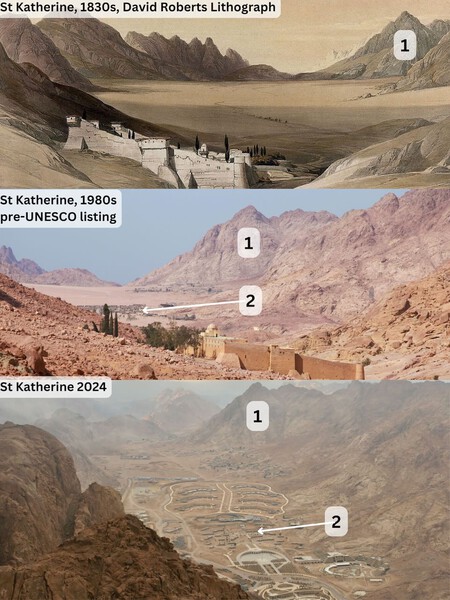
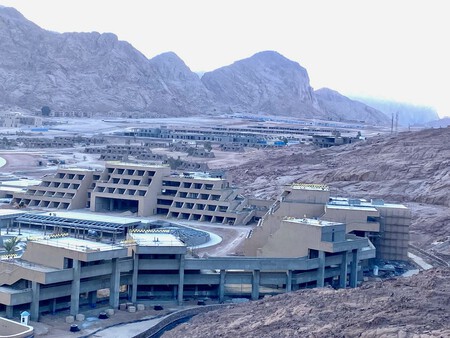
Launched in 2020 by President Abdel Fattah el-Sisi , the Great Transfiguration Project aims to transform Santa Catalina , a small community in the Sinai Peninsula , into a hotspot for religious and ecotourism. The initiative encompasses 14 different projects geared toward enhancing the area’s appeal by tapping into its rich archaeological and religious heritage. Moreover, it includes plans for a commercial hub , luxury hotels, and even a cable car to transport visitors to the mountainous site.
Advocates like Minister Sherif el-Sherbiny celebrate the project as essential for stimulating economic growth and enhancing accommodation facilities for developers and tourists. The Egyptian administration promotes it as a key initiative to position the region as a diverse tourist destination, with claims that it combines tourism with environmental preservation .
The On-the-Ground Reality
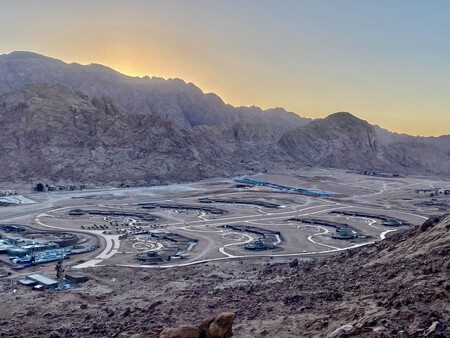
However, this grand vision is turning into a contentious reality. The Egyptian authorities report that 90% of the project has already been completed, leading to visible changes across the El-Raha plain. Organizations like World Heritage Watch (WHW) have criticized the initiative, arguing that the environmental toll and the erosion of local communities are alarmingly high. The Bedouin tribes , particularly the Jebelya , have been vocal about losing significant portions of their tribally owned land. Properties, graves, and culturally sensitive sites have been demolished to make way for the new developments.
A Deepening Divide: Local Voices vs. Economic Interests
Critics argue that the Egyptian government has largely ignored the rights of these indigenous groups while courting foreign corporations, including a well-known German hotel chain. WHW’s recent statements lament how development initiatives violate environmental laws and disregard the needs and rights of those residing in the region. Despite the concerns raised, the Egyptian administration continues to frame the megaproject as a unifying gift for all religions.
The Historical Heartbeat of Saint Catherine’s Monastery
Adding to the complexity of this situation is the proximity of the Saint Catherine’s Monastery , the oldest continuously inhabited Christian monastery. Established in the seventh century, it is recognized as a UNESCO World Heritage Site due to its exceptional Byzantine architecture and its invaluable collection of ancient manuscripts. Recent legal disputes about the land it occupies have stirred further unease about potential injustices faced by its guardians, namely the Orthodox Monks.
Judicial Developments: Threats to Cultural Heritage
In a recent ruling, the court granted the monastery usufruct rights over 57 plots but ordered the evacuation of 14 plots critical for its daily operations. Many assets vital for the monastery’s existence, including orchards and water sources, could be lost to the state. Experts suggest that the timing of this ruling is less than coincidental, occurring as the megaproject rapidly materializes, fueling fears of a “land grab” that endangers the spiritual and physical environment surrounding Mount Sinai.
Religious leaders like Jerome II of Athens , the Orthodox archbishop, label these developments as unprecedented threats to the monastery’s future. They worry that the expropriation of historical properties may ultimately erase centuries of heritage. Yet, the Egyptian government contends that it will uphold the monastery’s status and safeguard its religious significance.
In conclusion, the megaproject at Mount Sinai serves as a case study in where tourism and heritage preservation often collide. As the situation unfolds, it raises critical questions about the future of sacred spaces and the indigenous communities tied to them. The balance between development and preservation remains precarious, amplifying the need for dialogue to ensure that history is not sacrificed at the altar of modernity.