
Apple’s Revolutionary Front Camera in iPhone 17
Apple has presented an innovation that has gone unnoticed among the most striking improvements of the iPhone 17 : a completely redesigned front camera with a square sensor .
Why is it Important?
For the first time in the history of the iPhone, Apple has abandoned the traditional 4:3 format of the front camera. The new square sensor allows group selfies horizontally without turning the phone. This groundbreaking change opens new possibilities for photography enthusiasts and casual users alike. With this enhanced functionality, capturing moments with friends and loved ones becomes more intuitive and natural.
What Has Happened?
Apple has equipped this system in all models of the new generation: iPhone 17 , iPhone 17 Air , iPhone 17 Pro , and iPhone 17 Pro Max . The resolution has increased from 12 to 18 megapixels , ensuring that the quality of images meets the high standards set by modern users.
- The square sensor works as a broader canvas than different formats, allowing for creative flexibility.
- AI technology automatically detects how many people are in the frame and adjusts the field of vision accordingly.
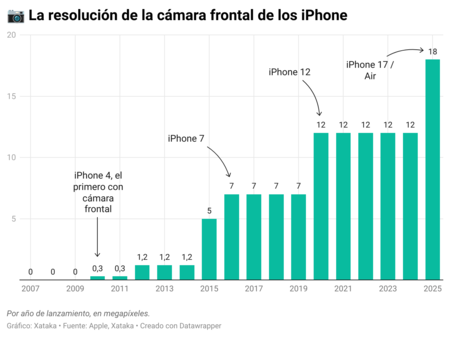
However, the final result is 7-megapixel photos , according to the images shown by Apple during the Keynote.
In Detail
The new camera allows three different formats:
- 4:3 for individual selfies .
- Horizontal 16:9 for group photos .
- Square format ideal for social media posts.
During video calls, Center Stage, a feature already familiar to many, automatically keeps the user centered in the frame, even if they move. This function also allows recording simultaneously with the front and rear cameras , enhancing the user experience for content creation.
Yes, But…
No Android manufacturer has implemented precisely this solution. Brands like Samsung , Xiaomi , Vivo , or Google have opted for ultra-angular front sensors to achieve similar effects, but they maintain the traditional rectangular format. The advantage of Apple’s approach lies in its simplicity : it prevents users from physically turning the device to change the orientation, an especially convenient feature when the phone is held with one hand.
The Context
This improvement comes after years of relative stagnation in Apple’s front cameras. The last significant update was the jump to 12 megapixels with the iPhone 12 in 2020. The commitment to the square sensor illustrates Apple’s strategy of elevating user convenience by eliminating unnecessary gestures and adapting to user needs.
As Apple continues to evolve, we can expect further advancements that focus on enhancing the user experience while maintaining high-quality standards. The transition to a square sensor is just one of many innovations that might shape the future of mobile photography.
The potential for the new front camera technology is monumental, influencing everything from individual selfies to expansive group photos. Apple’s focus on versatility and enhanced photography capabilities aligns with the growing importance of social interactions in today’s digital landscape, making the iPhone 17 a worthy contender in the smartphone market.