
Understanding Ultraprocessed Foods: A Modern Dilemma
When visiting the supermarket , it’s common to be surrounded by an array of enticing products like fried potato chips , cookies , soft drinks , frozen pizzas, and chicken nuggets. These items belong to the category known as ultraprocessed foods (UPF) —products that have gone through extensive industrial processing and often contain ingredients that are rarely found in a typical home kitchen, such as corn syrup or hydrogenated oils .
The Awakening
A debate that began in the early 2000s. The spotlight was first shone by Brazilian researcher Carlos Monteiro , who set out to understand the rising rates of obesity and type 2 diabetes in Brazil. His research revealed a perplexing trend: people were purchasing less sugar and salt than before. The hidden factor? Many were substituting basic ingredients with ready-to-consume, precooked options laden with high levels of these substances. This pivotal discovery initiated a global dialogue about the impact of ultraprocessed foods on health.
Growing Evidence of Health Risks
Research surfaces. Following Monteiro’s findings, a burgeoning body of research began to explore the potential link between the high consumption of ultraprocessed products and a growing list of health issues that had escalated at an alarming rate. Numerous studies have since established a strong correlation between diets rich in ultraprocessed foods and increased risks of obesity , cardiovascular diseases , type 2 diabetes , various cancers , as well as depression and anxiety .
A comprehensive study involving over 110,000 adults in the United States highlighted a concerning fact: individuals with the highest consumption of ultraprocessed foods were 4% more likely to die from any cause during the study period.
Variations Across Borders
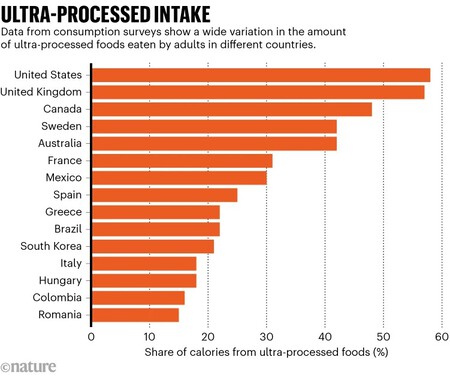
Not all countries consume the same amount of ultraprocessed foods. For instance, while in the United States and the United Kingdom , nearly 60% of calorie intake comes from ultraprocessed foods, in Spain , this figure hovers around 26-30% . Although Spain is relatively lower on the scale, recent studies, including one published by The BMJ , raise alarms that strong evidence associates ultraprocessed food consumption with cardiometabolic health problems , mental disorders, and increased mortality.
The Divided Scientific Community
Is ultraprocessing the true villain? Despite the overwhelming correlations, not every scientist is convinced that categorically vilifying ultraprocessed foods is warranted. Critics argue that the group of ultraprocessed foods is too diverse and cannot be generalized. This argument raises a question: is it fair to place donuts, fried potatoes, and supermarket yogurt in the same category?
Some researchers maintain that the association between poor health and ultraprocessed foods may stem from their high content of fats, sugars, and salts, coupled with low levels of vitamins and fiber. A clinical trial conducted at University College London examined two diets—one based on minimally processed foods and another incorporating ultraprocessed items, ensuring identical levels of key nutrients. Surprisingly, participants on the minimally processed diet lost twice as much weight, suggesting that nutritional composition alone does not account for health outcomes.
Beyond Caloric Intake
Insights into consumption patterns. A groundbreaking study led by physiologist Kevin Hall from the National Institutes of Health locked 20 adults in a research facility and allowed them to eat freely. Results showed that during the ultraprocessed diet phase, participants consumed an additional 500 calories daily , leading to nearly a kilogram of weight gain.
Hall’s research, alongside others, highlights that energy density and food texture play crucial roles. Many ultraprocessed foods contain less water, concentrating more calories into fewer grams, while their softer textures cause quicker consumption. When we eat faster, our brains lack the time to register fullness, leading to overeating.

Strategies for Better Choices
What’s next? Although the debate regarding the definition and mechanisms of ultraprocessed foods continues, the overall trend is evident: a high intake of these products correlates with poorer health outcomes.
However, an outright ban doesn’t seem feasible. Hall himself, recognizing his eating habits, advises moderation: “Incorporate more vegetables, legumes, fruits, and whole grains into your diet. Limit added sugars, sodium, and saturated fats. Select ultraprocessed foods that cater to convenience without compromising health, while avoiding those that compound your issues.”
It’s clear that understanding ultraprocessed foods is essential for making informed dietary choices that promote long-term health and well-being.