
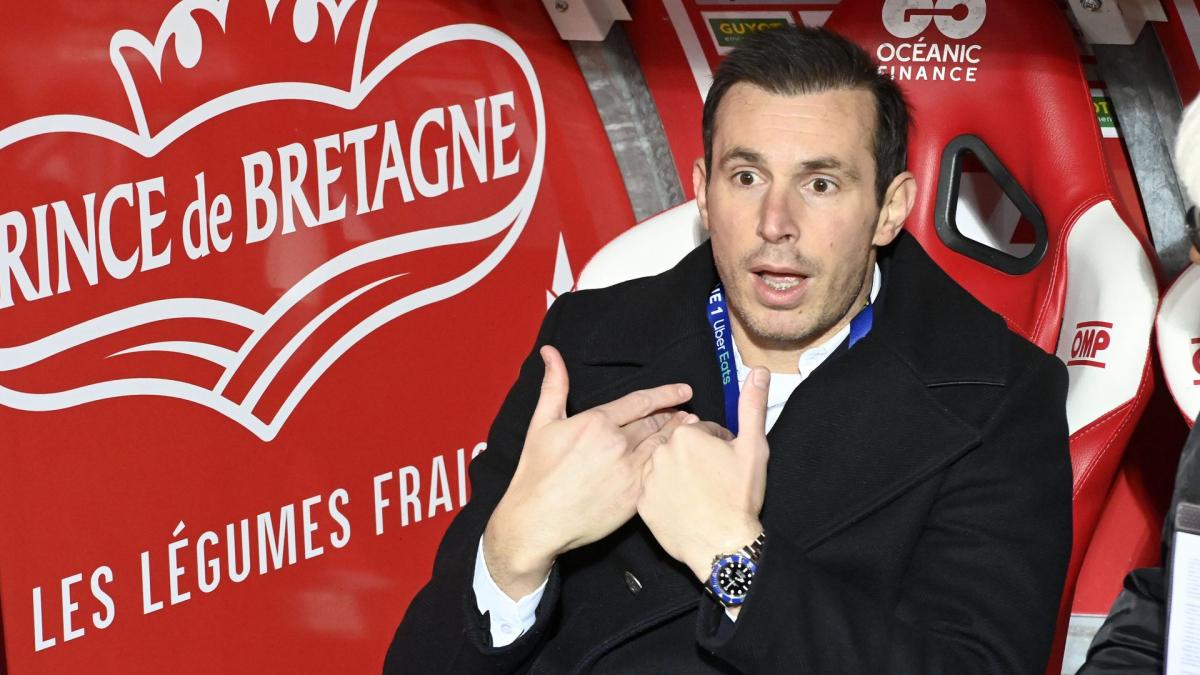
Grégory Lorenzi Reflects on a Challenging Transfer Window for Stade Brestois
The summer transfer window of 2025 has proven to be a tumultuous period for Stade Brestois, as the club saw an unprecedented turnover with 15 departures and 8 arrivals. Grégory Lorenzi, the sports director of the club, recently shared his insights on this complicated situation and the strategic choices made to ensure the club’s competitive edge while staying financially afloat.
Lorenzi’s comments, delivered during an interview with Ouest-France, highlighted the significant challenges involved in developing a robust team in such uncertain conditions. “I don’t build a transfer window through names,” he remarked, hinting at the financial constraints that restrict the club’s operational flexibility. These limitations have forced the club to be more judicious in its dealings.
“It is important to understand that I am not the club’s decision maker. This year, we have a president who is very involved and has asked me to execute strategies that would help balance the club’s financial imperatives,” Lorenzi elaborated. The primary focus, he mentioned, has been on selling players before reinvesting in new talent. His approach reflects a pragmatic viewpoint—one rooted in the realities of financial sustainability.
Balancing Financial Dynamics and Team Strength
One of the core tenets of Lorenzi’s strategy is to balance the incoming and outgoing talent through a blend of youth and experience. “Of course, we are the kind of club that looks for players who may come from lower competitions,” he explained. This strategy not only helps save costs but also allows the club to identify undiscovered talents with potential for development.
Lorenzi emphasized that the club does not possess the financial clout to purchase high-value players, stating, “People must understand that we do not have the ability to buy players at €3 million or €4.5 million.” Such transparency provides insights into the club’s scouting and recruiting philosophy. By carefully selecting players who offer a promising path for progression, Stade Brestois aims to build a solid team foundation.
Examples of Past Success
Lorenzicited the example of Lucas Tousart, a player who adds significant experience to the squad. He also reflected on the evolution of Mahdi Camara, who has transformed from a criticized signing three years ago into a standout player in the top leagues. “Today, Mahdi Camara has become a top Ligue 1 player,” Lorenzi pointed out, echoing the importance of patience and vision in player development. “When I brought Mahdi in, people were skeptical, but the results speak for themselves.”
Such examples serve as both a reminder and a motivation for the club’s scouting team. Identifying players with potential who may not yet have shone on the bigger stages can yield great rewards if nurtured correctly. This is crucial for a club like Stade Brestois, which operates within strict financial boundaries yet aspires for growth and improvement on the field.
Community and Fan Engagement
Beyond roster changes, Grégory Lorenzi emphasized the importance of maintaining a strong connection with the club’s fans and community. “We want our supporters to feel that the players we bring in can contribute to the spirit and success of the club,” he remarked, underlining their integral role in the team’s journey. Effective fan engagement can offer emotional support that is just as valuable as financial resources.
Engaging with the fanbase not only builds loyalty but also instills a sense of pride in representing a club that values its history while looking forward to the future. Such connections become vital in times of transition, where both players and supporters must navigate the challenges of the current landscape together.
The Path Forward
Looking ahead, Lorenzi indicated that the team would continue to evolve by adopting a fluid approach to recruitment. The focus will remain on targeting players who can contribute both immediately and in the long term. He expressed optimism regarding the player development process and the collaborative effort among the coaching staff, players, and management to realize the club’s vision.
In summary, while the summer transfer window may have posed challenges, Grégory Lorenzi’s strategic insights reveal a commitment to a sustainable approach in building Stade Brestois. He emphasizes a meticulous blend of youth, experience, and financial prudence. With the right strategy, the club aims not just to survive in the competitive landscape of football, but to thrive, showcasing that financial constraints can lead to innovative solutions and a focused vision for success. The road ahead may be complex, but with determination and a clear plan, Stade Brestois is poised for a promising season.