
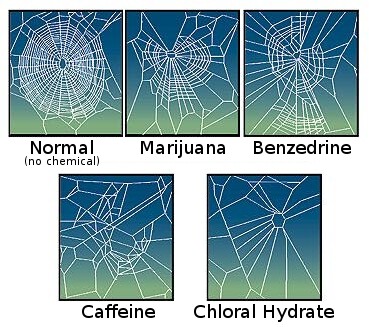
The Intriguing Experiment of NASA with Spiders and Toxicity Measurement
For decades, humanity has been involved in animal experimentation, a practice that has sparked numerous ethical debates . Amid rising concerns about animal rights and the prevalence of vegan products devoid of animal testing, even the most technologically advanced organizations have not shied away from this method. A remarkably curious experiment conducted by NASA in 1995 showcased the potential of using spiders as a medium to measure drug toxicity, blending science with a touch of creativity.
Understanding Toxicity Through a Unique Lens
The journey into this unusual experiment can be traced back to 1948 when researcher Peter N. Witt sought to assist zoologist HM Peters in altering the weaving patterns of his laboratory spiders. Instead of simply observing, Witt decided to administer various substances —ranging from LSD to caffeine—to these spiders. Intriguingly, while the schedule of weaving remained unchanged, the patterns themselves transformed based on the administered substance. This revelation proved to be an economic model that illustrated the neurological impacts of drugs on living organisms, albeit with limitations.
The Rationale for Choosing Spiders
Despite their fascinating behavioral patterns, the nervous systems of arthropods, including spiders, differ significantly from humans. Thus, while meaningful insights could be gained from studying these creatures, conclusions drawn may not directly apply to humans. In 1995, inspired by Witt’s prior work, NASA adopted spiders for new research endeavors. The aim was straightforward: measure the toxic effects of various compounds without resorting to mammals or other higher organisms that could raise ethical concerns .
The NASA Experiment Unveiled
Dubbed “Using Spider-Web Patterns to Determine Toxicity“, the experiment comprised exposing European garden spiders to a variety of drugs. To execute this, the researchers dissolved measured amounts of drugs in sugar water, subsequently administering them directly to the spiders either orally or through flies that had absorbed the solution.
After administering these substances, the spiders were allowed to produce their webs. The resulting structures were meticulously photographed and compared with previous webs woven by the same spiders before drug administration.
The Surprising Results: A Spider’s Take on Drugs
The results garnered from this unconventional experiment were as compelling as they were revealing. In addition to the initial observations, NASA employed rigorous statistical analyses to assess the changes in the completed webs. The study particularly highlighted how high doses of caffeine led to chaotic and incomplete webs , provoking a fascinating correlation between toxicity levels and the resulting web morphology. This correlation was not merely anecdotal; it served as solid evidence of the effects of drug toxicity .
The impact of drug administration was striking. As the spiders were exposed to increasing toxicity levels, the regularity and completeness of their webs diminished. This well-structured methodology transformed the experiment into a valid alternative for traditional toxicity tests, especially at a time when societal tolerance for animal testing was waning. Though chemical substances were administered to living beings, the approach was considerably less invasive compared to those involving mammals.
The Ethical Implications and the Future of Animal Testing
The success of this NASA experiment did not merely provide promising scientific data; it sparked renewed discussions regarding animal ethics in scientific research. By showcasing that less invasive, rigorous, and replicable methods could yield significant results, this experiment opened pathways for more ethical alternatives in toxicity testing.
In reflection, while the findings from the NASA spider experiment contributed valuable insights, they should be accounted for with caution. Despite the intriguing results, data derived from spiders cannot be directly applied to human physiology due to significant differences in neurological systems. For instance, while caffeine wreaked havoc on spiders, it doesn’t mirror the chaos it may create in human decision-making.
The legacy of both Peter N. Witt’s and NASA’s spider experiments underscores the complexity surrounding animal testing . They not only offer a glimpse into the effects of various substances on living organisms but also highlight the evolving discourse on ethics in scientific experimentation.