

The Complexity Behind Labor Roots for Nicanor Boluarte
According to recent investigative reports, new allegations have emerged against Juan José Santiváñez, implicating President Dina Boluarte in a network of political and legal maneuvers. The current investigations suggest that former Minister of the Interior, Santiváñez, was involved in creating labor roots for Boluarte’s brother, Nicanor Boluarte Zegarra, potentially to shield him from impending legal repercussions due to ongoing investigations.
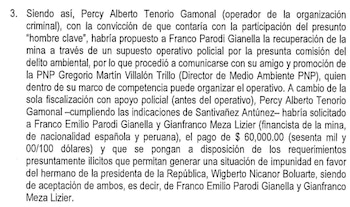
The timeline of these events points to a specific period between August and September 2024, where a plan allegedly orchestrated by Percy Alberto Tenorio Gamonal and businessman Franco Parodi Gianella came to light. They aimed to reclaim control over the “El Dorado” mining site and associated operations, allegedly with Santiváñez’s guidance. This arrangement reportedly involved activating a police operation under the guise of an environmental offense committed by unauthorized occupants of the land.
The fiscal documents indicate that an amount of $60,000 was initially discussed, which later escalated to $100,000, purportedly to ensure the illicit protection of Nicanor Boluarte. This was part of a broader pattern of maneuvering where Tenorio, under Santiváñez’s oversight, solicited financial arrangements that would benefit the Boluarte family.
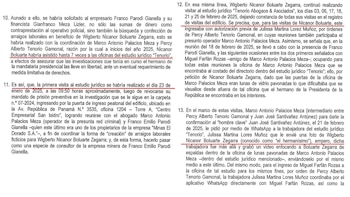
The investigation went further, revealing that Nicanor Boluarte reportedly engaged in seven visits to Tenorio’s legal office between January and February 2025. These meetings, meticulously documented within the office’s records, followed the lifting of a preventive detention order against him in a related case.
The strategy employed by Santiváñez’s network included establishing credible partnerships with companies that could facilitate operational activities under the pretense of legitimate work. However, the investigations concluded that many of these activities lacked substantive evidence of real work being conducted.
The allegations also extend to attempts to influence the Regional Government of Ayacucho in revising technical reports that would impose restrictions on the mining operations at “El Dorado.” One critical document, designated as “DREMA V14444.DOC,” was intercepted and indicated strategic alterations that would permit the continuation of extractive activities under the compromised agreements.
The culmination of these actions manifested in a police operation launched in December 2024, where 15 agents from the National Police’s Environmental Directorate executed strategies based on directives from Villalón Trillo and aligned interests, with logistical support funded by the mining company involved. Documentation from the case details internal communications regarding progress made in the operation and calculated distributions of the funds received, pointing to Santiváñez as a pivotal figure within this complex web.
In summary, the allegations encircling the Boluarte family and their associates underscore a growing narrative of political malfeasance and manipulation within Peru’s mining sector. The web of connections between Santiváñez, Boluarte, and various businesses raises significant questions regarding the preservation of law and order in the region amidst contested legal and ethical boundaries. The ongoing investigations promise to unveil deeper insights into these complex interactions, shaping the future landscape of Peruvian politics and governance.