
Juan José Santiváñez: A Controversial Return to the Ministry of Justice
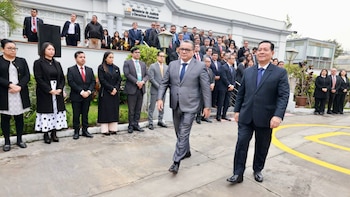
The appointment of Juan José Santiváñez as the new head of Justice and Human Rights has stirred significant political debate in Peru. Over the last few weeks, this move has attracted both criticism and support among various political figures and the public alike. Key figures have expressed their concerns, particularly given Santiváñez’s prior censure by Congress and the ongoing investigations against him, one of which involved current President Dina Boluarte.
While many are wary of Santiváñez’s track record, a faction of supporters has emerged, arguing for his capabilities and potential contributions to the Ministry. Surprisingly, this group includes not only members of the Ministerial Cabinet but also Congress members and local authorities.
Supporters Step Forward
Among the first to declare support for Santiváñez was Jorge Montoya, a member of the Honor and Democracy party. Montoya emphasized that Santiváñez had demonstrated “good management” during his tenure as Minister of the Interior, despite facing censure for not delivering significant results in combating crime.
“I opposed him being censored. My position with him has always been that I was doing a good job because we have verified it,” Montoya stated, asserting that Santiváñez possesses “a lot of capacity for action and management.”
In a similar vein, José Cueto, also from the Montoya bench, asserted, “More than the person, I defended the work that Mr. Santiváñez was doing because I have seen it. First, to clean the police a bit; second, to deactivate some organizations that were embedded among the police,” he remarked during an interview with RPP.
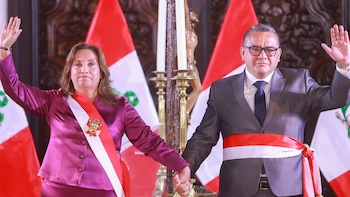
Héctor Valer, another supporter from the We Are Peru party, lauded Santiváñez, characterizing him as possessing “courage, capability, and knowledge for the position.” Similarly, Kira Alcarráz from We Can congratulated him on his appointment, asserting that Santiváñez represents a “true Minister of Justice in Defense of Peru.”
While some legislators showed enthusiasm for his return, others maintained a more cautious outlook. Miracles Jáuregui, for example, suggested waiting to evaluate Santiváñez’s work before making any definitive judgments. Meanwhile, Norma Yarrow indicated skepticism about Santiváñez’s qualifications but was willing to see how he performs within his first 100-day plan.
The Legal Perspective
Legal experts have jumped into the fray, discussing the implications of Santiváñez’s appointment. Diego Arteaga, a lawyer with Arteaga & Associates, clarified that the Constitution does not explicitly prohibit appointing a minister who has previously been censured. “In Article 132 of the Constitution, there is no mention of any prohibition, so there is no impediment to assuming the justice portfolio,” Arteaga explained.
Similarly, Jhuliana Atahuaman, a lawyer from the Southern Scientific University, asserted that the designation of Santiváñez is constitutional. She believes his questions surrounding him are primarily political. “Despite your tax investigations, there is no impediment to being able to assume a ministerial position since the case is only in an investigation and there is no sentence against him,” Atahuaman noted.
As the atmosphere becomes increasingly charged, the landscape of Peru’s justice sector will depend heavily on Santiváñez’s actions in the coming months. He faces significant challenges, and how effectively he handles them will shape public perception of his leadership.
The complexities surrounding his appointment reflect wider narratives in Peruvian politics, particularly in areas concerning accountability, transparency, and the interplay between power and justice. Whether Santiváñez will succeed in overcoming the challenges ahead remains to be seen, but his return marks a significant moment in a continually evolving political landscape.