
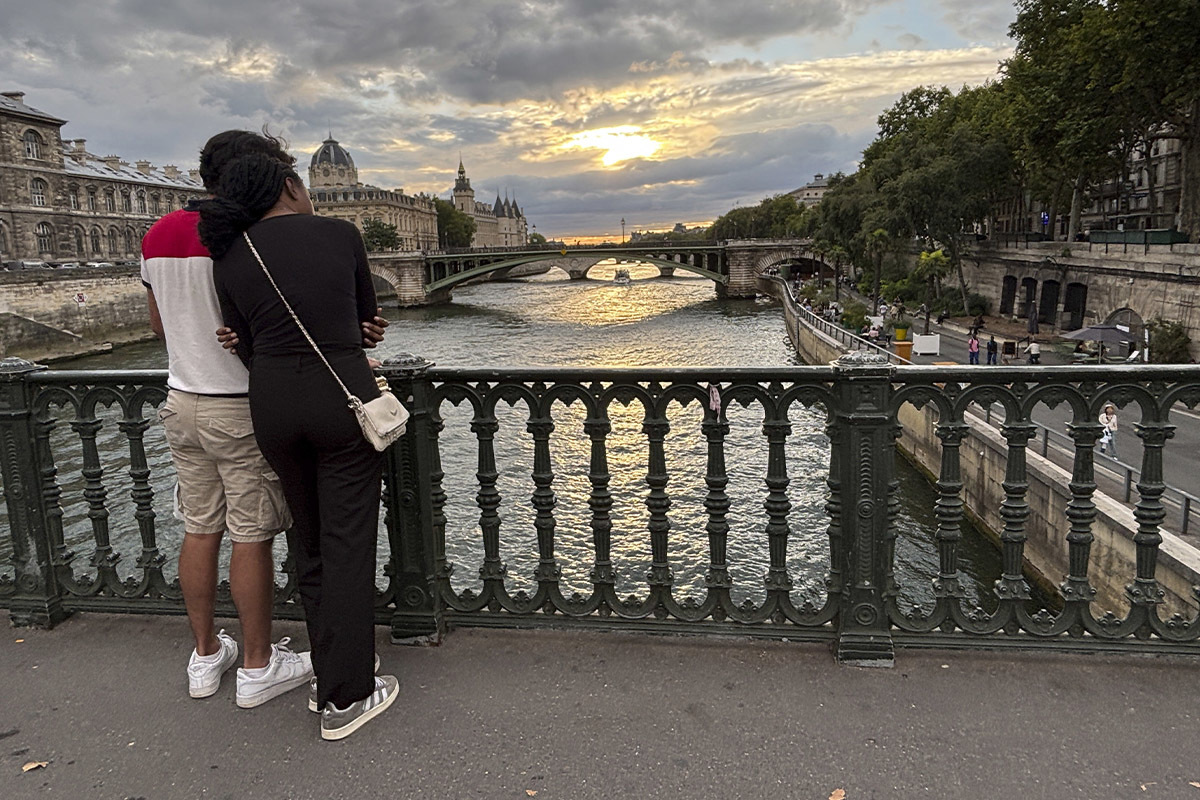
Paris or London. “Only the superlative comparison is acceptable,” penned Charles Dickens in A Tale of Two Cities, a narrative that whisked readers from the dullness of George III’s London to the frenzied Paris of the French Revolution (“Liberty, equality, fraternity… or death”). Times have changed, viewed as better or worse depending on perspective. Yet, the two capitals remain ensnared in their age-old rivalry as beacons of Europe .
Paris is famously dubbed “the City of Light” for being the first to implement gas public lighting, a feat some trace back to the era of Louis XIV, the Sun King. In contrast, London boasts the title of the first city with a subway , inaugurated in 1863 amidst the industrial fervor of the Victorian age.
A mere two hours and eighteen minutes is all the Eurostar needs to traverse beneath the English Channel, connecting the two cities that are merely 342 kilometers apart, as distinct as they are close . Despite their differences, comparisons abound: the Seine and the Thames, the Eiffel Tower and Big Ben, Notre-Dame and Westminster Abbey, the Louvre and the British Museum, Dickens and Balzac, Sherlock Holmes and Inspector Maigret, the blitz and occupation, the City and La Defense…
Comparing the incomparable could serve as material for a series or a book. Let’s confess from personal experience that Paris often feels like a coup de foudre, a love-at-first-sight moment that sweeps you off your feet. In contrast, London experiences more of a slow burn love, a passion that grows gradually over time.
Lutetia vs Londinium
In the tapestry of history, Paris and London are perpetually indebted to Rome . In the 1st century BC, during Emperor Augustus’s reign, the occupation of what would become Lutetia began in a marshy expanse along the Seine occupied by the Gallic tribe of the Parisii. By the 1st century, the layout of the Roman city took shape in a southern stretch along the Cardo Maximus , featuring its forum and an amphitheater. Today, children play football at the Arènes de Lutèce , where the amphitheater reemerged during renovations in 1869. This site is among the most significant Roman remnants in Paris, alongside the frigidarium of the Cluny baths, located in the heart of the Latin Quarter.
Londinium was the name the Romans gave to the site occupied by the Celtic village of Llyn Din . Fragments of the Roman city wall can still be seen at the Museum of London, tracing the perimeter of the modern-day City. The most visible remnants stand at Tower Hill, near the Tower of London. These Roman remains will continue to unearth themselves for centuries to come. This year, the ruins of the city’s first basilica were uncovered on Gracechurch Street.
The Straight Line vs the Meandering City
The French capital is the quintessential city of light.
Fast forward to 1852 , when Napoleon III tasked Baron Georges-Eugène Haussmann with the daunting mission of modernizing Paris. Haussmann razed 60% of the city , demolishing thousands of buildings, displacing the working class to the periphery, and opening wide avenues that gave the city its uniform and bourgeois appearance.
In stark contrast, London never had an urban plan, and its labyrinthine layout remains intact . In a classic of British humor, How to be an Alien, the Hungarian immigrant George Miekes advised Londoners to keep creating S- or W-shaped streets to maintain the city’s harmony. “London was designed by a drunken driver, which is why it’s full of bottlenecks,” taxi driver Mark Solomon told me once, author of the quirky book of proverbs Black Cab Wisdom.
While Paris embodies the straight line of Haussmannian design, London is the meandering, multi-centered city. Dickens used to roam the streets at night aimlessly to combat his insomnia, as documented in his Night Walks. Balzac, the quintessential flâneur of Paris, would undoubtedly have gotten lost in the British capital.
In the Realm of Plants
Carlos Magdalena (Gijón, 1972) has spent over two decades navigating London and still never ceases to discover it. Drawn there by the green call , he was drawn from afar by the Natural History Museum “with its Harry Potter vibe,” the zoo at Regents Park, and Kew Gardens, considered the most fascinating botanical garden in the world. As a true Spaniard, he carved a path for himself as a sommelier, eventually ascending from intern to the author of The Messiah of Plants (Ed. Debate), appearing in acclaimed documentaries by David Attenborough and receiving the cross of Officer of the Order of Isabella the Catholic.
“In London, there’s as much greenery as asphalt, and no other major European city can compete,” he emphasizes. “Beyond Kew lies Richmond Park, home to herds of deer, and the patch of countryside stretches out to Hampton Court. Closer to the center are the marshes of the London Wetland Centre, one of more than twenty nature reserves in the city. Even the crater left by a bomb dropped by Germans in World War II has become a pond with ducks (Walthastow Marshes).”
Paving his way among the astonishing aquatic plants at the Water Lilies House, Carlos imagines a bridge leading to Giverny in France, home of Claude Monet’s famous garden. He also recalls the Jardin des Plantes in Paris, which once rivaled Kew Gardens in specimens.
The other magnet for London is, for Carlos, music . South of the Thames, “there has been an interesting confluence of greenery and music,” he notes, as Richmond hosts the Olympic Studios. Jumping north, the Beatles’ Abbey Road studios lie just a stone’s throw from Regents Park, from where a canal flows to Camden, the musical borough renowned for fans tracing Amy Winehouse’s route.
A Magnet for Artists
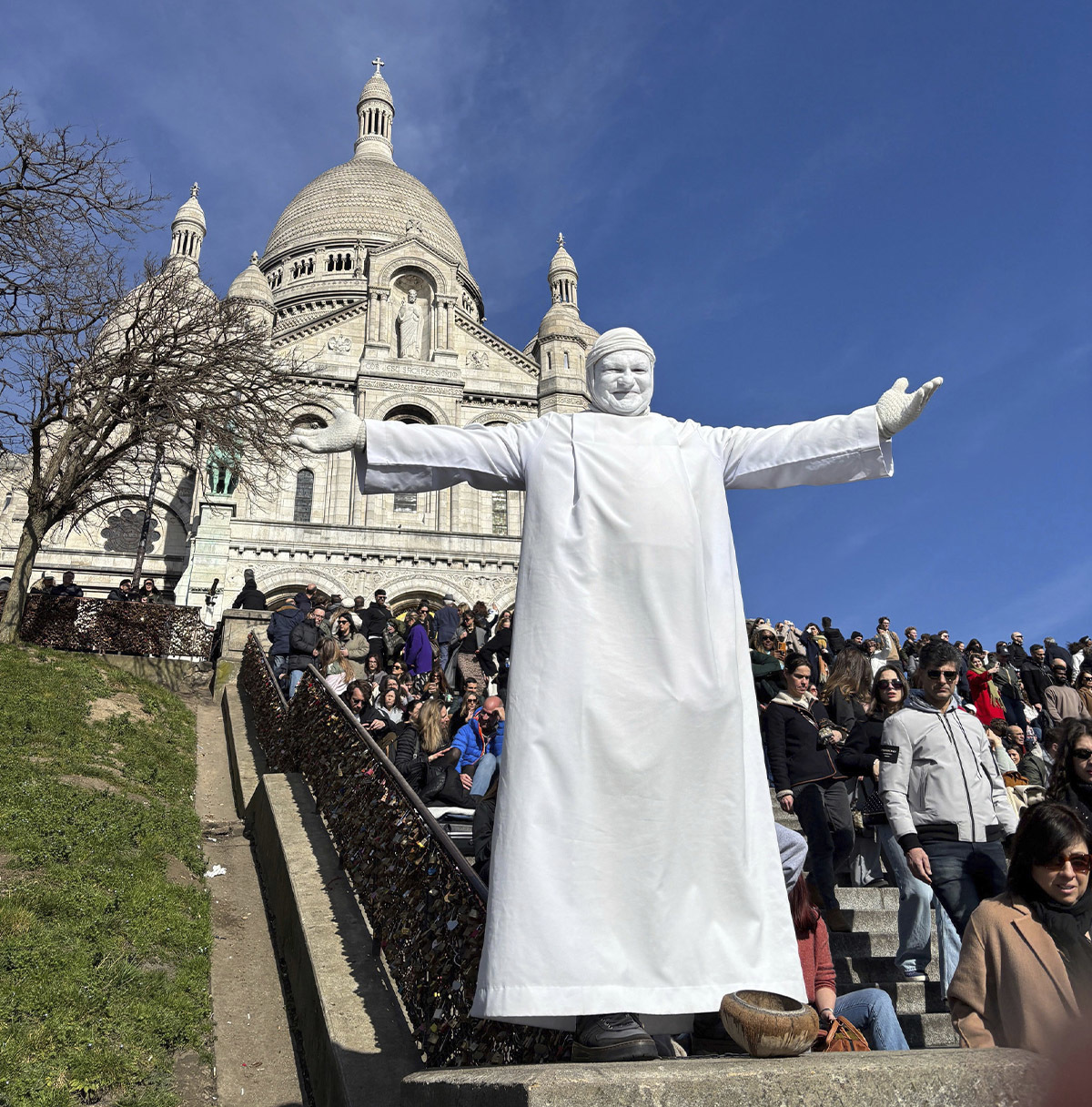
Paris is not Paris without a good photo on the stairs of Sacré-Cœur.
For painter Alberto Reguera (Segovia, 1961), whose studio is located on rue de Chabanais by the Palais Royal gardens, Paris continues to exert a powerful magnetism: “Sometimes I wonder why I chose it over New York. I would say it’s because I identified with its professionals and collectors, but also because of the city’s beauty, which lends a unique light and charisma to everything you do.”
“ Its secret is that it blends contemporary projects with the history of painting in the city seamlessly ,” warns the Segovian, who has exhibited his painted objects in the Louvre plaza. “Walking down the famous rue de Seine, where prestigious galleries cluster, it’s easy to stumble upon the Delacroix museum. Paris constantly renews itself without turning its back on history, and that’s part of the magic of this city,” he asserts.
Masculine City, Feminine City
To post-Brexit London arrived Enrique Rubio, a former head of Efe’s delegations in both cities, who offers a peculiar view of their rivalry: “London is a masculine city, and Paris, the feminine counterpoint. I heard a Parisian friend say that. In Paris, there’s an impulse towards beauty in everything : buildings, shops, and people’s elegance. It’s a hedonistic city where you can enjoy life’s simplest pleasures: dining well and in good company, sitting down to drink wine at a bistro, or strolling through streets that are monuments…”
“I’ve always felt closer to the French way of life than the English,” he acknowledges. “But London has cultivated me for other reasons. It’s less hedonistic. People get straight to the point and rush around, and the vast distances complicate social life. It’s overwhelming on one hand, yet you don’t feel the pressure of a big city, leading to a lot of neighborhood life.”
Post-Olympic Delirium
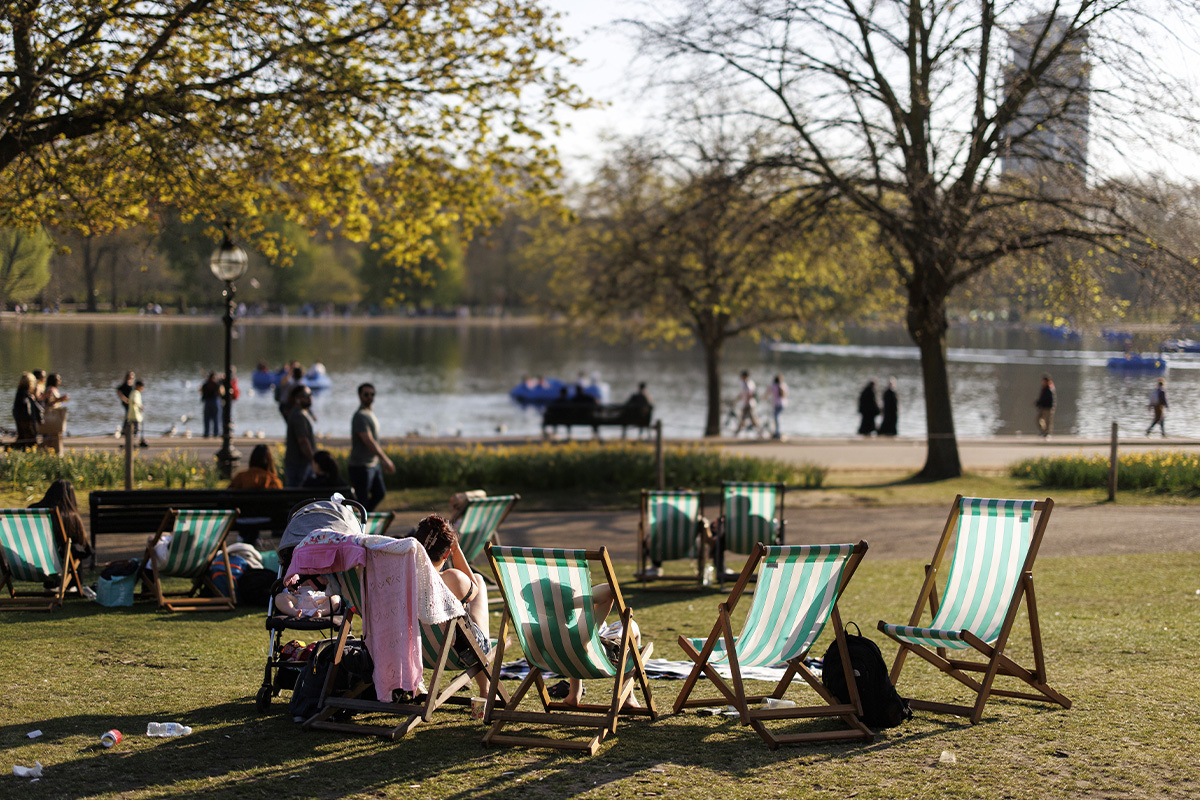
Picnicking in Hyde Park is one of the great summer activities in London.
Let’s finally say that Paris is experiencing post-Olympic delirium this summer, with the floating cauldron rising every night over the Tuileries Garden. The Champs-Élysées has once again yielded the spotlight to Montmartre, with the second remontada of the Tour through the emblematic rue Lepic.
Alongside the enduring enthusiasm from the Games, the restoration of Notre-Dame has also taken center stage, as six million visitors flocked this year. The €700 million restoration, involving 2,000 artisans, has dazzled and disappointed tourists who can now visit for free. The cathedral boasts a stunning luminosity, significantly brighter than its previous shadowy state.
While this summer has seen significant rainfall in Paris, it has not pleased everyone. Over the past decade, under Anne Hidalgo’s stewardship, the city has undergone rapid ecological transformation . Bike usage has increased from 2% to 12%, Parisians have backed the creation of 500 garden streets, and the concept of “the 15-minute city” is now being exported to many other urban centers. Swimming in the Seine is the latest legacy from the Andalusian mayor, who will leave office in March.
London had its own Olympic boost in 2012, exemplified by Boris Johnson hanging from a zipline and the once-overlooked East London capitalizing on the wave of enthusiasm. However, in 2016, the former mayor struck a damaging blow to the city with Brexit.
The summer in the British capital is fundamentally musical, marked by concerts in Hyde Park and festivals like All Points East in Victoria Park. Yet, the biggest street event is again the Notting Hill Carnival, featuring Caribbean plumage. There are also the free museums – the British Museum, Natural History Museum, the National Gallery, the Tate Modern… – and the West End theatres, which have set a new record of 17.1 million spectators.
To cap off the summer in London, there’s nothing better than a climb to Hampstead Heath , an urban forest with its three swimming ponds (men’s, women’s, and mixed). From Parliament Hill, nestled in the heart of the park, London rises beneath the parade of clouds (a trait it shares with Paris), with the distant twinkling skyline and the pinnacle of the Shard marking the horizon.