
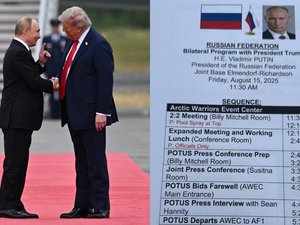
An internal document of the American protocol, detailing the summit program between Donald Trump and Vladimir Putin in Alaska, was found by chance in the printer of a neighboring hotel. These eight pages mentioned, in particular, the table plan, the list of participants, and the gift provided by Trump—a white eagle statue.
A confidential document eight pages “produced by the office of the Protocol chief” American, was found in the printer of a hotel in Alaska at the time of the summit between Vladimir Putin and Donald Trump, according to the media NPR.
These documents, forgotten in an establishment located near the Elmendorf-Richardson military base, detail the organization planned by the American team for the meeting between the two heads of state. We discover in particular the official program, the names of the participants with their photos and the phonetic pronunciation of their names, but also the table plan initially planned for a diplomatic lunch (a meal that ultimately never took place).
Trump’s Gift to Putin
Among the most striking elements of the document is the gift that Donald Trump intended to offer Vladimir Putin: a “Office statue of the American white eagle”, without it being specified if this present was actually given to him.
The schedule also provided for a 1:30 a.m. press conference, which actually summed up to only 12 minutes. This notable discrepancy raises questions regarding the effectiveness of the planned diplomatic talks.
The deputy spokesperson for the White House, Anna Kelly, minimized the scope of the leak, declaring that the pages found were only “several pages lunch menu”. She also stated that leaving this type of information on a public printer “did not constitute a security flaw”. This assertion, however, has sparked considerable debate among political analysts and security experts alike, who insist that any leak in protocol should be treated with seriousness.
Implications of the Leak
The unexpected discovery of these documents not only reveals the minutiae of official state meetings but also underscores the inherent vulnerabilities present in governmental communication systems. Experts warn that even seemingly benign documents can lead to embarrassing situations or, worse, jeopardize national security. The implications extend beyond simple operational errors; they invite scrutiny into the procedural safeguards held in place to avoid such slips.
During high-profile meetings, especially those involving global superpowers, controlling the narrative and protecting sensitive information becomes crucial. The presence of a printer serving up top-secret documents showcases a lack of protocol adherence that could have substantial consequences.
Furthermore, this occurrence begs the question of whether the protocol departments of various government branches are adequately prepared for the contemporary challenges of cyber espionage and information leaks. The rise of digital communication cannot overlook secure practices that protect images, formats, and sensitive messages, demonstrating the urgent need for improved training and infrastructure within these teams.
The Backlash and Response
Following the report of the leak, multiple voices from the political landscape began to chime in. Critics argue that the leak reflects broader issues within the Trump administration’s handling of diplomatic relations. The mishap could potentially affect how allies and adversaries perceive U.S. diplomatic engagements moving forward. The challenge now lies in restoring confidence in the integrity of American diplomacy.
Moreover, the response by White House officials, as characterized by Anna Kelly’s dismissive comments, can lead to further public distrust. When documents with potential significance are simply brushed aside as innocuous, it raises ethical considerations regarding transparency and security.
As this incident continues to unfold, it serves as a reminder of the precarious balance between openness and security in international relations, and it reinforces the pressing need for governmental bodies to maintain diligence in safeguarding sensitive information. The world will be watching to see if this incident leads to any substantial changes in how diplomatic meetings are organized and reported on in the future.
The scrutiny directed at this incident emphasizes the importance of accountability in governmental operations. Ensuring that protocol is followed and sensitive information is protected remains an essential part of maintaining the integrity of international diplomacy moving forward.