
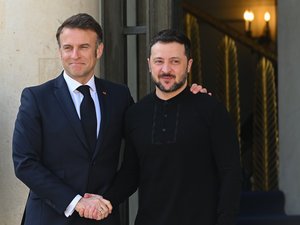
Ursula von der Leyen announced that she would go on Monday, August 18, 2025, to the White House with several European leaders, including Emmanuel Macron, Friedrich Merz, and Alexander Stubb, for a meeting alongside Volodymyr Zelensky and Donald Trump.
The President of the European Commission , Ursula von der Leyen, is set to lead a high-profile delegation to the White House next week. This meeting, which will also feature Ukrainian President Volodymyr Zelensky , is pivotal as it aims to address crucial issues surrounding the ongoing conflict in Ukraine.
In her announcement made via social media platform X, von der Leyen stated, “At the request of President Zelensky, I will participate tomorrow in the meeting with President Trump and other European leaders in the White House.” This underscores the urgency and significance of the diplomatic discussions planned for this summit. The presence of key European figures, including German Chancellor Friedrich Merz and Finnish President Alexander Stubb, signals a united front in addressing security concerns in Ukraine.
Purpose of the Meeting
The meeting is scheduled for 1:00 PM GMT and involves crucial consultations with allies identified as the “Coalition of Volunteers” . This coalition comprises numerous major European countries, EU representatives, NATO members, and other non-European nations, including Canada. The objective is to prepare for subsequent peace negotiations regarding Ukraine, especially after the talks between Donald Trump and Russian President Vladimir Putin in Alaska.
During this significant meeting, the attendees will deliberate over security guarantees for Kyiv as part of a potential peace agreement. Diplomatic sources indicate that the coalition leaders will also define the parameters of a sustainable treaty between Ukraine and Russia. “This afternoon, I will welcome Volodymyr Zelensky in Brussels,” von der Leyen added, indicating the ongoing engagement among European powers surrounding this conflict.
During a recent summit with Vladimir Putin, Donald Trump emphasized that his efforts are now geared towards developing a peace agreement, aiming to end the war directly rather than opting for an interim ceasefire. The implications of this shift in focus could significantly impact the dynamics of ongoing negotiations.
France’s Role in the Coalition
French President Emmanuel Macron has also affirmed his commitment to this critical dialogue. The French presidency issued a statement indicating, “The President of the Republic will go to Washington tomorrow alongside President Zelensky and several European leaders to continue coordination work between Europeans and the United States to achieve just and lasting peace that preserves the vital interests of Ukraine and the security of Europe.” This assertion reinforces France’s dedication to maintaining a robust European-American alliance aimed at curbing further escalation in Ukraine.
Mark Rutte, the secretary-general of NATO, will also participate in the meeting in Washington. The involvement of NATO leadership demonstrates the alliance’s collective interest in fostering stability and security in Eastern Europe. A press release from his office noted, “The secretary-general will participate in a meeting organized by the American president.” This further solidifies the collaborative efforts underway between NATO members and their response to the Ukraine crisis.
Expectations from the Meeting
As world leaders converge in Washington, there is a palpable sense of urgency and expectation. The meeting aims not only to * reaffirm alliances but also to set a concrete agenda for addressing the pressing humanitarian and security challenges facing Ukraine.* The stakes have never been higher, as the ramifications of this conflict extend beyond regional borders, affecting global geopolitics.
The repercussions of this summit will likely resonate far beyond the immediate discussions. The outcome may pave the path for new measures and frameworks to provide Ukraine with the support it needs to withstand the ongoing hostility. The partnership demonstrated by these European leaders alongside the U.S. showcases a commitment to international cooperation and diplomacy to restore peace in the region.
With tensions continuing to simmer, all eyes will be on the Washington meeting and the developments that emanate from it. The interplay between the United States, European nations, and Ukraine will be crucial in shaping a viable future for peace in Eastern Europe. This series of high-stakes talks could very well determine not just the fate of Ukraine, but the broader geopolitical landscape for years to come.