
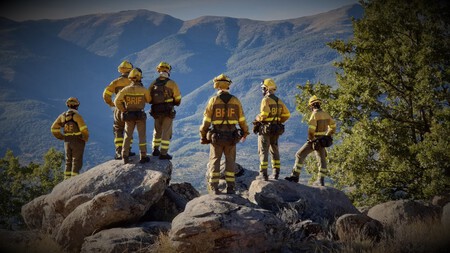
The Ongoing Challenge of Wildfires in Spain: A Year-Round Issue
As summer approaches, so does the grim reality of wildfires in Spain. The months of July, August, and September have transformed into the most dangerous periods of the year, not just for sun-seekers but also for firemen battling blazing infernos . Areas such as Las Médulas , Galicia , and Andalusia have seen devastating fires, with reports indicating that as of mid-2025, more than 69,000 hectares of land have already been scorched. This alarming figure has rekindled an ongoing debate: under what conditions do forest firefighters operate, and why are so many only active during the summer months, leaving the rest of the year unmanned for preemptive maintenance?
With a staggering 40% of firefighting personnel restricted to working only during summer, the issue of job insecurity becomes evident. Disparities exist between regions, with many firefighters employed through subcontracted companies rather than directly through government entities. The temporary contracts that dominate this sector exacerbate the problem, forcing highly skilled individuals into a cycle of seasonal employment.
A recent chronicle from El Mundo underscores this predicament. Javier Matinsa , a firefighter in Madrid, elucidates that the number of personnel available diminishes significantly as autumn arrives. “Forty percent of our team is only operational in summer,” he states, emphasizing that prevention efforts are crucial and need to be year-round.
Is there more data to highlight the situation? Absolutely. An analysis in 2023 indicated that while 25,000 professionals are responsible for fire prevention and containment in summer, this number dwindles to around 10,000 during winter months. This statistic, based on union insights, paints a disturbing picture of the industry’s manpower.
“You receive a contract in July and work until September or October, then it’s off to the unemployment line until the next year,” shared Carlos Martín , a firefighter from Castilla y León . Two-thirds of regional firefighters may only work during summer campaigns , underscoring the broader issue of temporal job placement. Nationwide, 43% of all contracts in this sector are deemed temporary .
Why does this matter? While wildfires captivate headlines during the summer months, they are not solely a seasonal problem. Management and prevention extend throughout the year, as highlighted by Carlos Moreno , who has garnered over 206,000 signatures on a petition advocating for year-round wildfire management.
“Most forest firefighters operate for just three to four months annually. What happens during the rest of the year? Who manages the landscape to mitigate fire risk? Nobody,” Moreno laments. This sentiment reflects a critical viewpoint that resonates among firefighting professionals.
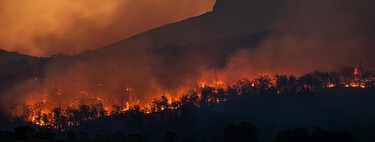
“A Tinderbox Waiting to Ignite”. This ongoing discourse is essential because the Spanish landscape has markedly transformed over recent decades. Influenced by rural depopulation and shifts in land use, the area is increasingly vulnerable to wildfires. Miguel Arroyo , an expert on forest topics, remarked that even though a significant portion of Spain is designated as forestry land, only a small fraction receives effective management. “Eighty percent remains neglected, making it a ready target for fire,” he cautioned.
Changes in agricultural activities , and a lack of forest management further exacerbate the wildfire risk. According to WWF , this neglect results in unhealthy landscapes filled with thick undergrowth that can easily ignite and cause widespread destruction.
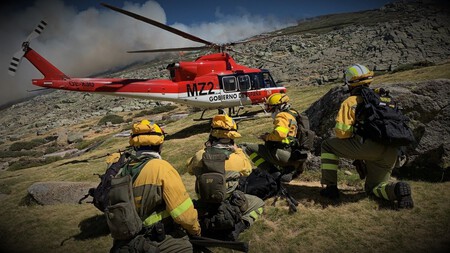
“It’s a Disgrace”. Along with job instability, other challenges plague forest firefighters: staff shortages , unfilled vacancies, and stagnant wages. Pablo Antón , a firefighter for the public company Tragsa , expressed his frustration, stating that many feel unrecognized for their contributions, despite risking their lives to protect the environment.
In interviews with several outlets, leaders like Jesús Molina have publicly communicated the need for increased staffing and better pay. As unrest grows, calls for reformation are echoing across various autonomous regions in Spain.
Advancing Flames. The backdrop to this discussion is a series of fires spreading across regions like Galicia , Madrid , Castilla y León , Extremadura , and Andalusia . With fatalities and more than 69,000 hectares scorched, the urgency for systemic change is more pressing than ever.
Maps published by Civio highlight that the wildfire threat varies widely across Spain, predominantly affecting Galicia , parts of Cantabria , and regions of Extremadura .
In summary, addressing the ongoing wildfire crisis in Spain necessitates a dedicated, year-round workforce capable of preventative measures. Failure to adapt not only endangers lives and livelihoods but significantly impacts the environment, leading Spain closer to an ecological precipice.