
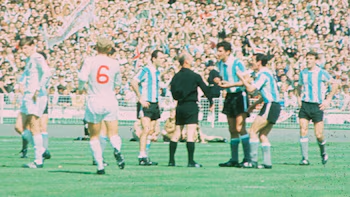
The Day Rattín Was Expelled Against England
A Historic Match at Wembley
On July 23, 1966, one of the most unforgettable matches in World Cup history unfolded as Argentina faced England in the quarterfinals at Wembley Stadium. With over 90,000 spectators in attendance, the game concluded with a 1-0 defeat for Argentina, marked by Geoff Hurst’s controversial goal in the 78th minute. However, the match is more famously remembered for the shocking expulsion of Argentine captain Antonio Ubaldo Rattín in the 35th minute.
The Context of the Expulsion
At that time, yellow and red cards were nonexistent. Referees documented infractions in notebooks, relying on their judgment without standardized signals. Rattín himself later recounted the incident, emphasizing his frustration with the referee, Rudolf Kreitlein. “I didn’t insult anybody; I merely asked for an interpreter to explain my concerns,” Rattín stated, illustrating the tension as he sought clarity on the referee’s decisions.
Kreitlein, however, perceived Rattín’s demeanor differently, claiming he “looked at me with bad intentions,” which ultimately led to the captain’s ejection from the match.
The Chaos of the Aftermath
Once Rattín was sent off, he didn’t leave without making a statement. As he walked off the field, he sat on the mat in the Queen Elizabeth II suite and became the target of a barrage of chocolates from irate English fans. In a bold retaliation, Rattín crushed a British corner flag, escalating the situation as the crowd’s chocolates were substituted by beer cans.
Rattín and the Argentine squad sensed an inherent bias in officiating throughout the tournament, believing it was designed for England’s victory. Rattín remarked, “That World Cup was prepared for the English to win,” reflecting on unbalanced judgments that marred the integrity of the competition.
The Birth of the Card System
Kenneth George Aston, responsible for FIFA’s referee management, realized that football required a more effective disciplinary tool after the match. Aston drew inspiration from traffic lights, which communicated rules clearly and simply. He introduced the idea of a card system: yellow for warnings and red for expulsions.
In 1967, this concept was implemented, revolutionizing the game. Referees could now address aggressive behavior more effectively, providing a universal understanding of infractions that has persisted today.
Rattín’s Legacy in England
Despite the humiliation of his expulsion, Rattín returned to England years later, where he found respect and recognition. He experienced a warm reception, even garnering autographs after the incident. His connections with English football extended to a role with Sheffield United in 1978, where he notably recommended Alejandro Sabella for hire.
Conclusion
The day Antonio Rattín was sent off against England became a pivotal moment in football history, not only due to the spectacle itself but for its lasting impact on the game’s regulations. The introduction of yellow and red cards transformed how the sport is played, embodying a critical shift towards improved accountability and sportsmanship on the pitch. Rattín’s story remains a testament to resilience and the evolution of football, highlighting the importance of fair play in one of the world’s most beloved sports.