
When Yang Liwei became The first Chinese astronaut in 2003, the United States and Russia had already accumulated decades of experience and over fifty manned missions, thanks to the advancements of the former Soviet Union. This marked China’s debut in space exploration, a field in which they were significantly behind their competition.
Fast forward to today, and that gap has been dramatically reduced. In just over two decades, China has successfully sent humans into space, launched Mars probes, and is currently building its own space station.
A Project That Points to Self-Sufficiency with Its Own Technology
Beijing is eager to showcase its technological independence . Yang Hong, the chief engineer of the space station system, emphasized this in June: “The central technologies of the Chinese Space Station have intellectual property that is totally independent , and all its components are produced domestically.”
This statement is ambitious: an orbital laboratory constructed without relying on foreign licenses, with all its critical systems developed and manufactured in China. To better appreciate how China has progressed to erecting its own space station, it is essential to look back to 2011.
That year, the U.S. Congress enacted the Wolf Amendment, which prohibits NASA and other federal agencies from using funds to engage in bilateral cooperation with Chinese entities regarding space activities, unless expressly authorized by Congress and certified by the FBI.
This effectively blocks any route for Chinese access to the International Space Station via NASA, cutting off avenues for technology exchange , data sharing , or training programs. The rationale for this measure was primarily security concerns over sensitive technology transfer.
Analysts like Makena Young from the Center for Strategic and International Studies (CSIS) argue that the exclusivity created by the Wolf Amendment has encouraged China to accelerate its space programs , ultimately creating a formidable competitor for U.S. leadership in this crucial domain of exploration.
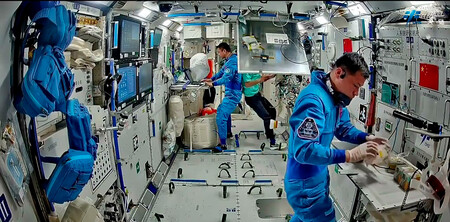
This scenario likely prompted Beijing to reinforce its long-term space plans and shift its strategy toward a manned program that emphasizes greater independence . Notably, the Tiangong-1 and Tiangong-2 served as preliminary test beds for the current station.
Is there any inheritance from previous designs? Yes, and it is acknowledged. While the historical lineage may still exist, the current landscape is different. The critical components— energy management, attitude control, life support, navigation, communications, computing, and software —are under national control.
If these essential blocks operate independently, the narrative of self-sufficiency becomes more compelling, minimizing vulnerabilities that could be exploited by rival nations.
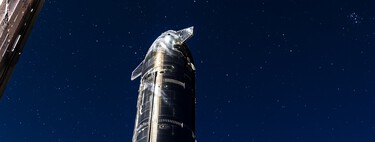
Interestingly, in operational terms, there have been no public indications of external dependence: crew rotations and resupply missions have been successfully executed. However, it is worth noting that outside of the official narrative, independent verifications are scarce, making it prudent to refrain from absolute conclusions, even when the indicators of autonomy appear robust.
When viewed through a broader lens, it’s evident that U.S. sanctions have spurred the development of more advanced domestic technologies, improvements in manufacturing processes, and a push toward sustainable energy solutions. Rather than stalling progress, such external barriers have served as a strategic catalyst for Beijing.
As the global space race becomes increasingly competitive and multifaceted, China’s emphasis on self-sufficiency, autonomy, and strategic foresight could redefine the landscape of space exploration. Whether this independence will lead to collaborative efforts or serve as a basis for escalating competition remains to be seen.
Images | CMS
In Xataka | The state of the ISS is so alarming that the United States and Russia have sat down together for the first time in eight years.
In Xataka | It was not an extraterrestrial ship, but a giant kite. We completely misjudged the phenomenon surrounding 3i/Atlas.