
It doesn’t matter that you live in Barcelona, Madrid, Bilbao, Grenada, Malaga, or even Vigo, to name just a handful of cities. If you take a walk through the majority of municipalities in Spain, it is more than likely that you will encounter the same sight: black and white residential buildings . This chromatic sobriety pushed to the extreme seems to dominate among the blocks of new constructions, even in rehabilitations where the façades are similarly styled. It might appear to be a mere fashion issue, but—without dismissing that factor—the reality is much more complex and rich in nuances.
So, why are there so many black and white buildings ?
This trend has been prevalent for a while now, but it has spread so extensively and with such force that today it can be observed in nearly all cities, be they populous like Madrid or Valencia, or less populated locations like A Coruña, Cáceres, and Grenada. A review of new construction promotions reveals that almost all of them seem to emerge from the same architecture firm showcasing a Black and White Mandate , much like the domination of caravista brick in earlier decades.
It is not necessary to leave home and travel the cities of the country to verify this. A simple look at the catalogs of promoters like Aedas Homes, Neinor Homes, Celere, Metrovacesa, or Real Estate Habitat shows a clear trend in their portfolios: a recurring use of whites, blacks, and gray tones .
Tax, tastes … and much more
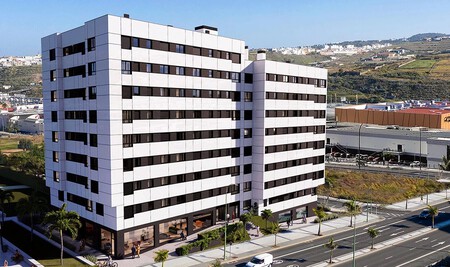
</div>Is it merely a matter of tastes and fashions? This could explain the scenario. In 2023, the newspaper Herald pondered why, in neighborhoods of Zaragoza with a significant number of new buildings, the same picture of black, white, and dark gray facades seemed to be repeatedly displayed. Grupo Lobe, the force behind one of these new buildings, indicated several reasons, including a fundamental aesthetic appeal . Architect Álvaro Van Horenbeke noted, “There is another issue that we consider, which is the preference of the people. We are aware that black and white, or very dark gray, attracts attention.”
As the architect further explains, other tones are often utilized for more unique projects, yet this combination provides a timeless aesthetic . Some in the field suggest that the intention is to “Generate dualities,” connecting whites to the Modern movement and an affinity for shades of black and dark gray, such as anthracite or RAL 7016. That the commitment to black and white has gained traction is not merely about aesthetics; these colors serve practical purposes too. They effectively reflect or absorb sunlight, influencing the temperature in urban environments.
<img alt="AI is transforming many sectors, including architecture" width="375" height="142" src="https://i.blogs.es/584e69/z2/375_142.jpeg"/>The strategies associated with white can be highly deliberate. Researchers are even dedicated to identifying the whitest white to enhance its reflective capabilities, thereby producing paints that cool surfaces beneath them. Some scientists propose that if 2% of the planet’s surface could be painted with an ultra-white pigment, it might help combat climate change.
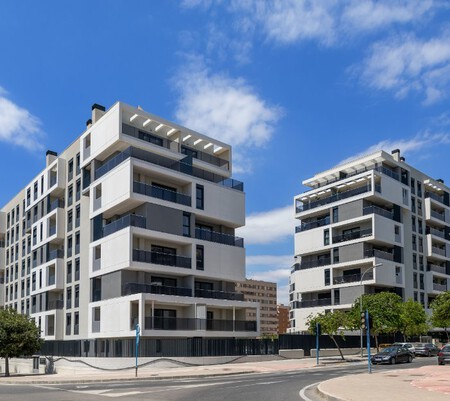
</div>Architect Pedro Torrijos emphasizes yet another key factor contributing to the high popularity of black and white structures, even extending to renovations: the pursuit of more effective thermal insulation . He recalls the rising demand for SATE (Thermal Insulation Systems), which involve placing thermal insulators on a building’s outer walls. By applying finishes, such as revoco or plates, contractors improve thermal performance—a vital consideration in today’s climate-conscious world.
The reliance on black and white constructions, however, simplifies a more complex narrative. Developers often adopt these shades for their conservative appeal. One old adage underscores this perspective: ‘If something works … why change it?’ When homes in black and white resonate with potential buyers, why risk embarking on a stylistic departure?
<img alt="A town in Toledo has grown weary of squatters, launching a new community service to address the issue" width="375" height="142" src="https://i.blogs.es/b4880c/plan2/375_142.jpeg"/>From the collective Madrid Proyecta, industry insiders say that large firms stick to established patterns and formulas. There are few developers willing to tinker with new ideas, often relying on recycled suggestions. Chromatic sobriety , synonymous with minimalism, risks leading to market saturation. One industry professional notes that, although you can create a distinct image using bricks and various shapes, the shift is now leaning toward technological materials. In Spain, the perception of colorful facades is often linked to social housing, which many developers want to avoid.
To better comprehend the phenomenon, the “cream cake buildings” concept stands out. This phrase illustrates how simple structures are adorned with layers to enhance the sense of volume, similar to the aesthetics of a cream-filled pastry. This chic touch seeks to obscure minor flaws and inconsistencies in architectural design.
<img alt="The construction industry is evolving, addressing significant challenges" width="375" height="142" src="https://i.blogs.es/6a17d6/1/375_142.jpeg"/>Furthermore, two other practical aspects bolster this trend: cost and efficiency . According to architect Juan Coll-Barreu, the repeated use of similar construction methods arises because they are cost-effective. The uniform use of specific materials leads to a collective resemblance in appearances. A concerning sentiment expressed in the industry relates to the scarcity of skilled labor, leading to a growing dependency on manufactured materials that require less craftsmanship.
In summary, the built environment in Spain is increasingly defined by its black and white aesthetic, reflecting a complex interplay of aesthetic preferences, practicality, market strategies, and industrial challenges. This trend may produce a uniform look across varying landscapes, yet it captures a moment in time that emphasizes simplicity and functionality in architectural design, resonating with many urban dwellers.
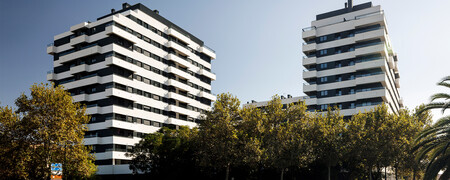
</div>In conclusion, the prevalence of black and white buildings in Spain signifies not just current aesthetic trends but also fundamental shifts in construction practices and societal preferences. As urban populations grow and the demand for housing intensifies, these architectural choices mirror the complexities of modern living, combining beauty with practicality.