

Recent developments concerning Russia’s nuclear deterrence highlight the evolving military landscape and the imperatives for modernization. The situation escalated when Moscow announced its intention to cease compliance with the Intermediate-Range Nuclear Forces Treaty (INF) , a pivotal agreement established in 1987 aimed at eliminating land-based missiles with ranges of 500 to 5,500 kilometers. Concurrently, satellite imagery revealed significant damage to a key Russian nuclear submarine base following a recent earthquake. These two reports underscore Russia’s strategic military intentions and considerable vulnerabilities.
The Termination of the INF Treaty
Just days ago, Russian officials announced that the nation will no longer observe the limitations set by the INF Treaty. Although the treaty was largely rendered ineffective following the U.S. withdrawal in 2019, Russia’s unilateral moratorium had provided a semblance of restraint. However, Moscow now claims that the U.S. aims to deploy intermediate-range missiles in Europe and Asia, justifying its withdrawal from the treaty. This decision coincides with the rollout of a new ballistic missile, the Oreshnik , capable of being stationed in Belarus . This move has raised concerns in Western capitals about the potential for a renewed arms race, pushing them closer to the peril of a direct Russian assault.
While Dmitry Medvedev, a prominent figure in Russian politics, has issued direct warnings , the Kremlin has somewhat moderated its tone. Nonetheless, the announcement’s implications are far-reaching: the collapse of the INF Treaty signals a significant setback for nuclear control frameworks, intensifying strategic tensions not only in Europe but also in Asia .
The Earthquake-Damaged Nuclear Base
Another alarming development was the damage caused to Russia’s nuclear submarine base in Rybachiy , located in the Kamchatka Peninsula , by a recent earthquake. Reports and satellite images confirmed that parts of a floating dock had become detached from their anchors but indicated that the main facilities remained operational despite the damages. The Rybachiy base serves a crucial role in maintaining Russia’s nuclear capabilities in the Pacific and is closely monitored by global powers.
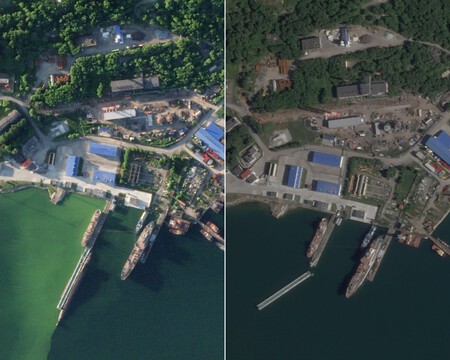
Visual representation of earthquake impact on nuclear infrastructure
Security Breaches and Vulnerabilities
In another concerning twist, Ukrainian military intelligence has reportedly acquired classified documents related to the K-555 Knyaz Pozharsky , Russia’s latest nuclear submarine. This vessel is a key part of Moscow’s nuclear triad, equipped with 16 intercontinental R-30 Bulava missiles , each capable of carrying ten nuclear warheads. The leaked materials contain sensitive information, including crew lists, operational manuals, and even details about technical failures in communication equipment.
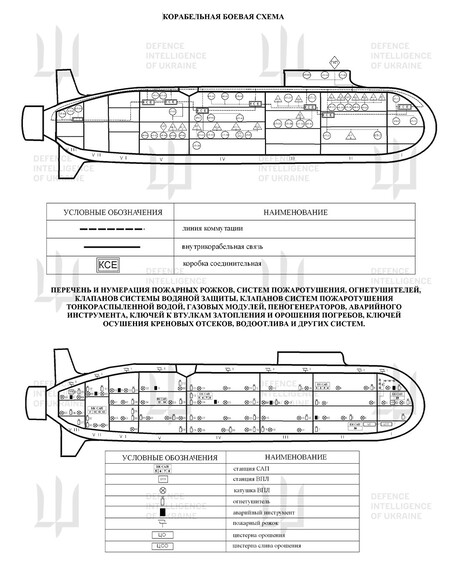
Details of classified documents obtained by Ukrainian intelligence
Operational Security Risks
This intelligence breach represents a major setback for Russia’s operational security, revealing vulnerabilities not just in the Knyaz Pozharsky, but across the entire Borei-A submarine class . This class is crucial for maintaining Russia’s perceived nuclear deterrence. These documents expose various limitations, from safety protocols to structural weaknesses, which undermine the Kremlin’s narrative of invulnerability regarding its strategic military assets.
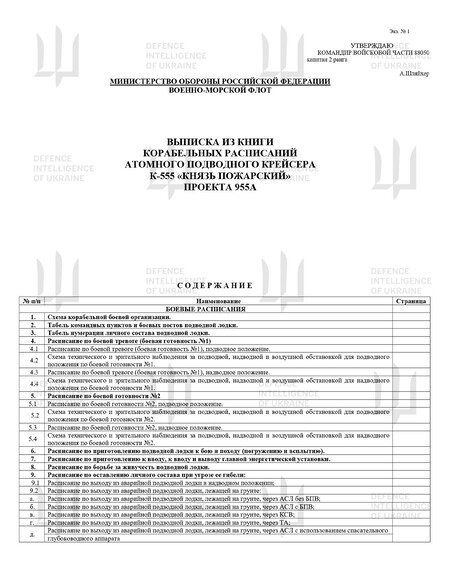
Additional filtered classified documents
Implications for Naval Power in the Ongoing Conflict
The revelations come at a time when the Russian Navy is facing a significant decline in operational capability, particularly in the Black Sea , where it has sustained losses due to Ukrainian drone strikes and Western missile attacks. As more vessels are incapacitated, the Kremlin’s naval supremacy continues to diminish, shaking the confidence long held since 2022.
Additionally, NATO has ramped up its activities in the Northern Arctic and Atlantic, closely monitoring Russian naval operations. Understanding the specifications and vulnerabilities of the Borei-A class submarines is pivotal not just for Russia but also for NATO, as it shapes the future nuclear balance and defense posture.
The Significance of Information Warfare
This operational intelligence acquisition ties into the modern narrative of warfare, indicating that information can serve as a powerful weapon. Ukraine’s ability to leverage this intelligence illustrates how asymmetric warfare can expose the Russian military’s weaknesses at a critical moment. The leaking of these strategic documents offers not just a glimpse into Russia’s military operations but also dismantles the myth of invincibility surrounding its nuclear arsenal.
For Moscow, the lessons are glaring: even its most sophisticated military assets are not immune to external threats or natural disasters. The shifting dynamics in this ongoing conflict present a complex and evolving challenge for both nations as they navigate the intricacies of nuclear deterrence, intelligence operations, and military strategy.