
A Closer Look at the Rybachiy Nuclear Submarine Base after the Earthquake
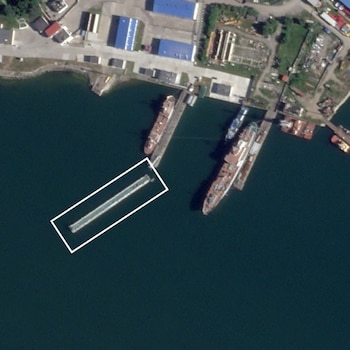
The base of Nuclear submarines of Rybachiy in the remote peninsula of Kamchatka (Russian East), suffered minor damage last week after one of the most powerful earthquakes in decades. Satellite images suggest that a floating dock at the submarine base was severely damaged, according to data taken by Planet Labs.
In those images, a section of the spring seemed to be separated from its mooring. No other significant structural damage has been reported, and several ships, including five submarines, were tied in nearby docks.
So far, there has been no official announcement about damage to the base, and the Russian press has not covered the matter. Neither have international organizations in charge of monitoring Nuclear facilities reported high levels of radiation.
It is known that some floating docks at Rybachiy are relatively new: at least two new docks have been commissioned and installed at the base since the Russian invasion of Ukraine in 2022, according to Russian military sources.
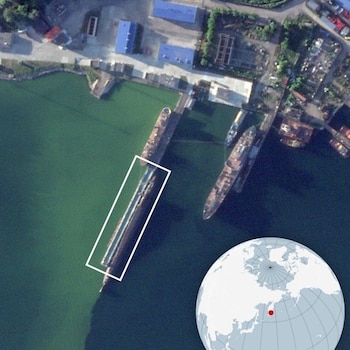
The base was built in Soviet times inside a cove to protect the ships from the high waves and storms of the open sea, which is merely a few kilometers away.
According to the group Conflict Intelligence Team, specialized in open source data, “this is unlikely to affect the operational capacity of the base—and the spring repairs are probably not expensive.”
The Magnitude 8.8 earthquake shook the Russian East on Wednesday, July 30, 2025, causing tsunami waves that moved toward the Pacific coast and activated alerts worldwide. The epicenter was located about 120 km from Rybachiy, with the tsunami reaching the base approximately 15 minutes after the earthquake.
The regional city of Petropavlovsk-Kamchatskiy, located in the same bay, suffered minor damage. The waves did not directly reach the city but were observed a few kilometers out to sea. Rybachiy and the neighboring town of Vilyuchinsk are high-security areas with restricted public access.
Kamchatka has experienced intense geological activity during those days, with strong tremors, aftershocks, and volcanic eruptions—including the activity of the Klyuchevskoy volcano, the most active on the peninsula.
Geology experts consulted by agencies like AP and Washington Post state that the earthquake was one of the strongest recorded since Japan in 2011, noting its shallow depth (around 19–20 km) which increased its impact on the surface.
The tectonic movement occurred in a subduction zone between the Pacific and North American plates, with an underwater break of between 200 and 300 miles that displaced large water volumes and generated the tsunami.
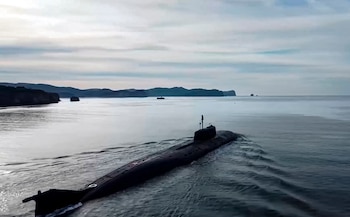
Indeed, floating docks—although useful in controlled conditions—can be more vulnerable than fixed concrete structures, especially against extreme waves, as noted by observers like Sharpe and analysts from the Royal United Services Institute.
For the moment, there are no direct damage signs to nuclear submarines. Images show other sections of the intact dock with submarines tied without visible evidence of loss.
Moreover, no human victims have been reported. According to Moscow, the seismic alert system worked properly, and the infrastructure demonstrated its expected resistance to a disaster of this magnitude.
However, the lack of official communication from the Russian Ministry of Defense feeds international doubts. This state of hermeticism prevents confirmation of the real extent of damages or any logistics involved in future operations.
Although visible damages in Rybachiy are limited to a floating dock, the seismic impact highlights logistical vulnerabilities in a critical area for the Russian Pacific fleet. The concentration of nuclear assets in a region with high tectonic activity raises concerns about the need to reassess structural security criteria and consider the possible redistribution of strategic capabilities.