
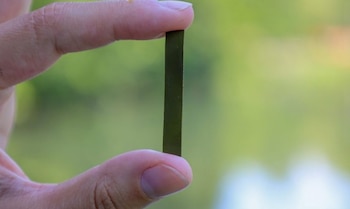
Revolutionizing Plastics: A Breakthrough in Biodegradable Materials
In recent years, the platic crisis has gained significant attention as plastic pollution has reached alarming levels across the globe. Traditional oil-based plastics, while durable and inexpensive, pose significant challenges due to their low recyclability and detrimental environmental impact. Acknowledging this crisis, researchers at Virginia Tech have embarked on a groundbreaking journey to create biohíbrid plastics derived from algal biomass, representing a promising shift toward sustainable materials.
The need for sustainable alternatives is underscored by the fact that the first materials resembling modern plastics were derived from natural substances. However, these were quickly overshadowed by synthetic plastics that boast superior durability but lack effective recycling capabilities. In response to this growing environmental concern, Josh Worch , an attached professor at Virginia Tech, and his research team have developed a novel approach aimed at enhancing the renewability and recyclability of plastic materials without sacrificing performance.
The team’s innovative strategy revolves around combining unprocessed biomass, specifically algae, with common chemical components in a high-energy mixer. This approach leads to the formation of robust biohíbrid plastics. Central to this innovation is a technique known as mechanochemical synthesis , which the team recently outlined in *Agewandte Chemie*. As Worch describes it, the opportunity emerged from a moment of “fortuitous science” when the research equipment was able to seamlessly incorporate all the algal material and chemicals into the mixing process.
What sets this development apart is the significant reduction in processing time ; the synthesis of these new plastics is accomplished in just 90 minutes , compared to the traditional two-day method. This efficiency stems from the incorporation of both biomass and synthetic components, which together create a hybrid plastic. The scalability of this process is further enhanced, as the mixing machinery utilized is commonplace across various industries, making this a feasible option for broader applications.
In discussing the process, Emily Bird , an undergraduate student who co-led the research alongside graduate student Meng Jiang , emphasized its simplicity and efficiency, stating, “It is an extremely simple process, which makes it a very efficient way to create plastic.” This simplicity is complemented by an existing plastic manufacturing technique traditionally used for grinding materials into finer pieces but has now been revamped to produce more sustainable options thanks to Virginia Tech researchers.
One of the standout features of the created hybrid plastic is its incorporation of spirulina , a nutrient-rich algae known for its availability and affordability. This decision wasn’t arbitrary; the research team extensively evaluated various biomass resources, including agricultural waste, to ensure optimal input materials for their sustainable product. The result is a robust , adaptable hybrid plastic that can be reshaped and reformed or, alternatively, completely decomposed without leaving hazardous remnants. Furthermore, the ability to recover algae and chemical components from the hybrid plastic for reuse ensures minimal environmental impact.
Jiang remarked on the versatility of the new material, asserting, “These characteristics make the plastic very versatile, which guarantees that it does not end as a residue.” The implications of this statement cannot be overstated, as one of the largest challenges facing today’s society is finding a viable solution to the overwhelming amounts of plastic waste generated. With innovative initiatives like that of Virginia Tech, the potential for a sustainable future in plastic manufacturing appears ever more possible.
The innovative work at Virginia Tech serves as a powerful reminder of the necessity for change within the plastic industry . By prioritizing sustainability and utilizing existing natural resources, researchers can create materials that not only meet today’s performance demands but also contribute to a healthier planet. As the world grapples with increasing plastic pollution, such transformative research is crucial in steering us toward a more eco-friendly future.