
Economic Turmoil and Stock Market Performance
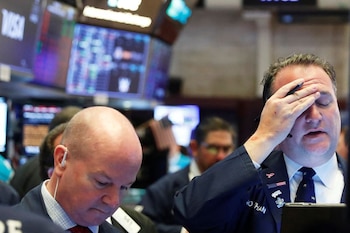
The recent announcement by President Donald Trump regarding the potential implementation of a “small tariff” on pharmaceutical imports has sparked a wave of concern across the financial markets. This news, coupled with the looming threat of possible increases in tariffs and an upcoming announcement about semiconductor levies, has significantly impacted investor sentiment.
In the last trading session, despite expectations that corporate earnings would remain stable, the S&P 500 index experienced a decline of 30.75 points, or 0.49%, closing at 6,299.19 units. Similarly, the Nasdaq Composite fell by 136.92 points, down 0.65% to settle at 20,916.66 points. The Dow Jones Industrial Average also retreated 61.56 points, a decrease of 0.14%, ending the day at 44,112.08 points.
Market Reactions to Economic Indicators
Amid these developments, economic data released during the trading day underscored the volatility in the market. The non-manufacturing purchasing managers index (PMI) fell to 50.1 in July from 50.8 in June. This drop was attributed to a slowdown in orders, weakened hiring, and rising supply costs. However, the revised earnings reports of U.S. companies helped to soften the blow and contain losses.
European Markets Show Resilience
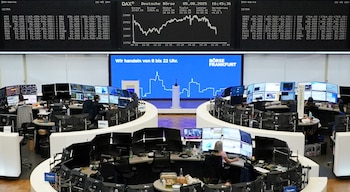
In stark contrast, European stock markets closed with gains on Tuesday, buoyed by business results that exceeded expectations and growing optimism about a potential interest rate cut by the U.S. Federal Reserve next month. The pan-European index Stoxx 600 recorded a modest increase of 0.15%, with most regional markets enjoying gains. This uptick happened during a busy earnings season, which has provided some comfort to investors wary of the potential impacts of trade disputes and tariffs on corporate profits.
A standout performance came from Diageo, which saw its shares rise by 4.9% after forecasting stable sales through 2026, despite anticipated U.S. tariffs. This confidence helped push the food and beverage sector index, .SX3P, to a 1.2% increase, marking it as the best-performing sector of the day.
Meanwhile, the German semiconductor manufacturer Infineon experienced a 4.6% surge in stock value, fueled by optimistic annual profit prospects and indications of a potential recovery in the global semiconductor market, despite ongoing concerns regarding tariffs.
Additionally, BP’s announcement regarding its evaluation of new strategies to enhance the profitability of its oil and gas production assets, following higher-than-expected quarterly profits, resulted in a 2.8% lift in its shares.
Adaptive Market Strategies in Response to Tariffs
Market analysts suggest that investors have begun to adapt to the reality of tariffs, with many companies finding ways to maintain profitability amid the resulting fluctuations. Chris Beauchamp, Chief of Markets at IG Group, commented, “The market has learned to adapt quite well to the reality of tariffs.” This sentiment reflects a wider acceptance that, while tariffs present significant challenges, businesses are adjusting their strategies to mitigate risks and continue delivering value to shareholders.
In this environment of uncertainty, the resilience shown by various sectors indicates a dynamic market landscape. As companies reassess their strategies and operations, their ability to navigate these challenges will continue to be critical in the coming months.
Investors will be closely monitoring further announcements from government officials and the results of upcoming earnings reports to gauge the ongoing impact of tariffs and economic policies on the market.