

Understanding the XFG Variant of COVID-19: A Closer Look at What It Means for Public Health
The variant XFG of COVID-19, popularly known as Stratus or “Frankenstein“, is causing concern among health experts after being detected in Argentina. This variant is the result of a recombination of two omicron lineages, specifically subvariants LF.7 and LP.8.1.2, which reflects the complex evolution of the virus.
The term “Frankenstein” draws an analogy to the literary creation of Mary Shelley, highlighting its hybrid nature. Despite its novel characteristics, both the World Health Organization (WHO) and Argentina’s national health authorities maintain that the health risks remain low at this stage.
Genetic recombination is a frequent occurrence in the evolution of SARS-CoV-2. This process allows the virus to acquire new features, sometimes granting it adaptive advantages that may enhance its spread. The WHO has placed the XFG variant on its list of “Variants Under Monitoring” (VUM) due to its rapid dissemination in regions like Asia, Europe, and Latin America. So far, however, there have been no reports of increased severity of associated clinical presentations.

According to a recent epidemiological report, this subvariant presents no increased transmissibility or danger. As detailed in the bulletin: “There are no reports suggesting that the severity of the associated disease is greater compared to other circulating variants.”
Internationally, XFG has been reported in at least 38 countries, with a global proportion increasing from 7.4% to 22.7% from the end of May to June. Significant rises were observed in regions such as Southwest Asia, Europe, and notably Brazil.
In Southeast Asia, where the XFG variant has gained a substantial foothold, increases in cases and hospitalizations were documented. However, the national epidemiological report noted that these increases did not correlate with heightened severity when compared to existing variants.
Dr. Ricardo Teijeiro, an infectologist from the Argentine Society of Infectology, explained to Infobae: “This new variant, known as Stratus or Frankenstein, has been circulating for some time, particularly in Europe and countries like Spain, Canada, and Brazil, where it accounts for a significant portion of infections. Its arrival in Argentina was anticipated.”

According to reports in the Epidemiological Weeks 26 and 27, three cases of the XFG variant were detected among 164 sequenced samples analyzed by the National Reference Laboratory for SARS-CoV-2. These findings highlight the continuous monitoring of COVID-19 variants in Argentina.
The current situation indicates the exclusive circulation of the omicron variant, with LP.8.1 and XEC variants trending, alongside the recent classification of XFG as VUM. Dr. Teijeiro emphasized that the XFG variant arises from a mix of genetic variations within omicron, stating: “All vaccinated individuals have some degree of protection.” He continues to advocate for vaccination, especially among vulnerable populations such as older adults or those with pre-existing conditions.

Clinically, one of the most notable aspects of the XFG omicron variant is the frequent emergence of hoarseness or aphonia. This symptom may help differentiate it from other variants. Along with dysphonia, patients typically experience fever, throat pain, dry cough, fatigue, and general discomfort, mirroring common symptoms found in SARS-CoV-2 infections.
Dr. Teijeiro clarified that while XFG does not lead to more severe symptoms, it may manifest with “dysphonia and inflammation of the larynx” more rapidly. He emphasized: “Vaccinated individuals possess an antibody response that offers protection, reiterating the importance of receiving vaccinations regardless of the number of doses previously administered.”
Moreover, he pointed out that the vaccinated may only exhibit mild symptoms. However, hospitalizations continue to be reported, primarily associated with unvaccinated individuals suffering from other variants. As various respiratory diseases see an uptick, the public health outlook remains cautiously optimistic with structured surveillance and vaccination as key tools.
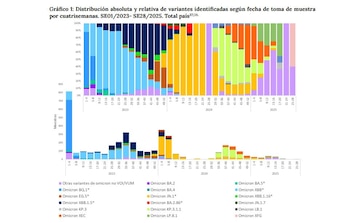
The Ministry of Health of the Nation has categorized the variant as an interest (VOI), along with six other variants under monitoring (VUM). This systematic approach enhances the ongoing surveillance efforts aimed at tracking the evolving landscape of COVID-19 variants. The current notable variants include:
- Jn.1* omicron
- KP.3 omicron (VUM)
- KP omicron. 3.1.1 (VUM)
- Xec omicron (VUM)
- LP omicron 8.1 (VUM)
- Omicron NB.1.8.1 (VUM)
- XFG omicron (VUM)
As the landscape of COVID-19 continues to evolve, the ongoing effort to monitor and respond to new variants like XFG remains critical in managing public health effectively. Vaccination remains a vital component of this strategy, providing increased immunity and helping to mitigate severe cases among the population. It is essential for individuals to stay informed and continue adhering to health guidelines to combat the ongoing pandemic.
General News – 2