

Understanding Aging: The Power of Positive Perception
The way you decide to think about aging significantly influences how you experience it. According to Michelle Feng, Clinical Director of the Health Mental Executive and a psychologist specialized in psychology and geriatric medicine, maintaining positive beliefs about aging can lead to improved cognitive health, fewer mental health issues, and greater life expectancy. Studies compiled by National Geographic indicate that those who nurture an optimistic attitude will enjoy better cognition and a decreased risk of depression and anxiety in their later years.
Social perceptions often dwell on the concepts of physical and mental decline, neglecting the complex reality of the aging process. As Feng points out, “Everyone talks about aging as if it were merely a decline, but aging literally means that you are alive.” This perspective invites us to view aging as a multifaceted phenomenon rather than a straightforward deterioration.
Stress Management in Aging
One admirable change observed with age is the ability to manage stress . Stressor sources may persist, but older adults often respond to them with renewed adaptability. Aanand Naik, Executive Director of the Consortium on Aging at UTHealth Houston, explains that older adults are usually better equipped to navigate difficult circumstances. Their enhanced stress management skills arise from both accumulated life experiences and specific physiological changes.

Research published in 2023 indicates that adults aged 65 to 84 exhibit lower cortisol and heart reactivity levels during stress tests compared to younger individuals aged 18 to 30. Furthermore, they generally report a lower sensation of stress . Maturity tends to foster emotional resilience , as older adults demonstrate enhanced emotional intelligence and adaptability. They are more likely to evade negative emotional states and focus on positivity.
Cognitive Changes: A Mixed Bag
Cognitively, while some skills—such as processing speed—may diminish with age, others like crystallized intelligence , which involves vocabulary and acquired knowledge, remain stable or even improve over time. Both Feng and Naik highlight how cultures venerate this wisdom as they view older adults as repositories of knowledge. A noteworthy study from Awaji Island, Japan, illustrated that older adults often surpass younger individuals in traditional ecological knowledge, known colloquially as “ the wisdom of the elderly .”

Personal Priorities Shift
The passing years often lead to a reconsideration of personal priorities . Older individuals perceive their available time as limited, shifting their focus to meaningful activities and relationships. This phenomenon is captured in the theory of socio-emotional selectivity, suggesting that as people age, their perception of time influences their life goals and priorities.
Interestingly, notions surrounding sexuality also reveal more positive changes with age. Contrary to the stereotype that desire diminishes, Naik reports that many individuals in committed relationships experience enhanced sexual satisfaction from the age of 50 onward. Revised studies indicate that sexual satisfaction can increase over time, with older women reporting greater orgasmic pleasure and satisfaction. Many who are not in active sexual relationships still report high levels of satisfaction in this aspect of their lives.
The Correlation Between Happiness and Aging
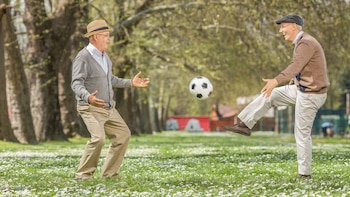
Moreover, happiness tends to increase as individuals mature. Previous studies suggested a U-shaped curve regarding life satisfaction; however, recent research cites that happiness can continue to evolve positively into later years. Many older adults reflect on middle age as a time filled with positivity, expressing the greatest levels of life satisfaction during their 60s and 70s.
Feng cautioned against viewing depression as an inevitable aspect of aging. She emphasizes that adopting this mindset can inadvertently predispose individuals to succumb to mental health struggles. “If people believe that depression is a normal part of aging, they are more likely to experience it,” Feng noted. It is crucial to recognize the facts and empower ourselves to make informed and beneficial choices regarding how we age.
In essence, a positive attitude towards aging, enhanced emotional resilience, and a focus on emotional priorities are essential components for leading a fulfilling and healthy life in our later years.