
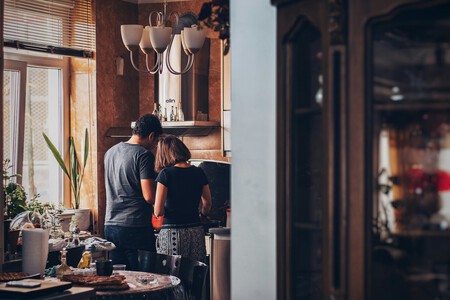
Will Kitchens Become Obsolete? Juan Roig’s Bold Prediction and Spain’s Cooking Reality
In a recent presentation of Mercadona’s 2024 memory, Juan Roig, the company’s president, made a bold and provocative statement that has sparked considerable debate. He claimed that by the mid-21st century, kitchens as we know them will cease to exist. Instead, he predicts that future generations will eat primarily from pre-cooked dishes and rely heavily on meals consumed outside the home. According to Roig, “Babies born in thirty years will not know what a pot or a casserole is.”
The Reality of Cooking in Spain
While Roig’s proclamation may seem forward-thinking, recent studies suggest that his vision of a kitchen-less future may not be entirely accurate. A survey by Elena Sandri from the Catholic University of Valencia revealed that a staggering 59.1% of Spaniards still cook nearly every day. With over 1,500 participants, Sandri’s research highlights the importance of home-cooked meals within Spanish culture, contradicting the idea that kitchens are becoming obsolete.
The data also shows that the average time spent in the kitchen for those who cook frequently hovers around an hour and a half each day. Furthermore, the study found notable gender disparities; women tend to cook more often, employ healthier cooking techniques, and demonstrate a broader knowledge of culinary practices compared to men.
Age and Cooking Habits
The research indicates that age also plays a significant role in cooking frequency. Older adults are more likely to cook than their younger counterparts. Sandri’s conclusion emphasizes that homemade cuisine remains central to Spanish culture, countering Roig’s prediction of its decline. Yet, sociodemographic factors also influence cooking habits, with younger individuals and those with less cooking knowledge tending to rely more on fast food and prepared meals.
Diverse Perspectives on Spanish Cooking Trends
Multiple studies over recent years have examined the question of whether Spaniards continue to cook at home. In 2023, a report from the Spanish Federation of Nutrition, Food, and Dietary Societies (FESNAD) indicated that approximately 46% of Spaniards still cook daily. While this figure is substantial, it signals a shift in kitchen use, as many people no longer prepare meals every day due to busy lifestyles.
Rosaura Leis, the Vice President of FESNAD, noted, “Our kitchens at home are losing importance. We do not cook daily and often eat alone due to time constraints and the pace of modern life.” Adding to this narrative, a study by Cocina Canal involving 2,251 interviews found that while about 90% of people cook at least once a week, only 20% do so daily, indicating a decline in regular home cooking.
The Rise of Meal Prepping
Interestingly, new cooking strategies, such as batch cooking, have gained traction. Approximately 36% of the population practiced this approach, dedicating a single day to prepare most meals for the week. Among the young, that percentage rises to 41%, while in urban centers like Madrid, the figure reaches 46%. This trend highlights a shift in how meals are prepared, accommodating busy lives while still allowing for home cooking.
Moreover, eating from tupperware (tapers) is now commonplace, with over half of Spaniards consuming at least one meal prepared outside their kitchen each week. It’s especially prevalent for lunches during workdays, reflecting a blend of traditional cooking habits with modern eating practices.
A Surge in Pre-Cooked Meal Consumption
As significant as cooking habits are, the rise of prepared meal consumption cannot be overlooked. The Association of Prepared Dishes Manufacturers (ASEFAPRE) predicts that by 2024, the demand for pre-made meals will increase by 6.6%, eclipsing 700,000 tons in homes. Per capita consumption is projected to rise to 17.2 kg per year, underscoring a growing trend toward convenience.
Consultant Kantar has reported a dramatic 48% increase in the purchase of ready-to-eat meals in Spanish supermarkets over the last two years. Surprisingly, 20% of these meals are consumed away from home, indicating a shift in food consumption patterns as people seek balance among time, health, and culinary enjoyment.
Public Perception of Home Cooking
When the CIS asked Spaniards whether they believed that industrial cuisine and fast food were eclipsing home cooking, a significant three out of four participants responded affirmatively. This response illustrates a growing concern over the future of traditional cooking practices and the evolving nature of food consumption in Spain.
Conclusion
The reality is that while Juan Roig’s prediction may hold some truth regarding changing habits and convenience, home cooking remains a vital part of life for a majority of Spaniards. Despite the rise of prepared meals and changing lifestyles, the tradition of cooking at home endures, reflecting a balance between modern demands and cultural heritage. As Spain navigates this culinary crossroads, it will be fascinating to see how these trends evolve leading up to 2050. For now, kitchens are far from being obsolete.