
China’s Ambitious Hydro Project: The World’s Largest Dam
In the world of mega-structures, Pharaonic works are often met with skepticism, as seen with The Line, a groundbreaking vertical city project in Saudi Arabia that has come under scrutiny. Yet, on the other side of the globe, China continues to impress and astonish with its unyielding pursuit of megastructures. Now, after extensive planning, the nation is on the verge of commencing the construction of the world’s largest hydroelectric dam on the Yarlung Tsangpo River.
The announcement has sparked a wave of concerns from neighboring countries about the potential militarization of water resources.
A Colossal Undertaking
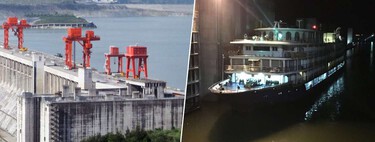
China is already home to the largest dam in the world, the Three Gorges Dam, which boasts a staggering annual production capacity of 88.2 million MWh. However, this impressive feat will soon be outdone as plans unfold for an even larger dam capable of generating a monumental 300 million MWh per year. This scale of energy generation could meet the needs of approximately 300 million people annually at an estimated cost of €130 billion. The massive capacity will be harnessed through advanced turbines and the utilization of significant elevation changes along the river, with a design that includes a cascading system of five dams.
The Project of the Century
The proposed location is remarkably rich in hydroelectric resources, leading Chinese Prime Minister Li Qiang to label it the “project of the century.” The ambitious plan involves drilling four to six tunnels, each extending 20 kilometers, to divert a significant portion of the river’s flow, aimed to reach 2,000 m³ per second. This operation presents substantial challenges due to the area’s geological conditions and the staggering financial implications. The project has already faced international criticism.
Caution Amidst Construction
However, the risks are substantial. First, there are natural hazards to consider. The dam’s site is in a seismically active region of Tibet, where the Indian and Eurasian tectonic plates converge. Earthquakes are common, and a recent incident damaged five hydroelectric facilities nearby. Additionally, the immense weight of accumulated water may trigger further seismic activities.
Human factors also complicate the situation. There is a historical precedent where local populations have been displaced for dam construction, raising concerns among Tibetan communities about their lack of visibility and agency in the decision-making process regarding such projects. Previous complaints against similar initiatives have been met with governmental suppression, further exacerbating fears.
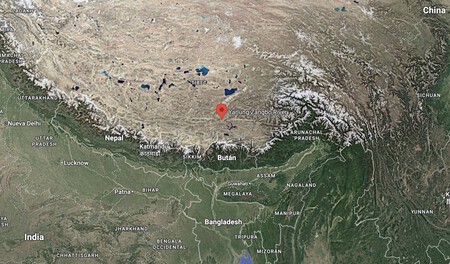
The Yarlung River, a crucial water source, poses geological and geopolitical complications.
Geopolitical Implications
Neighboring countries like India and Bangladesh are keenly observing the developments with growing apprehension. The crucial Brahmaputra River, which plays a vital role in agriculture and drinking water for millions, could be adversely affected by changes to its flow due to the dam. Concerns have been raised that this project may endanger both food security and regional stability.
Neeraj Singh Manhas, a special advisor for South Asia at the Parley Policy Initiative, expressed worries that “China could use water as a weapon, blocking or diverting it.” Historical precedents, such as the catastrophic 1975 collapse of the Banqiao dam, which resulted in 85,000 deaths and vast displacement, serve as cautionary tales.
Concerns Over Water Hegemony
The implications extend into India’s interests, with plans for a hydroelectric dam on the Sang River, a tributary of the Tsangpo. If China employs its latest dam as a strategic “water pump,” it could profoundly endanger the lives and properties of communities downstream, as explained by Pema Khandu, the Minister of Arunachal Pradesh.

Government Reassurances
Despite the widespread concerns, the Chinese government has strongly rejected accusations of seeking “water hegemony.” Officials claim that the project aims to provide employment opportunities, meet energy demands, and contribute to China’s burgeoning renewable energy sector. Prime Minister Li has promised that ecological conservation will be a primary focus to mitigate environmental damage.
As the timeline progresses, it seems inevitable that the dam will be built, with operational plans aiming for completion by 2030.