
Valencian Community’s Economic Struggles Under Government Policies
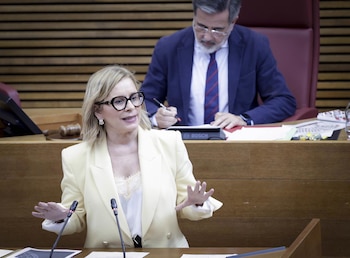
The Valencian Community has emerged as a focal point of economic discontent recently, sparking significant criticism aimed at the Spanish government. The spokesperson for Economics and Finance of the Popular Group in this region, Mari Carmen Contelles, has been vocal in her denouncement of Prime Minister Pedro Sánchez, accusing him of actions that unbalance the regional system and violate essential principles such as equity and solidarity.
In Contelles’ statements, she pointed out that Sánchez is prioritizing “bilateral pacts” that jeopardize the shared financial resources necessary for the community’s sustenance. This has led her to label such actions as political opportunism. She exclaimed, “Sánchez has sold the Valencians and the rest of the Spaniards for a few votes in order to stay in La Moncloa.” Such phrases encapsulate the growing frustrations felt by many in the Valencian Community regarding their financial treatment under the current government.
The Current Financial Landscape
The Valencian Community has been vocal about its status as the “worst financed” region in Spain, a claim that has taken center stage amid the economic discussions following the latest governmental changes. Contelles underscores the community’s plight, stressing that rather than implementing solutions, Sánchez is “economically suffocating” the region at its most critical time.
In light of these challenges, the Popular Group has forwarded a non-law proposition urging the government to maintain the territorial consensus and avert granting privileges to specific autonomous communities through preferential bilateral treatments. This call for action seeks to ensure that sufficient state resources are allocated to uphold essential services in the Valencian Community.
Unmet Needs and Demands
The community has echoed longstanding calls for reforms, particularly the necessity to rectify the current autonomous financing model. Contelles expressed frustration over unmet demands that have significant backing from local residents and officials alike. Among these is the push for a leveling fund and unfettered access to the Autonomous Liquidity Fund, concerns that directly impact the community’s ability to fulfill its social commitments in vital sectors like health, education, and housing.
“What we have is an absolute unfairness towards Valencian society,” Contelles lamented, insisting that the existing financial model inequitably places the Valencian Community at a disadvantage.
The Politics Behind the Economic Discontent
In the broader context, the political landscape in Spain has been increasingly polarized, with local communities like Valencia feeling sidelined in a political reality that often caters to larger regions, especially Catalonia. The disparate funding allocation between these regions raises questions about the validity of existing policies within Spain’s decentralized governance structure.
Contelles charged that the actions taken by the Sánchez administration indicate a lack of commitment to addressing fundamental inequalities. This perceived neglect has caused ripples throughout Valencian society, triggering protests and calls for political accountability.
Calls for Reform
The push for a new financing model isn’t merely local sentiment; it’s backed by countless stakeholders who demand fairness in the distribution of resources. The Popular Group has stated that without these changes, they are resorting to appealing for basic rights and services, which should already be guaranteed under current governance frameworks.
As the dialogue surrounding financial equity in the Valencian Community gains momentum, it’s evident that the implications of government decisions extend far beyond mere fiscal policy—they touch on the very fabric of society and its future. The Popular Group posits that the right approach requires acknowledging and addressing these disparities decisively.
Furthermore, the community is urging for a comprehensive review of how resources are allocated, to ensure that those most in need receive adequate support. This continuing advocacy represents a critical chapter in the Valencian narrative as it seeks equitable treatment within Spain’s multipolar governance structure.
In summary, the growing unrest regarding financial inequities faced by the Valencian Community demands urgent dialogue and resolution. As community leaders voice their concerns, the path forward hinges on political willingness to foster an inclusive environment where all regions can thrive. Addressing these systemic issues will be crucial for the long-term stability and prosperity of the Valencian Community. The time for meaningful reform is now.