
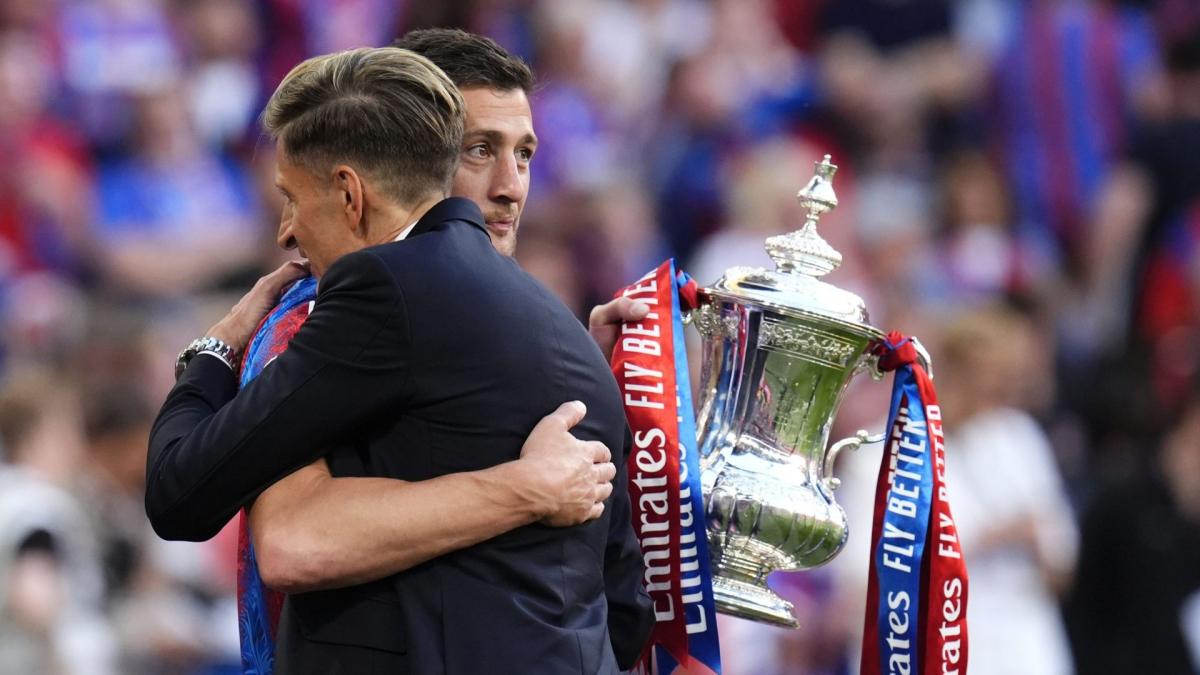
Crystal Palace Faces Controversy Over Europa Conference League Demotion
Crystal Palace’s recent relegation to the Europa Conference League has sparked significant backlash and controversy, not only within the club but also among its loyal supporters. This move has incited a wave of anger, prompting club chairman Steve Parish to urge UEFA to reconsider the decision, which many fans believe is unjust.
In a statement reflecting the sentiments of many at the club, Parish expressed a desire for intervention, saying, “We believe that it is possible that Mr. Ceferin or someone else does it.” His call for action shows the depth of frustration felt by the club’s leadership, making it clear that this situation is far from over. The heart of the matter revolves around Eagle Football and its owner John Textor, under whom the club’s fortunes have fluctuated.
Supporters took to the streets in protest, voicing their dissatisfaction with UEFA and the club’s decision-makers. One of the striking banners read, “UEFA: in moral bankruptcy. Cancel the decision, right away.” This message resonates with fans who feel cheated by regulatory bodies and the decisions affecting their club’s future. The Guardian reported that hundreds gathered, highlighting the unity and determination among the Crystal Palace faithful.
Understanding the Decision’s Background
The implications of Crystal Palace’s demotion to the lower-tier European competition stem from regulatory concerns regarding club ownership. Textor, who recently sold off his shares in the club, also has ties to Olympique Lyonnais (OL). UEFA has rules in place that prevent two clubs under the same ownership from competing in the same European tournament. As the FA Cup winners, Crystal Palace expected to make an appearance in the more prestigious Europa League, but the continued association with OL resulted in their demotion.
The intricacies of this situation underscore a growing concern over the governance of football clubs and their eligibility for competition. Many fans see this as an inappropriate and harsh penalty for the club, labeling UEFA’s ruling as flawed and demanding a reassessment of their guidelines. The notion that domestic results should influence European participation has become a contentious topic in the current climate of football.
The Impact on Club Culture and Community
The ramifications of this decision extend beyond the club itself. Crystal Palace has always maintained a strong connection with its local community. A passionate fan base feels cheated and deflated, believing that consistent support should be rewarded rather than punished. Loyalty is a core component of football culture, and supporters feel that they are being disregarded in the larger conversation about club ownership and performance.
Parish’s efforts to rally support indicate that the leadership is keenly aware of the damage this situation could do to the club’s reputation. Indeed, the impact on the community can be long-lasting, as negative sentiments could lead to disengagement among fans, affecting match attendance and local investments.
For many, the current situation represents a turning point. A club’s identity is intrinsically linked to its achievements and its relationship with supporters. With so much uncertainty surrounding Crystal Palace’s future, fans are left questioning what this means for their beloved team.
The Road Ahead for Crystal Palace
As the dust settles on this controversy, the immediate future remains uncertain for Crystal Palace. Will UEFA consider the appeals from Parish and the club, or will they stand firm on their ruling? There is a growing belief that grassroots movements from passionate fans can sometimes influence decisions at the highest levels of sport.
The challenge now lies in the club’s ability to regroup and harness the collective passion of its supporters. Steve Parish’s proactive stance may be just the beginning of a broader movement, one that might force football governing bodies to reconsider how they enforce rules regarding club ownership.
As the club navigates these troubled waters, the resilience of its community will be crucial. Fans have historically played a vital role in shaping the direction of their clubs, and the same spirit of determination will undoubtedly emerge during this challenging chapter for Crystal Palace.
The situation at Crystal Palace serves as a clarion call for all stakeholders in football: the voices of supporters matter. Whether it’s through banners at protests or conversations on social media, the dialogue about ownership and governance in football must continue. Only then can decisions reflect the values that underpin the beautiful game.