
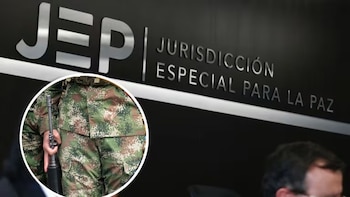
The Special Jurisdiction for Peace (JEP) has come under scrutiny after its recent sanction of Lieutenant Colonel Jorge Emerson Melgarejo Escobar , the director of the National Army Logistics School. This sanction was triggered by the officer’s failure to comply with a precautionary measure meant to secure a military site located in San Cristóbal , Bogotá. The site is suspected to contain inhumation sites relevant to cases of forced disappearance.
The JEP’s decision highlights the ongoing struggle for justice in Colombia, involving the rights of victims and the state’s obligation to safeguard sensitive sites of historical importance. The court ruled that Lieutenant Colonel Melgarejo faced a three-day arrest and a fine equivalent to ten current monthly legal minimum wages due to his disregard for the protection order.
Specifically, the JEP determined that Melgarejo neglected his responsibility to ensure the preservation of judicially protected land. The original precautionary measure was put in place in September 2024 after petitions from victim advocacy groups, including the Bar Association José Alvear Restrepo (Cajar) and the National Movement of Victims of State Crimes ( MOVICE ). The aim was to prevent any disturbance that could compromise potential inhumation sites linked to the forced disappearance of individuals.
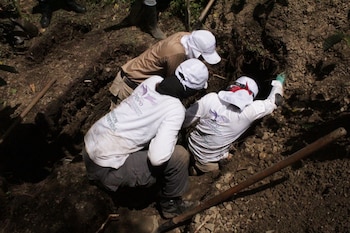
Despite the protective court order, which strictly prohibited any intervention in the designated area without prior authorization, a forensic team discovered an unauthorized excavation on February 3, 2025 . This serious violation led the JEP to initiate a contempt incident that ultimately resulted in the sanctions imposed on Lieutenant Colonel Melgarejo.
It was revealed during the investigation that the unauthorized excavation was initiated by a non-commissioned officer under Melgarejo’s command, who claimed ignorance of the restrictions. However, the JEP refuted this defense, emphasizing that the precautionary measure had been effectively communicated to the relevant units, meaning that ignorance could not absolve them from responsibility.

The JEP stressed the gravity of the incident, noting that the unauthorized excavation permanently affected the potential recovery of human remains . This incident is not just a legal violation but represents a striking violation of the rights of the victims’ families, who continue to live under the shadow of forced disappearances . “The anxiety that remains in front of the forced disappearance increased in the face of the possibility that current technology and forensic techniques do not allow to establish whether the body was on the altered site,” said the court.
In its ruling, the JEP also mandated that copies be sent to the Attorney General’s Office to investigate whether other military personnel might be held accountable for their actions within this protected area. This includes notable figures such as Colonel Juan Gabriel Toro , who allegedly participated in activities within the restricted area.
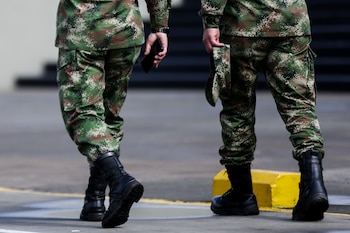
While the JEP did not extend responsibility to former Defense Minister Iván Velásquez Gómez or Colonel Johan Slead Gelvez Peña , stating they acted responsibly regarding the precautionary measures, it emphasized that respect for its judicial decisions is a constitutional duty for all state entities. Breaching these measures would invoke legal consequences for those involved.
The implications of this case extend beyond mere disciplinary measures; they resonate within the broader context of transitional justice in Colombia. Victims of forced disappearance have continuously fought for recognition and accountability, and the actions of both military personnel and judicial authorities will significantly influence their quest for justice and closure . The JEP’s stringent enforcement of precautionary measures demonstrates its commitment to safeguarding the rights of victims, even in the face of institutional resistance.