
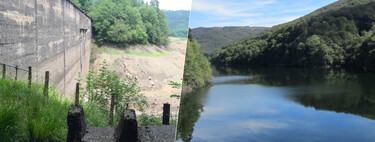
The Silent Thief of Reservoirs: Understanding Sediment Accumulation
Thanks to the data provided by the authorities and on initiatives such as reservoirs.net, we have access to detailed information about the state of the hundreds of reservoirs populating our environment. However, experts have highlighted a significant issue that transforms this otherwise precise and observational data into something more akin to estimates: the problem of sediments .
Decades of Accumulation
The reservoirs, apart from accumulating water, collect sediments over time. This accumulation poses a critical problem since sediments occupy an increasing portion of the volume of Spanish swamps. The aggravating circumstance is that estimating the exact proportion of sediment in each case is notoriously difficult.
Fortunately, the shadows of drought have left us (for now), but in recent months of excess water, some reservoirs even had to release water after being fully filled. This water could have been better utilized if it weren’t for the sediments occupying their space. This is why sediments have come to be referred to as the “silent thief” of reservoirs.
Difficult Solutions
This accumulation results from the dynamics associated with the very nature of these reservoirs and the architectural barriers that create them. Consequently, it’s almost impossible to prevent this accumulation entirely, leaving us with only two viable options: cohabitating with the sediments or conducting periodic dredging operations to clear them out.
Living with Sediments
Cohabiting with sediments does not mean turning a blind eye to the issue. On the contrary, it necessitates an even greater effort to document the magnitude of this phenomenon. The rate at which sediments accumulate in reservoirs, taking the form of sludge, sand, and other materials, varies significantly.
Considering all these variables is complex, making observational studies a viable option. Assessing the lacustrine bed through batimetry can provide insights into the reservoir’s bottom status without having to empty it or rely on indirect estimates.
Determining the precise degree of sediment accumulation in reservoirs helps us recalibrate their actual capacity and understand our real water resources and consumption rates more accurately. While this approach won’t solve the issue of diminishing reservoir capacity, it allows us to work with the reality we face.
Research Studies on Sediments
Currently, we lack a comprehensive understanding of the state of sediments in our reservoirs, though several studies and estimates have been undertaken in recent years. However, the limited number of studies and their varying results complicate matters.
For instance, a 2018 study conducted by the Tajo Hydrographic Confederation estimated an insignificant accumulation of sediments. In contrast, a batimetry study by the Segura Hydrographic Confederation revealed a capacity loss of between 10% and 40% in the basin.
A third, more global study, analyzing 110 reservoirs, estimated an overall capacity loss of about 5%, which is an intermediate result compared to the previous studies.
Addressing the Challenge of Dredging
The potential solution for this issue might lie in dredging reservoirs. This approach would allow them to reclaim their original capacity, albeit at the cost of significant investment and logistical challenges due to the numerous swamps throughout the country.
However, such operations are not mere utopias. In 2024, the Ebro Reservoir commenced dredging operations to clear one of its drainage systems , which had become non-functional due to sediment accumulation. The budget for this operation is estimated at 2.5 million euros.
In a changing environment, the challenge of sediment accumulation in reservoirs underscores the need for innovative approaches and effective management. As we continue to confront the implications of climate change and fluctuating water supplies, understanding and addressing sediment accumulation will be essential for maintaining our vital water resources.