
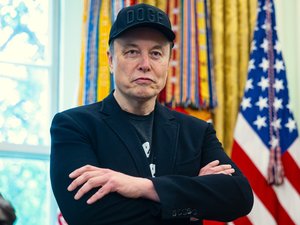
Elon Musk, the billionaire entrepreneur and CEO of Tesla and SpaceX, has taken a bold step in American politics by announcing the formation of his own political party, the “America Party.” This declaration, made on July 5, marks a significant shift in his relationship with former ally Donald Trump, with Musk openly criticizing Trump’s recent budgetary reform. Musk, once a prominent supporter and donor for Trump’s campaign, has now positioned himself as a critic of the administration’s fiscal policies, which he deems detrimental to the financial health of the United States.
Key Takeaways:
Elon Musk has established the “America Party,” opposing Trump’s budgetary law.
Musk criticizes Trump for a projected debt increase of $3.4 trillion, claiming it jeopardizes American freedom.
Trump threatens to withdraw subsidies to companies led by Musk, indicating a growing rift.
The recent budgetary bill , dubbed the “Big and Beautiful Law” by Trump, aims to facilitate the President’s major political reforms, supported by a narrow Republican majority. Signed into law on July 4, this bill is expected to raise the national debt by $3.4 trillion , bringing the total debt to an alarming $36.2 trillion . This decision has ignited Musk’s ire, as he reiterated his concerns over the sustainability of such fiscal policies.
“A Need for a New Political Party”
Elon Musk’s online polls suggested a public appetite for a new political party, prompting his proclamation: “By a factor of 2 to 1, you want a new political party and you will have it!” He aims to reclaim what he perceives as lost American freedom through his newly-established political entity. His message has enthused supporters who are disenchanted with the traditional two-party system, which many feel does not represent the electorate effectively.
By a factor of 2 to 1, you want a new political party and you shall have it!
When it comes to bankrupting our country with waste & graft, we live in one-party system, not a democracy.
Today, the America Party is formed to give you back your freedom. https://t.co/9k8ad04QN
Opposition to Trump’s Legislation
Musk, who previously held a prominent position in Trump’s administration focusing on government efficiency, has now diverged sharply from the President’s agenda. Earlier this month, Musk threatened to fund rival electoral campaigns against Republican officials who endorse Trump’s expansive budgetary plan. This shift illustrates a pivotal change in Musk’s stance, moving from a supporter to an opponent of Trump’s financial strategies.
Concerns Over National Bankruptcy
In a recent discussion on social media, Musk outlined his concerns regarding the accumulating national debt, which he attributes to both Trump and previous administrations. He stated, “To carry an already incredible debt of $2 trillion onto $2.5 trillion will put the country bankrupt.” This stark warning reflects Musk’s growing unease with economic policies that he believes are unsustainable.
Trump, unperturbed by Musk’s criticisms, has reaffirmed his intent to withdraw federal subsidies from Musk’s companies, indicating a potential escalation in their rivalry. The future of the America Party remains uncertain, particularly given the entrenched Republican-Democratic duopoly that has dominated American political discourse for over a century. Although Musk possesses substantial financial resources, the challenges of disrupting this status quo cannot be understated.
Moreover, Trump’s popularity remains relatively stable with approximately 40% public approval rating, which presents a formidable barrier for Musk’s nascent political party. The question lingers: can a new political entity gain traction in a landscape that has largely favored the existing political parties?
The emergence of Musk’s America Party reflects broader discontent with traditional political frameworks and may herald a new chapter in American politics. As financial and economic concerns take center stage, Musk’s challenge will be whether he can effectively channel public sentiment into a credible alternative that resonates with American voters. This political evolution could redefine how Americans engage with their government, warranting close observation in the months to come.