
In a world increasingly grappling with the realities of climate change, few nations are facing existential threats as dire as Tuvalu , a small island nation in the Pacific Ocean. This nation, which is barely above sea level, is projected to be submerged in the coming decades due to rising ocean levels. According to NASA’s projections , much of Tuvalu could be underwater by the mid-21st century, with conditions worsening significantly by 2100. The urgency of the situation was underscored recently when over a third of the population participated in a lottery to leave their homeland and seek refuge in Australia, far from the encroachments of the rising sea.
Goodbye Tuvalu. Nestled in Polynesia, Tuvalu is celebrated for its breathtaking beaches and palm-fringed landscapes. However, a cloud looms over this tropical paradise as citizens scramble to escape the looming threat of climate catastrophe. A staggering 1,124 applications were submitted soon after the “First Climate Visa” lottery was announced by Australia, which aims to allow a limited number of Tuvaluans to relocate. When considering family members, the number of potential migrants could exceed 4,000 , a substantial portion of Tuvalu’s population of just over 10,600 individuals.
A figure: 4,052. The registration period to apply for these climate visas opened on June 16, and the numbers are striking. With only 280 visas available, this represents a significant opportunity for those looking to escape impending doom. The gravity of the situation is compounded by the fact that the visa lottery is managed through a random selection process, making the odds of being chosen quite slim. Each applicant must pay a nominal fee of approximately $16 and commit to funding their relocation should they be selected.
What exactly do they choose? The climate visa not only offers a chance for relocation; it provides recipients a pathway to permanent residence in Australia, complete with access to healthcare, educational opportunities, and social support systems. This arrangement is particularly appealing, allowing Tuvaluans to maintain their citizenship while integrating into a new community. However, the upcoming selection raises ethical questions about the future of a nation that is in the process of being erased from existence.
“The first agreement of this type”. The Visa program is part of broader bilateral discussions between Tuvalu and Australia, aimed at addressing the myriad challenges posed by climate change. This is the first instance of a nation offering relocation assistance to another country as a direct response to climate threats. According to a representative from the Australian Foreign Ministry, this agreement signifies a progressive step towards dignified mobility as the impacts of climate change worsen.
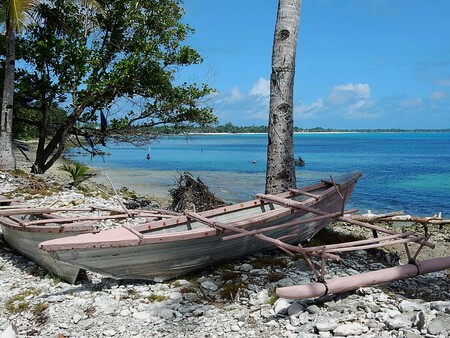
A paradise that sinks. Tuvalu is an ecological treasure that is slowly sinking. Recent studies reveal that the sea level around Tuvalu has risen nearly 15 centimeters in the past three decades, with predictions suggesting continuous annual increases. This might seem negligible but with the highest point on the islands being only six meters above sea level, even slight elevations can have catastrophic effects, inundating critical infrastructures and displacing vulnerable communities.
By 2050, NASA estimates that a substantial portion of Tuvalu’s land will be below the high tide line, with forecasts for 2100 suggesting that as much as 90% of Tuvalu could be regularly underwater. These statistics highlight the insidious nature of climate change and its disastrous repercussions for small island nations.
“It’s not an option”. The urgency surrounding this situation is echoed by Tuvalu’s Prime Minister Feleti Teo , who recently articulated that “internal relocation is not an option.” The stark reality is that there are no higher ground alternatives for inhabitants, necessitating external relocation as the only viable path forward. For many families, this move may represent a golden opportunity for better educational prospects. However, it also raises concerns about the potential loss of labor needed for Tuvalu’s fragile economy, which may already be struggling.
Migration can have both positive and negative implications for the countries involved. Remittances sent back by expats can significantly contribute to the economy, as seen in neighboring countries like Samoa and Tonga . However, the potential for “brain drain” must not be underestimated, especially for a country facing rapid change and decline.
Images | 總統府 (Flickr) and Michael Coghlan (Flickr)
As Tuvalu grapples with an uncertain future, its resilience continues to shine through the bleak prospects of climate change. Looking to Australia offers a glimmer of hope, albeit with challenges that could reshape the very fabric of Tuvaluan society. The situation serves as a cautionary tale for the world, reminding us of the urgent need to combat climate change and protect vulnerable nations from disappearing under the tidal wave of rising seas.