
Taiwan’s Health Care Revolution: The Emergence of Nurse Robots
In an evolving landscape where technology and healthcare converge, soon hospitals in Taiwan will witness a significant transformation. Imagine navigating hospital corridors alongside a robot designed not just to transport items but also to assist patients and healthcare professionals alike. This isn’t mere speculation or a distant dream; initiatives are already underway, with prototypes being tested on real patients. The driving forces behind this innovative project are Kawasaki and Foxconn , who have set timelines to introduce these robots as integral members of medical teams by 2026 .
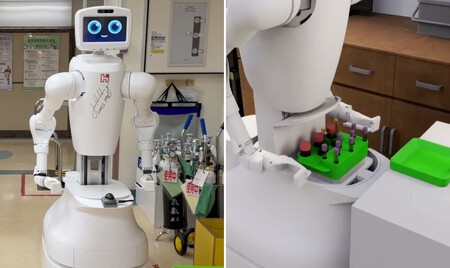
The robot under development is based on the already familiar Nyokkey, a social robot introduced by Kawasaki for various environments, including residences and restaurants. The current iteration, being trialed at the Taichung General Veterans Hospital, is tailored specifically for clinical settings, outfitting it with functions to alleviate some of the burdens faced by healthcare personnel.
A Nurse Robot in Taiwan is equipped to navigate autonomously through hospital corridors, utilizing an advanced sensor system to avoid obstacles and collisions. With two articulating arms, it can hold objects, transport medications or samples in a designated compartment, and guide patients throughout the facility. As reported by The Register, it may even have the capability to explain basic hygiene practices, although specifics on this feature remain TBD.
The primary goal of these robots is not to supplant medical personnel but to assist them in handling routine tasks that consume significant time and resources. In Taiwan, where there is a prevailing shortage of nursing staff, as highlighted by reports from Taiwan News and the World Health Organization, the introduction of these robots could alleviate some of the pressures faced by healthcare workers. Estimates from Foxconn indicate that by managing medication transport and other logistical challenges, these Nurse Robots could reduce nurses’ workloads by up to 30% .
Who Are Behind the Robot? The partnership between Kawasaki Heavy Industries and Foxconn is a noteworthy collaboration grounded in expertise and innovation. Kawasaki has long been a pioneer in industrial robotics, manufacturing systems used in automotive, semiconductor, and healthcare sectors, while Foxconn stands as the world’s leading electronics manufacturer, actively investing in robotics and AI as emerging growth areas.
This project also benefits from Nvidia technology, which powers the entire artificial intelligence ecosystem involved in the robotics initiative. This includes everything from model training in data centers to the execution of algorithms on the robots themselves. According to Nikkei Asia, the two companies are currently navigating the logistics of production, technical support, and marketing strategies for when the robots are officially released.
What Comes After this initial introduction of Nurse Robots? While the focus is presently on hospital environments, both Kawasaki and Foxconn are eyeing potential applications in other sectors as well. The ultimate vision is to cultivate a versatile robotic platform that can adapt to different environments and needs. The experiences gathered in clinical settings stand to serve as invaluable groundwork for future generations of multifunctional robots.

Such advancements could lead to the development of various specialized models for roles like customer service assistants, public space guides, and logistics aids. The technology currently being tested in Taichung may lay the foundational framework for a new class of robots designed to coexist with us in our everyday lives.
Objective: Market Launch in 2026. All indicators suggest that the robots are slated to hit the Taiwanese market in fiscal year 2026, with Kawasaki and Foxconn ambitiously targeting the sale of 200 units by the end of 2027. However, they have yet to disclose the price tag on these innovative units.
With exciting advancements happening in the field of robotics and healthcare, Taiwan seems poised to lead the charge in incorporating these high-tech solutions into everyday medical practice, improving efficiency and patient care.