
When we talk about a military plane, we usually think of fighters, such as the F-35, or bombers, like the B-2. However, there are other crucial types of aircraft that play a vital role: Cistern Aircraft . Among them, the KC-135 Stratotanker stands out. Its mission is both simple yet indispensable: to fly loaded with fuel and refuel other aircraft in mid-air.
According to Aviation Week, the U.S. Air Force aspires to enhance the capabilities of the KC-135. They have developed a system allowing the KC-135 to launch drones while in flight, aiming for these drones to serve as shields, sensors, or even communication links in high-risk areas.
A ‘Tanker’ That Will Launch Drones
This is not an entirely new concept, but it marks a significant advancement. For several years, the capabilities of cistern airplanes have been explored, and all indicators suggest that the KC-135 is the first candidate for this transformation. According to official budget documents for fiscal year 2026, the development of this drone launch system was tested at some point last year.
At present, there are no images or videos of these tests, nor has any public demonstration been conducted. Nonetheless, the budget indicates that the goal is to provide the KC-135 with onboard defensive capabilities, particularly in hostile environments. This allows it to launch drones that help detect threats, confuse enemy missiles, or simply expand its visual field during missions.
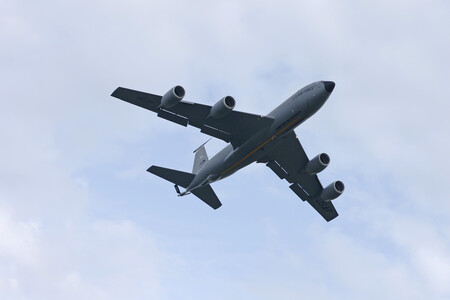
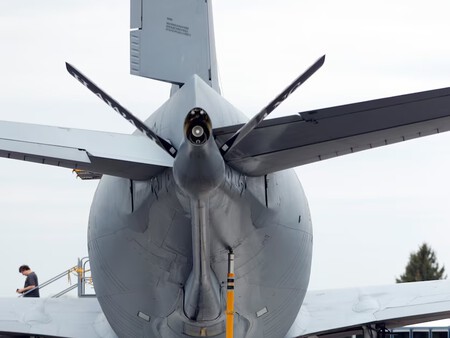
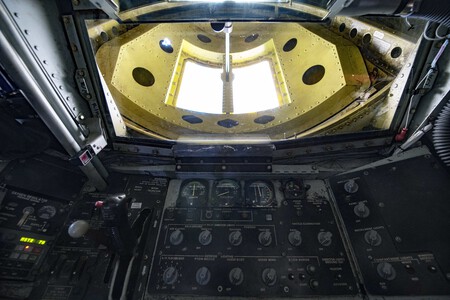
This innovative approach incorporates a well-known tool called the Common Launch Tube (CLT), which will be adapted by utilizing a KC-135’s rear hatch. It is notable that this design can also be adapted for the more modern cistern aircraft, the KC-46 Pegasus.
For the time being, these drones are not intended for offensive operations. Their primary purpose will be defensive. They are designed to deploy interference systems, act as lures to divert enemy missiles, or deploy sensors to monitor the environment and alert the aircraft to potential threats.
Essentially, these drones would serve as the first line of defense for the KC-135 in increasingly perilous flying conditions. The underlying strategy proposed by the Air Force involves not just a specific enhancement but a fundamental change in operational methodology: to transform an aircraft originally designed for refueling into something resembling an airborne resource depot, ready to act dynamically according to the mission’s unfolding events.
While the United States is striving to maximize the capabilities of its KC-135 fleet, France has decided to phase out its own KC-135 Stratotankers. On June 30, one of its Stratotankers flew for the last time, marking the end of over six decades of service. Instead, the nation is transitioning to the Airbus A330 MRTT, a more modern aircraft that boasts greater autonomy, enhanced load capacity, and versatility for logistical and medical missions.
Images | Anduril | United States Air Force
As aviation technology continues to evolve, it will be fascinating to observe how military logistics will change and adapt to meet the demands of modern warfare. The integration of drone capabilities into a traditional refueling platform like the KC-135 shows a forward-thinking approach from the U.S. Air Force, enhancing situational awareness and increasing operational effectiveness. This innovative strategy could set a new standard for future military operations, emphasizing safety , agility , and resourcefulness in the skies.