
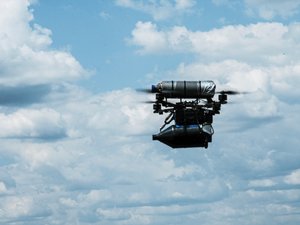
In the ongoing conflict between Ukraine and Russia , drones have emerged as pivotal tools on the battlefield. The latest innovation from the Ukrainian army is a fiber optic drone designed to enhance combat effectiveness. This drone, equipped with advanced technology, aims to neutralize Russian armored vehicles through precise attacks from the air.
The weapon, known as the Queen Hornet , represents the latest advancement in Ukraine’s efforts to counter Russian armor. Reports from Militarnyi, a publication specializing in Ukrainian armaments, indicate that this First Person View (FPV) drone is designed for immersive control via a fiber optic communication system. This ensures stable communication, essential for evading enemy countermeasures.
Drones vs. Armored Vehicles: A Tactical Shift
The deployment of the Queen Hornet signifies a major tactical shift in modern warfare. With a compact 38 cm chassis , the drone can carry up to 9.5 kg of payload over a distance of 5 kilometers. Its primary weapon, the Czech RPG-75 , is notably effective against armored targets, boasting a destruction range of approximately 1,000 meters . The drone can also extend its operational capabilities with a 20 km optical fiber coil , allowing for greater flexibility in mission execution.
This innovative design not only enhances the armament of the drone but also addresses vulnerabilities present in previous versions. Earlier tests using a Bulgarian Bulgare-Ap launcher lacked optical fiber technology, which raised serious concerns about reliability and communication during operations. The upgrade to the Queen Hornet significantly mitigates such issues, making it a formidable asset on the battlefield.
The Role of Fiber Optic Technology in Drone Warfare
Fiber optic control systems are increasingly becoming crucial in drone warfare for several reasons. They provide high-speed data transmission , reducing latency in communication and thereby enhancing response times. Moreover, fiber optics are less susceptible to electronic warfare tactics, which can jam traditional radio frequencies. This advantage ensures that drone operators maintain a steady link with their units, essential during high-stakes combat situations.
In addition to its operational capabilities, the Queen Hornet also embodies a broader trend in military technology: the integration of unmanned systems to supplement human soldiers. As nations invest increasingly in drone technology, the implications for modern warfare are profound. The ability to deploy drones for targeted strikes minimizes the risk to human life while increasing the precision of military operations.
Implications for Ukraine’s Military Strategy
The introduction of the Queen Hornet reflects Ukraine’s adaptive military strategy amid ongoing confrontations with Russian forces. By leveraging cutting-edge technology, Ukrainian troops aim to exploit any weaknesses in Russian defenses. The ability to target armored vehicles from the air enables Ukrainian forces to conduct more flexible operations, allowing for rapid strikes without exposing ground troops to the dangers of close-range combat.
As the landscape of warfare continues to evolve, the integration of technologies such as the Queen Hornet serves to level the playing field for smaller nations against larger adversaries. The commitment to enhancing capabilities through innovative solutions aligns with Ukraine’s resolve to secure its territory and sovereignty against aggression.
Future Prospects
Looking forward, the Queen Hornet represents just the beginning of an evolution in drone warfare. Future iterations may incorporate enhancements such as improved sensor packages for reconnaissance or autonomous flight capabilities for increased operational freedom. As drone technology continues to advance, the potential applications in military conflicts will only broaden, likely reshaping how battles are fought around the globe.
In conclusion, the Queen Hornet showcases the evolution of warfare technologies and their implications for the battlefield. As military strategies adapt to incorporate drones like this innovative model, the landscape of global conflict may witness a transformative shift. With greater precision and fewer risks to personnel, drone warfare could redefine traditional combat tactics, making it an indispensable element in modern military strategies.