
Exploring the Final Frontier: Cannabis Seeds in Space
Throughout humanity’s journey into space exploration, we have sent a myriad of eclectic items to the cosmos—from golf balls to fragments of the Wright Brothers’ airplane, electric cars, gorilla costumes, and even a pizza. Recently, this peculiar list has been expanded to include 150 cannabis seeds, transported for purely scientific purposes.
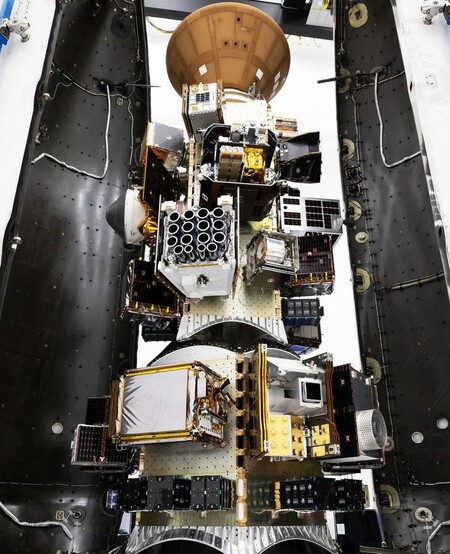
The mission, dubbed Mayasat-1, is part of the broader initiative known as Mission Possible 2025. It serves as an incubator aboard the spacecraft, carrying not only cannabis seeds but also algae and samples of human DNA, summing up to 980 samples from 11 different clients. This innovative incubator has been developed by the Genoplant Research Institute in Slovenia, while the initiative to send cannabis seeds to space comes from Martian Grow.
The Mission Details
On Monday, February 23, 2023, Mayasat-1 launched at 23:50, aboard a SpaceX Falcon 9 rocket from Vandenberg Space Force Base in California. The mission lasted three hours, reaching a height of 520 kilometers—30% higher than the International Space Station (ISS). The spacecraft completed three loops around the Earth, covering mainly polar areas. This choice of trajectory exposes the samples to significantly higher radiation levels than those at the equator, due to the Earth’s magnetic field.
Objectives of the Mission
The objectives of this extraordinary mission can be encapsulated as follows:
Survival of Samples: To observe how well the samples withstand radiation, microgravity, and extreme temperatures in space.
Genetic Changes: To identify any potential adaptations, whether genetic or structural, that arise from environmental stresses.
Implications for Space Cultivation: To explore the possible impacts on growing plants in space, which could lead to advances in space medicine.
- Biological Experimentation: To establish a proof of concept for future biological experiments onboard spacecraft.
Why Cannabis?
Leading this initiative, Božidar Radišič of Martian Grow asserts that cannabis has vast potential for future lunar bases. He mentions that cannabis serves multiple functions—it can provide food, proteins, construction materials, textiles, and medicines. The Cannabis sativa L. plant produces THC (tetrahydrocannabinol), the principal psychoactive ingredient, and CBD (cannabidiol), which is non-psychoactive. Yet, over 550 chemical compounds exist within this remarkable plant, and while their effects aren’t fully understood, research already indicates its surprising resilience under various conditions.
Resiliency of Cannabis
Cannabis sativa is notably resistant to both ultraviolet rays and gamma radiation, making it a candidate for industrial applications such as decontamination. It also boasts impressive adaptability, flourishing in diverse climates ranging from Mexico to Nepal and the Netherlands. An intriguing fact is that cannabis doesn’t demand extensive water supply, allowing it to thrive in varied soil types.
The Scientific Pursuit
So why send cannabis seeds into space? Research has shown that radiation and genetic mutations can lead to the emergence of new plant varieties with different properties. According to the International Atomic Energy Agency, more than 3,400 new variants have been created using induced genetic variation and mutations in over 210 plant species.
Radišič emphasizes that the mission focuses on understanding how cosmic conditions may alter cannabis genetics—a process that could potentially yield beneficial mutations. The challenge lies in the fact that not all mutations are advantageous.
Future Considerations
This isn’t the first time we’ve cultivated plants in space. Previous missions have successfully grown lettuce on the ISS and Thalian Arabidopsis in lunar soil. However, this mission is unique, as radiation exposure has been limited to low Earth orbit—up to 2,000 kilometers high. The environmental conditions on other celestial bodies like the Moon or Mars could yield different responses in plant biology, meriting various studies and experiments.
One future project aiming to investigate how plants respond to lunar conditions is NASA’s Leafa mission, planned for the Artemis III Mission in 2027.
The Road Ahead
Upon returning to Earth, Radišič’s team, together with the Faculty of Health Sciences at the University of Ljubljana, will meticulously analyze the cannabis seeds. They will examine any mutations or adaptations to better understand which compounds may have changed and how. “Whether there are changes or not, both results are vital for the future,” Radišič states.
As we set our sights on colonizing Mars or the Moon, the logistical challenges loom large. Transporting food to support a population on another planet is not feasible in the long run. Therefore, mastering the cultivation of crops in inhospitable soils is of paramount importance. Although significant strides have been made over the years, a comprehensive solution is still underway.
In conclusion, the inclusion of cannabis seeds in space missions may initiate a novel chapter in our quest to adapt to extraterrestrial environments. By exploring the genetic responses of cannabis to space conditions, we can acquire valuable insights that could transform how we think about growing food, thereby enhancing the potential for sustainable human life beyond our planet.