
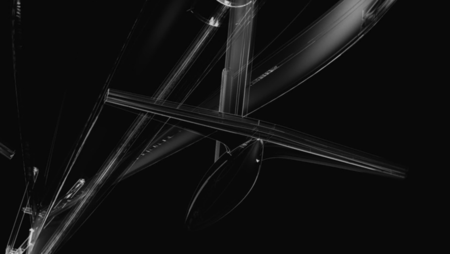
Ferrari has already conquered the circuits. Now it aims to take on the ocean. Its new project, dubbed Hypersail, is not a car, and it lacks wheels, ailerons, or even a V12 engine. This endeavor is a monohull built for regattas, although this description merely scratches the surface. Ferrari has decided to create an extreme vessel, engineered to challenge the limits of both physics and design.
The ambition is monumental: to create a 100-foot monohull that literally rides above the water , propelled solely by renewable energy—without a drop of fuel.
A Brand That Is No Longer Limited to Asphalt
For decades, Ferrari has epitomized competition , engineering , and prestige . Its history has been interwoven with the most challenging circuits and prestigious garages worldwide. Yet, the landscape is evolving. Although Ferrari continues its legacy of sports car manufacturing, it also seeks to expand its horizons.
Today, Ferrari is not just innovating in its vehicles but also in its strategic direction. A significant part of this evolution concerns its audience. Generation Z and Millennials now constitute approximately 40% of its new buyers. These younger customers are not merely interested in design and technology; they also prioritize impact and sustainability . Ferrari is adapting to these shifting consumer priorities.
In this light, Hypersail does not appear to be just a whim or a marketing ploy. This initiative represents a method to apply the knowledge accrued on the asphalt to an entirely different medium, with the potential to transfer the experiences gained on water back to their automotive designs.
Ferrari describes Hypersail as a floating laboratory , which is no exaggeration. Designed by naval architect Guillaume Verdier and helmed by navigator Giovanni Soldini, this craft is unlike any conventional ship.
The vessel’s structure is engineered to keep the hull above water through three key support points: a tilting keel foil, another on the rudder, and one that acts alternately on the side. This configuration minimizes friction and allows the craft to “fly” over the waves.
Perhaps the most radical aspect of the project is invisible. The craft doesn’t feature a traditional combustion engine; it is entirely powered by the renewable energy generated onboard while sailing, utilizing solar , wind , and kinetic energy.
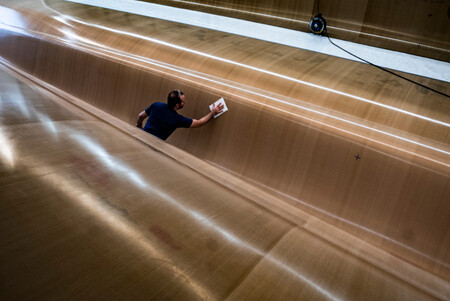
This project not only involves the installation of energy panels or sensors; it requires a complete redesign of each system to enhance efficiency. There are no hidden generators or backup plans. For many, achieving complete autonomy in ocean navigation seemed unfeasible, but Ferrari is determined to prove that it is entirely achievable.
Ferrari is not merely lending its name; it is deeply involved in the development of this project. The team has employed many tools from the automotive sector, including aerodynamic simulations , advanced structural calculations, and a control system adapted for marine conditions.
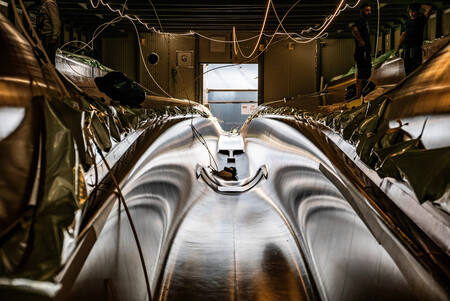
This collaborative effort has already yielded nine patents , with an additional six in the pipeline. The ship adapts in real-time to sea conditions, adjusting its position similarly to how a racing car navigates a curve.
According to Ferrari, the development of Hypersail is also influencing the evolution of its sports cars. While specific models have not been disclosed, this innovative approach could align with its current hyper-sports lineup, including the Ferrari F80 , a formidable 1,200 hp vehicle meant to succeed the iconic Enzo and LaFerrari.

Hypersail is still a work in progress. Assembly has commenced in Italy, and the planned launch is set for 2026 . Thus far, Ferrari has released limited visuals of this groundbreaking project, which indicates that further updates will be necessary to grasp its full potential. In the meantime, the sailboat will continue to serve as an open innovation platform.
Images | Ferrari
In Xataka | In Australia, they have already introduced the ‘infinite train’. It operates on battery power without a catenary system and claims to provide unlimited autonomy, although significant caveats exist.