
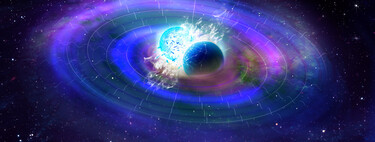
The Inevitable End of Earth’s Habitability: 1.8 Billion Years Left
For as long as humanity has been aware, it has wondered when and how the end of the world will come. Far from apocalyptic prophecies, science offers a calculated and inevitable response: Earth has an expiration date on its capacity to support life as we know it.
Understanding the “Habitability Window”
A classic study published in the journal Astrobiology in 2013 by researcher Andrew Rushby calculated the “habitability window” of our planet. The magic number, renowned from various physical and climate models, stands at approximately 1.8 billion years. This figure represents the average duration Earth can sustain complex life, derived from a larger range of 1,750 to 3,250 million years.
However, this date is misleading. While 1.8 billion years indicates a timeline for basic life forms, complex organisms, including humans, may face extinction much sooner due to environmental shifts.
The Solar Influence
To appreciate how scientists pinpointed the figure of 1.8 billion years, we must examine the Sun. Like all stars, our Sun undergoes stellar evolution, consuming nuclear fuel as its core contracts and heats up. This process results in increased luminosity over time, impacting Earth’s climate.
Rushby’s methodology combined models of solar brightness evolution with greenhouse effect parameters and Earth’s energy balance. The goal was to determine the precise moment Earth exits the so-called “habitable zone.”
The Habitable Zone and Its Implications
The habitable zone is the orbital region around a star where conditions allow for liquid water on a rocky planet’s surface. As the Sun grows hotter, this zone shifts outward while Earth remains in its current orbit. When Earth crosses the inner limit of this zone, escalating solar radiation will initiate a runaway greenhouse effect akin to what Venus experiences today.
The repercussions will be catastrophic, culminating in ocean evaporation, further intensifying the greenhouse effect and leading to the irreversible loss of liquid water—and ultimately, life.
The Staggered End of Life
It’s essential to distinguish “habitable” in astrobiological terms from our everyday understanding. Earth is approximately 4.545 billion years old, and simple life forms emerged surprisingly early, around 3.7 to 4.3 billion years ago. Consequently, the decline in life will be gradual, starting with complex organisms. Human life is particularly vulnerable to temperature fluctuations, asserting that our conditions will deteriorate well before those 1.8 billion years are reached.
The Last Survivors
The “apocalypse” of 1.8 billion years symbolizes the planet’s final gasps. In this dire scenario, as oceans evaporate, only the hardiest extremophile microorganisms may endure, clinging to existence in isolated, heated pockets before facing extinction.
A Broader Perspective: Looking to the Future
Amid all this uncertainty, one might question the relevance of calculating when Earth’s oceans will dry up eons from now, especially considering pressing contemporary issues. However, understanding the “window of life” on our planet equips astronomers with tools to assess other celestial bodies.
This knowledge aids in pinpointing where to search for life. For instance, while a planet might exist in its star’s habitable zone, if it has only been there for a few million years, it likely hasn’t provided ample time for complex life to develop.
Conclusion
As we gaze toward the universe, reflecting on Earth’s eventual limitations may illuminate our search for life beyond our solar system. While the Earth has millions of years left, our understanding of these timelines can shape our approach to discovering habitable worlds.
Images | Javier Miranda
In Xataka, astronomer Ryan MacDonald remarks on the future of Earth: “The death of the star is not the end, but the beginning of a new chapter.”